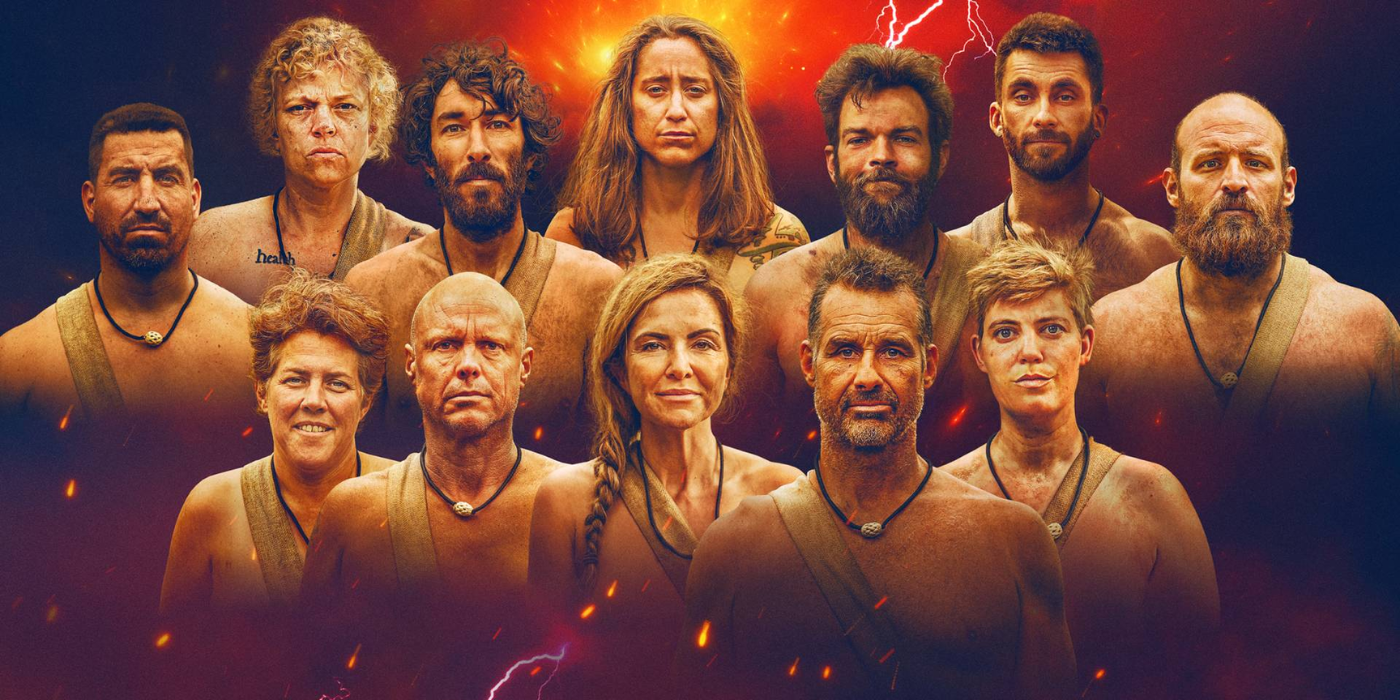
You're sitting on your couch, watching a survivalist trek through the Colombian jungle with nothing but a machete and a pot, and the thought hits you. It hits everyone eventually. Is there an uncensored Naked and Afraid? You see the pixelated blurs, the strategic arm placements, and the awkward camera angles designed to keep the show "TV-PG" or "TV-14." It feels like there must be a raw version stashed away in a vault somewhere or floating around on a premium streaming service.
Honestly, the answer is simpler—and maybe a bit more boring—than the internet rumors suggest.
Discovery Channel, which is owned by Warner Bros. Discovery, has built a massive franchise out of "survival nudity." Since the show premiered in 2013, fans have constantly hunted for a version where the pixels are gone. They want to see the "real" experience. But here’s the reality: there is no official, commercially available "unrated" or "uncensored" cut of the show. If you're looking for a DVD box set or a secret Discovery+ tier that reveals everything, it doesn't exist.
Why the "Uncensored" Version is a Myth
People often confuse "uncensored" with "unrated." On platforms like Max or the Discovery GO app, you might find episodes labeled as "Uncut" or "Pop-Up Edition." Don't let the marketing fool you. These versions usually just add a few minutes of deleted scenes, trivia bubbles, or slightly more graphic footage of a foot infection or a slaughtered feral hog. They never, ever remove the digital blurs covering the survivalists.
Think about the legal nightmare. Discovery signs contracts with these survivalists—people like Jeff Zausch, Laura Zerra, or EJ Snyder. Those contracts are incredibly specific about how their bodies are portrayed. Most participants are willing to be naked for the sake of the "social experiment" and survival challenge, but very few would sign up if they knew their private parts would be broadcast to millions of people without a filter.
It's a matter of consent. And a matter of money.
If Discovery released an uncensored version, they’d likely face massive lawsuits or have to pay the cast significantly higher "talent fees" for what would essentially be adult content. That’s not the brand they’re building. They want to be the "hardcore survival" network, not a late-night cable trope.
The Logistics of the Blur
Ever wonder how they keep those blurs so perfect? It’s a tedious post-production process. Editors spend hundreds of hours frame-by-frame ensuring that as a contestant moves through tall grass or climbs a tree, the "privacy shield" stays in place.
It’s actually become a bit of a running joke among the crew. Former producers have mentioned in interviews that after a few days in the field, the "nudity" stops being scandalous. It just becomes another Tuesday. You’ve got a cameraman, a sound tech, and a producer all standing around a naked person who is covered in dirt, ticks, and probably suffering from severe diarrhea. The "sexiness" factor is zero.
Because of this, the raw footage—the stuff before the blurs—is treated like high-security data. It’s stored on secure servers and handled by editors who are basically desensitized to it. Once the episode is finalized and the blurs are "baked" into the video file, the raw files are typically archived. They aren't just sitting on a public-facing hard drive.
The "Naked and Afraid: Alone" and Spin-off Confusion
When Naked and Afraid: Alone or Last One Standing comes out, the search volume for an uncensored version spikes again. People think that maybe the rules change for different formats. They don't. Whether it's the 21-day challenge, the 40-day XL, or the 14-day fan challenges, the censorship rules remain ironclad across the board.
What You Do Get in "Uncut" Episodes
If you see an episode titled "Naked and Afraid: Uncensored" on a streaming site, it’s almost always a clickbait title for what Discovery calls "Bares All."
Naked and Afraid: Bares All is a spin-off hosted by Whitney Cummings. It’s a talk-show format where contestants sit down to discuss their experiences. The title is a play on words. They "bare all" emotionally and share stories that were too gross or too weird for the main edit. You might see:
- More intense medical footage (parasites, infections, and injuries).
- Behind-the-scenes interactions with the crew.
- The actual "pooping" talk that survivalists deal with.
- Arguments between contestants that got cut for time.
But again—the blurs stay on.
The Evolution of the "Blur" Technology
In the early seasons, the blurs were huge. They were these massive, blocky squares that took up half the screen. As the show evolved and high-definition became the standard, the blurs became "soft" and more targeted. It’s a weird thing to notice, but it shows the production value increasing.
The editors have to balance the blur so it covers the "essentials" without obscuring the action. If a contestant is being bitten by a snake on their thigh, the editor has to navigate a very thin line. They want you to see the wound, but they can't show the groin. This tension is part of what keeps people searching for an uncensored version. The "tease" of the edit makes viewers curious about what they aren't seeing.
Real Survival vs. TV Perception
There's a common misconception that the nudity is just a gimmick. Well, it is a gimmick, but it serves a survival purpose.
When you're naked, your skin is your only defense. You feel every bug, every thorn, and every temperature drop. Expert survivalists like Shane Lewis have talked about how the lack of clothing changes your psychology. You feel vulnerable. You can't just sit on a rock; you have to find a leaf. You can't just walk through brush; you have to navigate it.
The "uncensored" curiosity often stems from a desire to see the "rawness" of that vulnerability. People feel like the blur is a literal filter between them and the reality of the situation. While that's true, removing the blur wouldn't actually change the survival narrative. It would just change the rating of the show.
Where Do the Rumors Come From?
Why does everyone think there’s a secret version? Mostly because of "leaks" that aren't actually leaks.
Occasionally, a production still (a photo) might circulate online where a blur wasn't applied correctly, or a "slip" happens during a fast-paced scene. These are usually accidents. Then you have the "parody" versions or the "NSFW" fan-made edits that use AI or Photoshop to remove blurs. Those are fake. They aren't official footage.
There's also the international factor. Some countries have much laxer laws regarding nudity on television. For instance, European versions of certain reality shows often feature much less censorship than their American counterparts. However, because Naked and Afraid is an American production by Renegade 83 and Discovery, they apply the US standard to the master cut that is distributed globally. Even in countries where they could show it, they usually don't have a different "unblurred" master file to broadcast.
The Future of Naked and Afraid
As we move further into 2026, the technology to "de-pixelate" video is becoming a topic of conversation. You might see "AI Uncensored" videos popping up on shady corners of the internet. Be wary. These aren't revealing the "truth"; they are using generative AI to guess what's behind the pixels. It's not real footage.
Discovery is leaning harder into the "behind the scenes" content because they know that's what the audience craves. They are giving more access to the "making of" the show, the psychological breakdowns, and the actual survival mechanics. That is the real "uncensored" content.
Actionable Insights for Fans
If you're looking to get the "truest" experience of the show without the filtered feel of standard cable, here is what you should actually do:
- Watch "Bares All" and "Clothed and Confused": These spin-offs provide the most context. You get the rawest look at the contestants' personalities and the physical toll the journey takes, which is far more interesting than the nudity itself.
- Follow the Survivalists on Social Media: Many participants, like Steven Lee Hall Jr. or Sarah Bartell, share "behind the scenes" stories on Instagram or Patreon. They often talk about the things the cameras missed or the things the network was too scared to show.
- Look for "Discovery+ Originals": Sometimes the streaming-only versions of the show have slightly more lenient editing regarding language and "gross-out" factors (like the full process of gutting an animal), even if the nudity remains censored.
- Read the Books: Several contestants have written books about their experiences. These are 100% uncensored in terms of the grueling reality of the bush. They describe the infections, the smells, and the mental health struggles in ways a TV show never could.
- Ignore the "Uncensored" Links: Don't click on sites claiming to have the "Naked and Afraid Uncensored Leak." These are notorious for malware and phishing scams. If it's not on an official Warner Bros. Discovery platform, it’s fake.
The "blur" is a permanent fixture of the franchise. It’s the barrier that allows the show to exist on mainstream television while pushing the limits of the survival genre. The real "uncensored" story isn't what's under the pixels—it's the sheer grit it takes to survive 21 days with nothing but your own two hands.