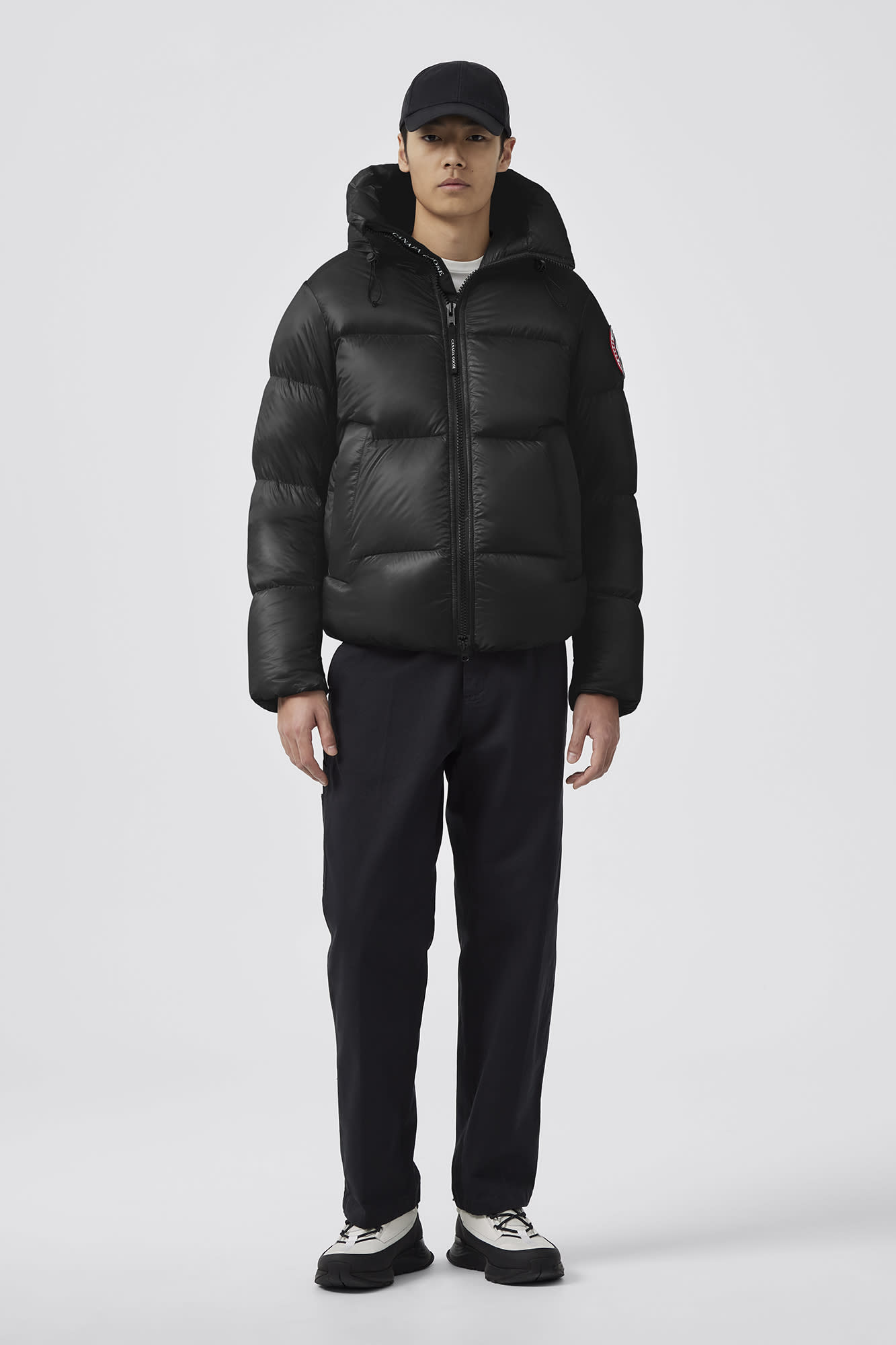
The Canada Goose Crofton Puffer isn't just another jacket. It’s basically everywhere now. You’ve seen it on the subway, in the grocery store, and probably all over your Instagram feed during the first real cold snap of the year. But here’s the thing: most people buying this jacket don't actually know what they’re getting into when they drop nearly a thousand dollars on a piece of nylon and down. It’s a weirdly specific niche in the outerwear world. It’s not the heavy-duty parka that can survive an Arctic expedition, but it’s way more than a simple windbreaker. Honestly, it’s the middle ground that Canada Goose finally got right after years of focusing almost exclusively on those massive, heavy Coyote-fur trimmed coats.
If you’re looking for a jacket that makes you look like you’re about to summit Everest while you’re actually just grabbing a latte, this is it. But the Crofton Puffer serves a real purpose for people who hate being weighed down. I’ve spent years tracking how luxury outerwear brands pivot from "functional gear" to "lifestyle staples," and this jacket is the poster child for that shift.
The Weight Problem Nobody Mentions
Most high-end winter coats are heavy. Like, physically exhausting to wear for more than an hour. The classic Canada Goose Expedition Parka weighs a ton because it’s built for -30°C. But the Canada Goose Crofton Puffer is different. It’s light. It feels like you’re wearing a cloud, or maybe a very expensive sleeping bag. This is thanks to the Recycled Feather-Light Ripstop fabric. It’s a mouthful, but basically, it’s a high-tenacity nylon that’s meant to resist tearing while keeping the weight down to almost nothing.
I’ve seen people complain that it feels "cheap" because it isn't heavy. That’s a huge misconception. In the world of technical gear, lightness is a premium feature, not a flaw. If you can stay warm without feeling like you're wearing a lead vest, the engineers have done their job.
The jacket is rated for temperatures between 0°C and -15°C (32°F to 5°F). That’s the "sweet spot" for most people living in cities like New York, Toronto, or London. If you live in Winnipeg or Fairbanks, this is your fall jacket, not your January jacket. It’s important to be real about that. If you try to wear this in a blizzard with -40 winds, you’re going to have a bad time. The Crofton is a TEI 3 (Thermal Experience Index) jacket. It’s versatile.
What’s Actually Inside the Canada Goose Crofton Puffer?
Let’s talk about the guts of the thing. Canada Goose uses 750 fill power responsibly sourced duck down. Now, "fill power" is one of those terms that brands love to throw around to sound fancy. Essentially, it measures the loft or "fluffiness" of the down. The higher the number, the more air it traps, and the warmer it is for its weight. 750 is high. It’s not the absolute highest—some specialized mountaineering gear hits 900 or 1000—but for a daily driver, it’s excellent.
The construction is also worth looking at. They use a "baffle" system. You can see the horizontal lines across the jacket. These aren't just for style. They keep the feathers from all falling to the bottom of the jacket. Imagine if all the insulation ended up around your waist while your chest was freezing. Not great.
One detail that I personally love is the backpack straps. Yes, interior backpack straps. It sounds gimmicky until you’re in a crowded mall or a heated train station. You can take the jacket off and wear it like a cape. It keeps your hands free. You don't look as ridiculous as you think you do, and it beats sweating through your shirt because the heating is cranked to 80 degrees indoors.
The Durability Reality Check
Is it bulletproof? No. The Ripstop fabric is tough, but it’s still thin. If you snag this on a sharp piece of metal or a jagged brick wall, it might tear. That’s the trade-off for the weight. Canada Goose does offer a limited lifetime warranty, but they are very clear that "wear and tear" isn't covered. If you rip it, you’re probably paying for the repair.
I’ve noticed that the sheen on the Crofton Puffer can be a bit polarizing. It has a slight shine to it. Some people love that "technical" look; others think it looks a bit too much like a trash bag. If you want a matte finish, you’re looking at the wrong model. You’d be better off with something from their Black Label collection or a different material entirely.
Practicality vs. Hype: The Real Cost
Let’s be honest for a second. You’re paying for the patch. The red, white, and blue "Arctic Program" disc on the arm adds a couple of hundred dollars to the price tag. You can get a high-quality down jacket from Patagonia or North Face for half the price.
But there’s a nuance here. The Canada Goose Crofton Puffer holds its value incredibly well. If you buy one today for $950 and decide you hate it in two years, you can probably sell it on a resale site for $500 or $600 if you've taken care of it. Try doing that with a mid-tier brand. You can't. It’s almost like an investment in a weird way. Not a good one, like stocks, but a better one than buying a disposable fast-fashion coat that ends up in a landfill by March.
Also, the fit is "Classic Fit." It’s not super slim, but it’s not boxy either. It leaves just enough room for a hoodie underneath. I always suggest people stay true to size. If you size down to get that "skinny" look, you’re going to compress the down, which actually makes the jacket less warm. The air trapped in the down is what keeps you warm. Squeeze the air out, and you're just wearing thin nylon.
Portability and Travel
This is where the Crofton really wins. It’s packable. It actually folds into its own internal pocket. When it’s packed down, it’s about the size of a small travel pillow. For anyone who travels frequently, this is a game-changer. You can use it as a pillow on the plane and then have a serious winter coat when you land in a colder climate.
I remember talking to a frequent traveler who swore by the Crofton because it cleared up so much space in his carry-on. Most winter coats take up 50% of a suitcase. This takes up about 5%.
Common Misconceptions and Errors
A lot of people think the "Crofton" name refers to a specific warmth level. It doesn't. There’s a Crofton Vest, a Crofton Hoody (which is thinner), and the Crofton Puffer. The Puffer is the warmest of the bunch. Don't get them confused when you're shopping online, or you might end up with a very expensive sweater instead of a winter coat.
Another thing? Water resistance. This jacket is water-resistant, not waterproof. If it’s a light drizzle or a dry snow, you’re fine. The DWR (Durable Water Repellent) coating will make the water bead off. But if you’re standing in a downpour for twenty minutes, the down will get wet. Once down gets wet, it loses all its insulating properties and turns into a heavy, clumpy mess. If you live in a place where "winter" is mostly just cold rain (I’m looking at you, Seattle and Vancouver), you need a shell over this or a different jacket entirely.
How to Spot a Fake
Because the Canada Goose Crofton Puffer is so popular, the market is flooded with fakes. Some are terrible, but some are surprisingly good. Here is what you actually need to look for:
- The Badge: The embroidery should be clean. The maple leaves shouldn't look like blobs. The "Canada Goose" lettering should be consistent. On fakes, the North Pole often looks like a weirdly shaped amoeba.
- The Hologram: There is a small hologram tag inside. If it’s missing, walk away.
- The Zipper: They use YKK zippers. They should feel smooth, not catchy.
- The Feel: Real down has a specific "rebound." If you squish the jacket, it should puff back up almost instantly. Fakes often use polyester fill, which feels flatter and heavier.
The Competition: Is There Anything Better?
If you aren't married to the brand, there are alternatives. The Moncler Maya is the obvious competitor, but it’s even more expensive and leans much harder into the "luxury" side than the "functional" side. Then there's the Arc'teryx Thorium. It’s a technical masterpiece, arguably better built for actual mountain use, but it lacks the "status" that some people want from Canada Goose.
The Crofton sits in this weird, perfect spot. It’s more stylish than the purely technical brands but more functional than the pure fashion brands.
Actionable Steps for Potential Buyers
If you’re seriously considering pulling the trigger on a Canada Goose Crofton Puffer, here is the roadmap to making sure you don't regret it.
First, check your climate. If your winter stays above 20°F most of the time, this is your primary coat. If it regularly hits sub-zero, this is your secondary coat for "warmer" days.
Second, go try it on in a store if you can. The "Classic Fit" can be tricky. Some people find the sleeves a bit long, which is intentional to keep your wrists warm, but it can feel weird if you aren't used to it.
Third, choose your color wisely. The black is the safest for resale value and hiding dirt. The lighter colors, like the silver or the "North Star White," look incredible but show every single smudge of city grime. Down jackets are a pain to wash—you usually have to dry clean them or use a very specific down wash and a dryer with tennis balls—so think about how much maintenance you’re willing to do.
Finally, register the product. Canada Goose has a pretty robust system to track their items. It helps with the warranty and proves authenticity if you ever decide to sell it later.
Don't buy this jacket thinking it's a "buy it for life" rugged work coat. It's a high-performance piece of lifestyle gear. Treat it with a bit of respect, avoid sharp corners, and it’ll probably be the most comfortable thing you wear all winter.
Check the seams for any loose threads right out of the box. While their quality control is usually top-tier, even a premium brand misses a stitch occasionally. If you see down leaking out of a seam in large amounts, it’s a defect. A few feathers here and there? That’s just the nature of down.
Buy it from an authorized retailer. Avoid those "80% off" websites. They are scams. Every single one of them. Canada Goose almost never goes on sale for that much. If the price is too good to be true, you're buying a fake or just giving your credit card info to a thief.
Stick to the basics, understand the temperature ratings, and you’ll actually enjoy the winter for once.