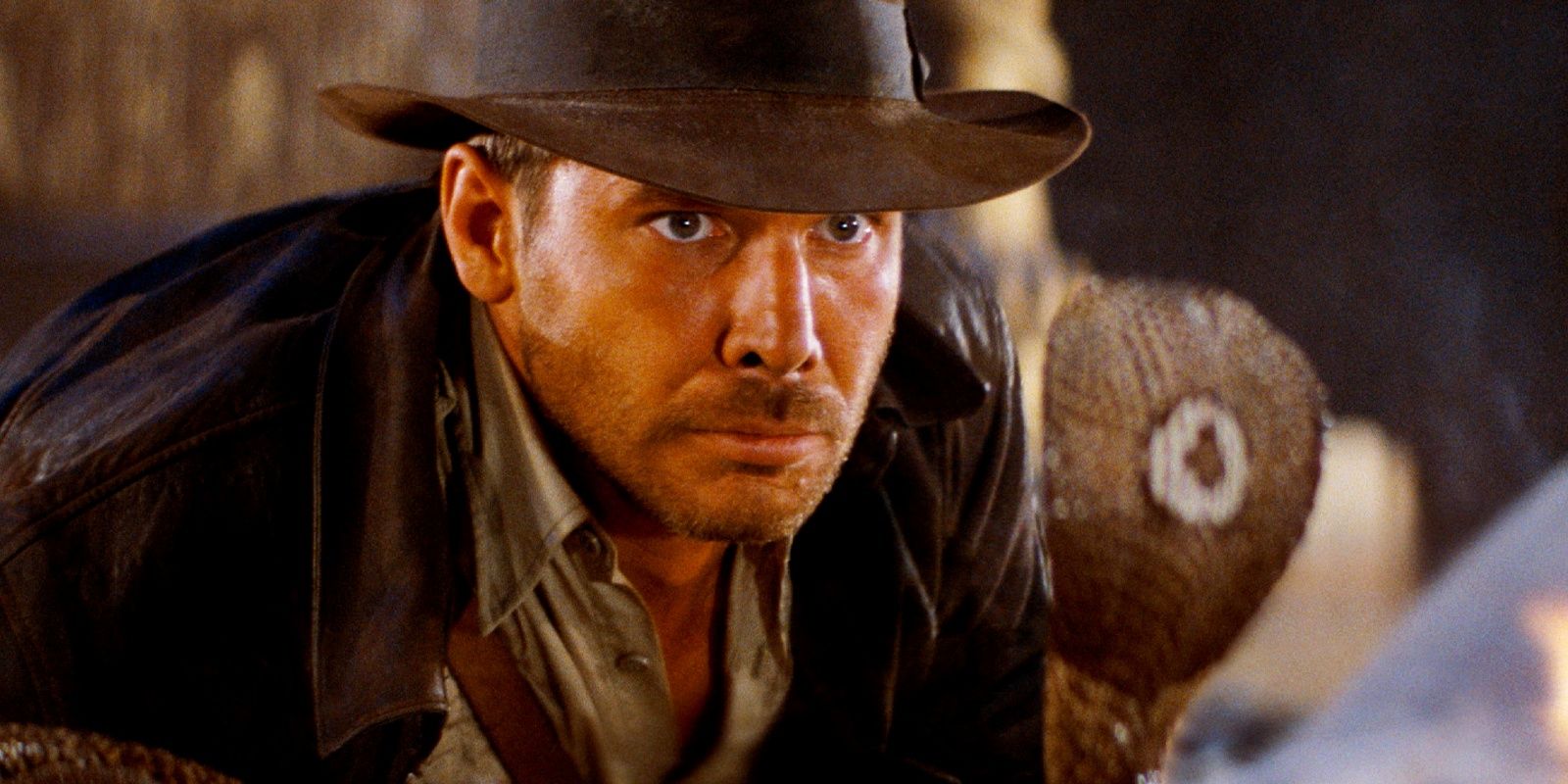
Ever since Indy stumbled into that sun-drenched canyon in Alexandretta, people have been obsessed with one question: is Indiana Jones immortal? It’s a fair thing to ask. He drank from the literal Cup of Christ. He watched a 700-year-old Knight standing guard in a dusty cave. Then, decades later, we see him survive a nuclear blast inside a lead-lined fridge and, eventually, grapple with time travel in a dial-based Nazi plot. He’s been beaten, shot, poisoned, and dragged behind trucks.
Yet, he keeps ticking.
But the "immortality" in the Indiana Jones universe isn't a superhero healing factor. It's way more complicated than that. If you’re looking for a simple "yes" or "no," you’re going to be disappointed because the lore itself is intentionally cagey. Most fans point to The Last Crusade as the smoking gun. They remember the water hitting Indy’s throat. They remember the wound on Henry Jones Sr. vanishing instantly.
But there’s a catch. A big one.
The Rules of the Holy Grail
Let's look at the actual mechanics of the Grail. It’s not a portable battery for eternal life. When Indiana Jones drinks from the "cup of a carpenter," he experiences a localized miracle. The Knight explains it pretty clearly: "The Grail cannot pass beyond the Great Seal." That’s the boundary line. The immortality offered by the relic is tethered to the temple itself.
Think about the Knight. He’s been alive for centuries, but he’s stuck in one room. He’s essentially a prisoner of his own longevity. If the Grail gave you permanent, "take-it-to-go" immortality, the Knight could have just packed up and headed to a beach in the Mediterranean. He didn't. He couldn't.
So, when Indy and his father cross that seal at the end of the movie, the "clock" starts ticking again.
Why the "Healing" Isn't Forever
When Indy poured the water on his father's gunshot wound, it healed. Gone. That's a physical restoration. But restoration isn't the same as being invincible. If someone shot Henry Jones Sr. again ten minutes later outside the temple, he would have bled out just like anyone else. The Grail provides a "reset" to your health and, if you stay within its proximity and drink regularly, it halts the aging process.
Once you leave? You’re just a very healthy guy with a great story.
George Lucas and Steven Spielberg have talked about this in various making-of features and interviews over the years. The intent was never to turn Indiana Jones into an unkillable god. That would kill the stakes. If Indy can’t die, why do we care when he’s surrounded by snakes or dangling off a tank?
The "Young Indiana Jones" Problem
Here is where things get weird. If you grew up watching The Young Indiana Jones Chronicles, you know there are "bookend" segments featuring an elderly Indy. This version of the character, played by George Hall, is 93 years old. He has an eyepatch. He has a daughter.
He is very much an old man.
If Indiana Jones was immortal, he wouldn't be hobbling around New York in the 1990s with a cane and a grumpy attitude. He’d look like Harrison Ford in his prime, or at least he wouldn't be showing the standard signs of geriatric decline. The existence of "Old Indy" proves that he ages.
Dial of Destiny reinforces this. We see a man who is physically hurting. He’s lonely. He’s stiff. He’s mourning his son. This isn't the behavior of a man who possesses the "breath of God" in his veins. He is a man who has been used up by history. He’s a relic himself.
Did the Grail Water Help Him Survive the Nuke?
This is the big conspiracy theory. You know the scene. Kingdom of the Crystal Skull. The "nuke the fridge" moment that launched a thousand memes.
Some fans argue that the only reason Indy survived the radiation and the literal kinetic impact of being launched miles through the air is because of the Grail water he drank in 1938. The theory suggests that while the "eternal life" aspect wore off, his cells were somehow bolstered. Maybe his bone density is higher? Maybe his DNA has a "protective coat" from the holy water?
Honestly? It's a fun head-canon. But it’s not supported by the script.
The movie presents the lead-lined fridge as a (highly dubious) scientific shield. It’s pulp logic. In the world of Indiana Jones, if you hide in the right box, you survive the blast. It’s not meant to be a hint at his divinity. It’s just Indy being lucky. He’s always been lucky.
The Five Levels of "Immortal" Indy
To really understand the debate, we have to look at the different ways "immortality" shows up in the series. It’s not just the Grail.
- The Blood of Kali: In Temple of Doom, Indy is forced to drink the Blood of Kali. It puts him in a "Black Sleep." Does it have long-term effects? Probably not, but it shows his body is a vessel for all sorts of supernatural junk.
- The Great Seal: As mentioned, the Grail's power is geographic.
- The Dial of Archimedes: In the latest film, Indy doesn't seek immortality, but he seeks a "fissure in time." If he had stayed in the past, would he have lived "forever" in the eyes of history? Technically, yes.
- The Ark of the Covenant: He survived looking at it because he didn't look at it. Survival through respect, not through being a demi-god.
- The Knight's Longevity: The Knight is the only truly immortal person we see, and he's more of a cautionary tale than a goal.
The Narrative Risk of an Unkillable Hero
If Indiana Jones were truly immortal, the movies would suck.
Action cinema relies on the "fragility" of the lead. Look at John Wick. We like him because he bleeds. We like Indy because he loses. He gets punched in the face and it hurts. He's terrified of snakes. If he were a walking deity, the tension evaporates.
James Mangold, who directed Dial of Destiny, leaned heavily into the "human" side of Indy. He wanted to show a man who was out of time. A man who felt the weight of every fall he ever took. That is the antithesis of immortality.
Factual Takeaways on Indy’s Lifespan
We have to look at the "Old Indy" footage as the definitive end of the timeline. Even though those segments were edited out of some later DVD releases, they remain part of the expanded Lucasfilm lore.
- Fact 1: The Grail water heals existing wounds immediately.
- Fact 2: The Knight lived 700 years because he stayed at the temple.
- Fact 3: Indiana Jones ages in real-time between 1936 (Raiders) and 1969 (Dial of Destiny).
- Fact 4: He eventually dies. We don't see it on screen, but the transition from Harrison Ford to the George Hall version (in the original broadcast) confirms a natural human lifespan, albeit a long one.
Basically, Indy is just a guy who had a very, very healthy drink once in the 1930s. It might have cleared up his sinuses and fixed his dad's bullet wound, but it didn't turn him into an Egyptian god.
What You Should Do Next
If you want to settle the debate for yourself, there are a few things you should actually watch. Don't just take the memes at face value.
- Watch the "Old Indy" Bookends: Find the original Young Indiana Jones footage on YouTube. It changes your perspective on his "immortality" instantly.
- Analyze the Great Seal Scene: Pay close attention to the Knight's dialogue in Last Crusade. He literally warns them that the power is localized.
- Read the "Internal Canon" Books: There are several licensed novels that bridge the gaps between movies. They consistently treat Indy as a man who is falling apart physically by the time the 1950s roll around.
Indy isn't a god. He’s a survivor. And honestly, isn't that way more impressive? A regular man facing down the supernatural and coming out the other side with nothing but a hat and a whip is a much better story than a guy who simply can't die.
To dig deeper into the lore, look for the The Complete Making of Indiana Jones by J.W. Rinzler. It’s the gold standard for understanding what Lucas and Spielberg actually intended for the character's physical limits. You'll find that they always viewed him as a "man of bruises," not a man of magic.
Stop looking for the supernatural explanation for his survival and start looking at his grit. That’s the real "magic" of the character. He survives because he refuses to give up, not because he drank from a shiny cup.
Next Steps for Fans:
Go back and re-watch the final sequence of The Last Crusade. Notice that the Knight doesn't try to stop them from leaving; he just says "farewell," knowing that by crossing the seal, they are choosing mortality. Then, check out the Indiana Jones and the Ultimate Guide by DK Publishing for a cross-referenced timeline of his health and injuries throughout the decades. It’s the best way to see the "wear and tear" that proves he’s just as human as the rest of us.