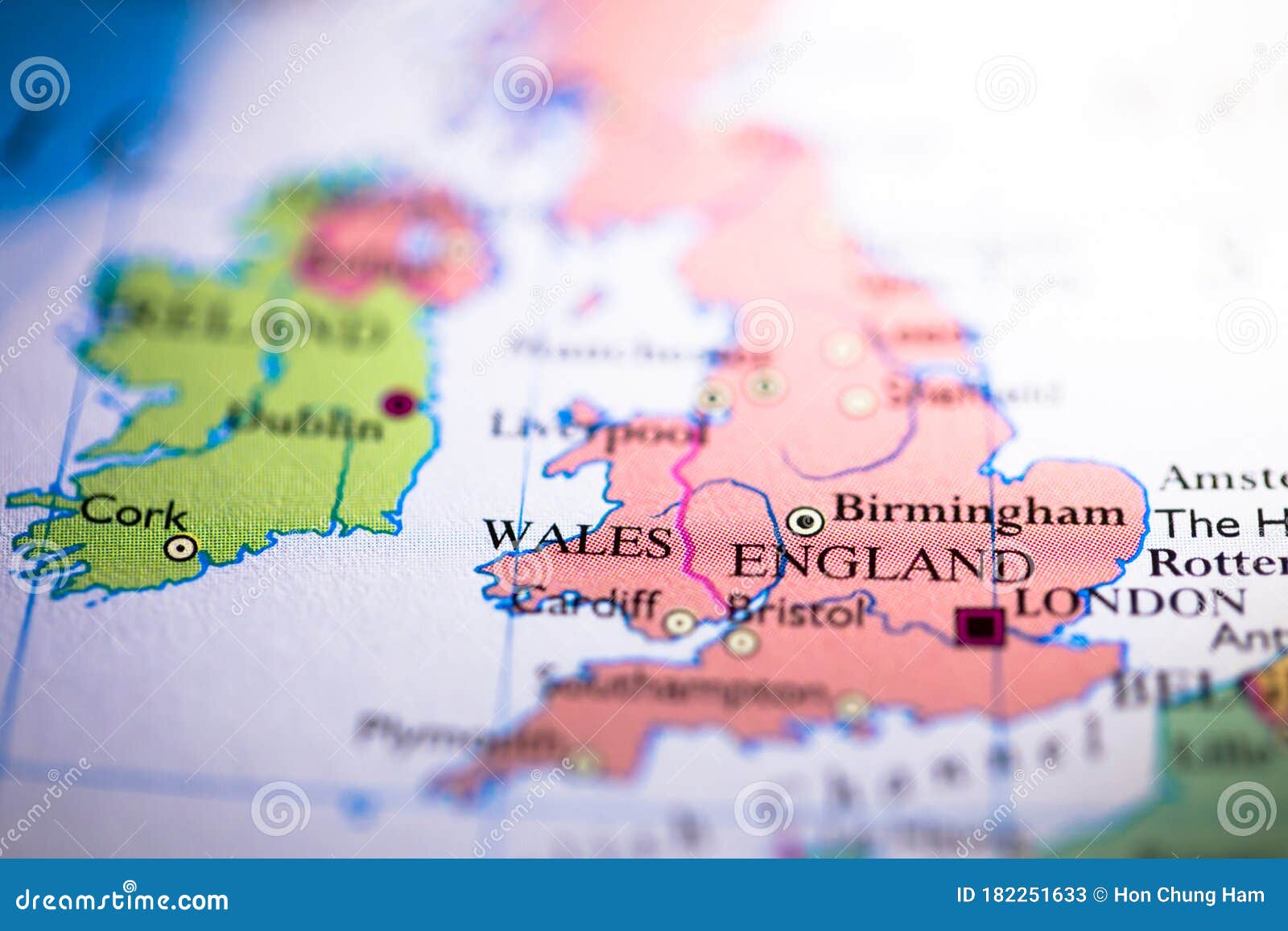
You're looking at a map and things get blurry. It happens. People often ask what continent is England, and while the answer seems like a quick one-liner from a primary school geography quiz, the reality of England's placement is tied up in thousands of years of shifting tectonic plates, rising sea levels, and some pretty intense political history.
England is in Europe.
Specifically, it’s part of the United Kingdom, which occupies the British Isles. It isn't its own continent, though sometimes the way people talk about "The Continent" (referring to mainland Europe) makes it sound like England is drifting off in its own private dimension. It’s an island nation. Or rather, a nation on an island.
The Tectonic Reality of England’s Location
Basically, England sits on the Eurasian Plate.
If you could drain the English Channel—which, honestly, would be a mess—you’d see that England is physically connected to the rest of Europe by the continental shelf. It’s not a deep-sea island like Hawaii. About 8,000 years ago, you could have actually walked from what is now Norfolk straight over to the Netherlands. There was a massive plain called Doggerland. It was a hunter-gatherer paradise until the glaciers melted, the sea levels rose, and a massive underwater landslide off the coast of Norway (the Storegga Slide) likely sent a tsunami that finished the job.
Now, we just have the North Sea and the Channel. But geologically? England is as European as France or Germany. It’s just a bit damp and separated by twenty-odd miles of salt water at its narrowest point, the Strait of Dover.
Why Do People Get Confused About What Continent England Is In?
It's usually a terminology trap.
You’ve got England, Great Britain, the United Kingdom, and the British Isles. People use them interchangeably, but they aren't the same. England is a country. Great Britain is the island. The United Kingdom is the political sovereign state (England, Scotland, Wales, and Northern Ireland). Because "The Continent" is a common British phrase used to describe mainland Europe, travelers often say, "I'm going to the continent for the summer."
This language creates a mental gap. It makes it feel like England is a separate entity entirely.
Then there's the political side. Mention "Europe" in a pub in Manchester or Birmingham, and you might get a lecture on Brexit. Since the UK left the European Union (EU) in 2020, there’s been a massive surge in people wondering if the UK—and England by extension—is still "in" Europe.
Yes. It is.
The EU is a club. Europe is a continent. You can leave the club, but you can't move the tectonic plate. Unless someone develops some truly terrifying thruster technology, England is staying right where it is on the European map.
The British Isles vs. Mainland Europe
England occupies the largest portion of the island of Great Britain. To its west is Ireland, and to the north is Scotland. When looking at what continent is England through a geographical lens, it’s classified as being in Western Europe.
Biologically, England shares almost all its native species with the rest of the continent. The oak trees, the foxes, the hedgehogs—they all migrated across those land bridges before the water moved in. Even the Roman Empire saw England as just another province of their European territory, calling it Britannia.
A Quick Breakdown of the Neighbors
- France: Just across the Channel. On a clear day, you can see the French coast from the white cliffs of Dover.
- Ireland: To the west, across the Irish Sea.
- The North Sea: Separates England from Scandinavia and the Low Countries.
The "Island Mentality" and Regional Identity
Living on an island changes your perspective.
For centuries, England’s "separateness" was its greatest defense. The Spanish Armada, Napoleon, and even the forces of the twentieth century found that the English Channel was a formidable moat. This has led to a cultural feeling of being distinct from "the Europeans."
Ask a person in London if they feel European, and you’ll get a hundred different answers. Some identify strongly with the broader continent’s history and art. Others feel that the UK is a bridge between Europe and the Americas, a sort of mid-Atlantic cultural hub.
But geography doesn't care about feelings.
If you’re filling out a visa application, booking a flight, or studying for a geography exam, England is 100% in Europe. It’s located in the Northern Hemisphere and the Eastern/Western Hemispheres (the Prime Meridian actually runs right through Greenwich, London).
How England Compares to Other European Countries
England is roughly 50,000 square miles. That makes it smaller than Greece but larger than Iceland. It’s densely populated, especially in the Southeast.
When people ask what continent is England, they are sometimes comparing it to places like Australia. Australia is a country and a continent. England is just a country on a much larger continent. It doesn't even take up its whole island.
Common Misconceptions to Toss Out
- England is a continent. Nope. It’s not even an island (Great Britain is the island).
- Leaving the EU moved England to a different continent. Physically impossible.
- The English Channel means it’s not Europe. By that logic, Sicily isn't in Europe and Tasmania isn't in Australia. Separation by water doesn't change continental status.
Actionable Insights for Your Next Trip or Study Session
If you’re planning to visit or just trying to wrap your head around the geography, here is what you actually need to know:
- Currency Check: Even though England is in Europe, it does NOT use the Euro. It uses the British Pound Sterling (£). Most of the continent uses the Euro, so keep your wallets organized if you're hopping across the Channel.
- Travel Documents: Since Brexit, if you're a European citizen going to England (or vice versa), you usually need a passport now, not just a national ID card. Check the latest UK Government travel guidelines before you pack.
- The Channel Tunnel: You can actually drive or take a train (the Eurostar) from England to the rest of Europe. It’s a 31-mile tunnel under the sea. It takes about 35 minutes to cross. It’s the physical link that proves just how close the continent really is.
- Time Zones: England follows Greenwich Mean Time (GMT). Most of Western Europe is one hour ahead (Central European Time).
Understanding that England is in Europe is the first step in grasping how its history has unfolded. From the Norman Conquest in 1066 to the Industrial Revolution, England’s story is a European story.
To get a better feel for this, grab a physical map or open Google Earth. Zoom out. See how the British Isles sit on that shallow shelf of the Atlantic? Notice how the water between England and France is actually quite shallow compared to the deep ocean? That’s the "submerged" Europe.
Next time someone asks you what continent is England, you can tell them it's Europe—but with a side of island independence and a very long, watery history.
Next Steps for Your Research:
- Check the current entry requirements for the UK if you're traveling from the EU or the US.
- Look up a topographic map of the North Sea to see the "hidden" land bridge of Doggerland.
- Review the differences between the UK, Great Britain, and the British Isles to avoid the most common naming mistakes.