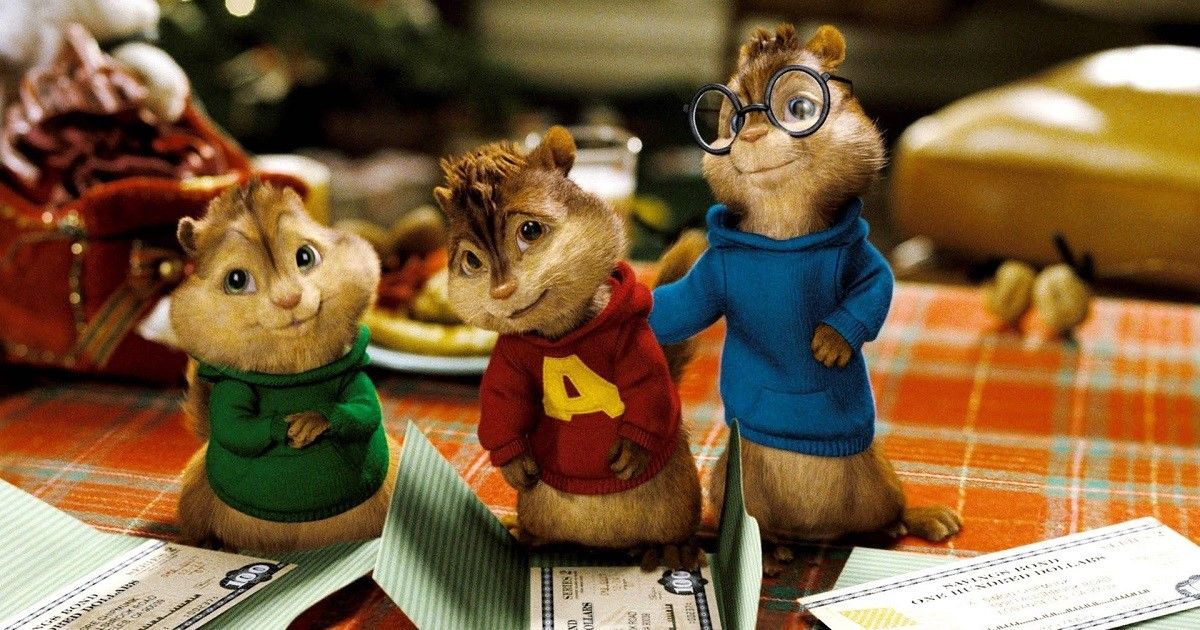
He’s the guy we all loved to hate. Ian Hawke. Mention his name to anyone who grew up in the mid-2000s and you’ll get an immediate reaction involving a sharp suit and a soul-crushing record contract. But if you look past the slapstick comedy of the 2007 live-action film and its sequels, you realize something kinda dark. This Alvin and the Chipmunks villain wasn't just some cartoonish bad guy twirling a mustache. He was a hyper-realistic satire of the music industry's most predatory instincts.
David Cross played him. He brought this frantic, desperate energy to the role that made Ian feel less like a movie villain and more like a guy you’d actually meet at a high-level meeting at Jive Records or Sony in 1999. He’s the personification of "it’s just business," which is exactly why he’s so terrifying to kids and so relatable—in a gross way—to adults.
The Rise and Fall of the Jett Records Empire
Ian Hawke starts the story as the head of Jett Records. He’s Dave Seville’s old college roommate. That’s an important detail because it establishes the power dynamic immediately. Dave is the struggling artist with integrity; Ian is the "success" who traded his soul for a corner office and a lot of expensive glass furniture. When the Chipmunks first show up, Ian doesn't see talent. He sees a "novelty act" with a high profit margin.
The industry term for what Ian does is exploitation.
Honestly, the way he manipulates Alvin, Simon, and Theodore is a masterclass in how child stars are handled in the real world. He gives them the toys. He gives them the sugar. He tells them their "dad" (Dave) is holding them back from being global icons. It’s the classic wedge strategy used by managers to isolate talent from their support systems. You've seen it happen to real-life pop stars. The movie just swapped out the human teenagers for CGI rodents with high-pitched voices.
Why the 2007 Movie Version Hits Different
The 2007 film reinvented the Alvin and the Chipmunks villain for a cynical age. In the original 1980s cartoons, the "villains" were often one-off crooks or rival bands like the Wolfman. They were obstacles. Ian Hawke was an antagonist. There's a difference. An antagonist challenges the protagonist's worldview. Ian challenged Dave’s belief that the Chipmunks were family. Ian insisted they were products.
He was right, according to the market.
Remember the scene where Ian tries to replace them with puppets because they're too tired to perform? Or when he tries to ship them off to Europe in a cage? It’s extreme, sure. But it echoes the grueling tour schedules that real-world labels push on young artists. Ian Hawke is basically the personification of a 360-deal. He wants the merchandising, the touring, the publishing—everything. He’s the guy who sees a miracle and asks how he can put a barcode on it.
The Squeakquel and the Desperation of Ian Hawke
By the time The Squeakquel rolls around, Ian has hit rock bottom. This is where the character gets interesting from a narrative standpoint. He’s living in the basement of the record company. He’s lost his prestige. He’s a joke. Most villains would just disappear, but Ian’s drive is fueled by pure, unadulterated spite.
Then he finds the Chipettes.
Brittany, Jeanette, and Eleanor represent his second chance. But notice how he treats them differently? He doesn't even try to pretend he cares about them like he did with the boys in the first movie. He’s more overt. He’s more aggressive. He’s lost the "cool executive" facade and replaced it with a desperate hunger for relevance.
- He locks them in a cage.
- He forces them to perform while they're sick.
- He tries to sabotage their relationship with the Chipmunks.
This shift in behavior makes him a much more traditional villain in the second film, but it also shows the trajectory of a disgraced industry mogul. He isn't trying to build a brand anymore; he's trying to survive. It’s a pathetic, downward spiral that actually makes you feel a tiny bit of pity—until you remember he’s trying to kidnap singing chipmunks for a concert in a mall.
Comparing Ian to Other Franchise Villains
If you look at the 2015 The Road Chip, the villain changes to Agent Suggs, played by Tony Hale. Suggs is an air marshal with a grudge. He’s funny, but he lacks the thematic weight of Ian Hawke. Suggs is an external threat—someone chasing them. Ian was an internal threat. He was a virus within their home and their career.
Even the 1987 The Chipmunk Adventure gave us Klaus and Claudia Furschtein. They were wealthy diamond smugglers. Again, they were just "bad guys." They didn't represent the existential threat to the Chipmunks' identity that Ian did. Ian wanted to change who they were. He wanted to turn Alvin into a bratty solo star and Simon and Theodore into backup dancers. That’s a deeper kind of villainy. It’s psychological.
David Cross and the "Sellout" Irony
There’s a bit of real-world meta-commentary here, too. David Cross is a legendary indie comedian. He’s known for Mr. Show and Arrested Development. For years, he was criticized by "hardcore" fans for taking the role of Ian Hawke. People called him a sellout.
Cross, in his typical blunt fashion, has been open about the fact that he did it for the money. He famously told The A.V. Club that the "Chipmunks money" paid for a lot of things in his life. The irony is palpable. A comedian who is being called a sellout plays a character who is the ultimate sellout. It adds a layer of snarky authenticity to the performance. You can tell Cross is having fun, but there’s a "can you believe I’m doing this?" twinkle in his eye that perfectly matches Ian Hawke’s own cynical vibe.
The Business Reality: Could an Ian Hawke Exist Today?
In 2026, the music industry looks very different than it did in 2007. The "big label" executive who controls everything is a dying breed. Today’s Alvin and the Chipmunks villain wouldn't be a guy in a suit at Jett Records. It would probably be a predatory TikTok manager or a tech CEO trying to train an AI on their voices without paying them.
Ian Hawke represented the "Old Guard." He was the gatekeeper.
- He controlled the radio play.
- He controlled the physical CD distribution.
- He controlled the press junkets.
In the streaming era, the Chipmunks could have just uploaded "Witch Doctor" to Spotify and bypassed Ian entirely. But that makes Ian a historical relic—a monument to a specific type of corporate greed that defined the early 2000s. He’s the "bad guy" of the transition period between the analog and digital worlds.
Misconceptions About Ian’s "Evil"
A lot of people think Ian hated the Chipmunks. I don't think he did. Honestly, I think he loved them—in the way a person loves a winning lottery ticket. He didn't have a personal vendetta against them until they humiliated him. In the beginning, he was just a guy following a logic that says: "If it makes money, it’s good. If it stops making money, it’s trash."
That’s not hatred. That’s something worse: indifference. To Ian, the Chipmunks weren't living beings. They were assets. When Alvin gets sick or tired, Ian doesn't see a suffering kid; he sees a "malfunctioning unit." This is the core of his villainy. It’s the total lack of empathy in the face of profit.
The Actionable Takeaway for Fans and Creators
If you’re watching these movies today, there’s actually a pretty solid lesson buried under the fart jokes and the high-pitched singing. Ian Hawke serves as a cautionary tale for any young creator entering the entertainment space.
Watch out for the "Ian Hawkes" of the world. 1. Read the fine print. Ian’s power came from the contracts Dave didn't sign and the Chipmunks did. In the real world, "standard" contracts are rarely standard.
2. Maintain your support network. Ian’s first move was to drive a wedge between the boys and Dave. If someone tells you your family and friends are "holding you back" from your true potential, they're usually trying to isolate you so they can control you.
3. Ownership is everything. The reason Ian could treat them like products is that he owned the rights to their performances. Modern artists like Taylor Swift have shown how important it is to own your masters.
Ian Hawke isn't just a funny character played by a comedian who’d rather be doing stand-up. He’s a warning. He’s the shadow side of the "American Dream" where success is measured solely by the size of your billboard and the depth of your pockets. He lost everything because he forgot that even in business, people—and chipmunks—are more than just line items on a spreadsheet.
If you want to understand the history of the franchise, you have to look at the villains. From the smugglers of the 80s to the air marshals of the 2010s, no one captured the zeitgeist quite like Ian. He was the perfect antagonist for a world that was just starting to realize how toxic celebrity culture could truly be. He was the guy we were supposed to laugh at, but deep down, we were also supposed to be a little bit afraid of him. Because in the real world, the Ians often win. Luckily, in the movies, they just end up getting hit in the face with a toy remote control.