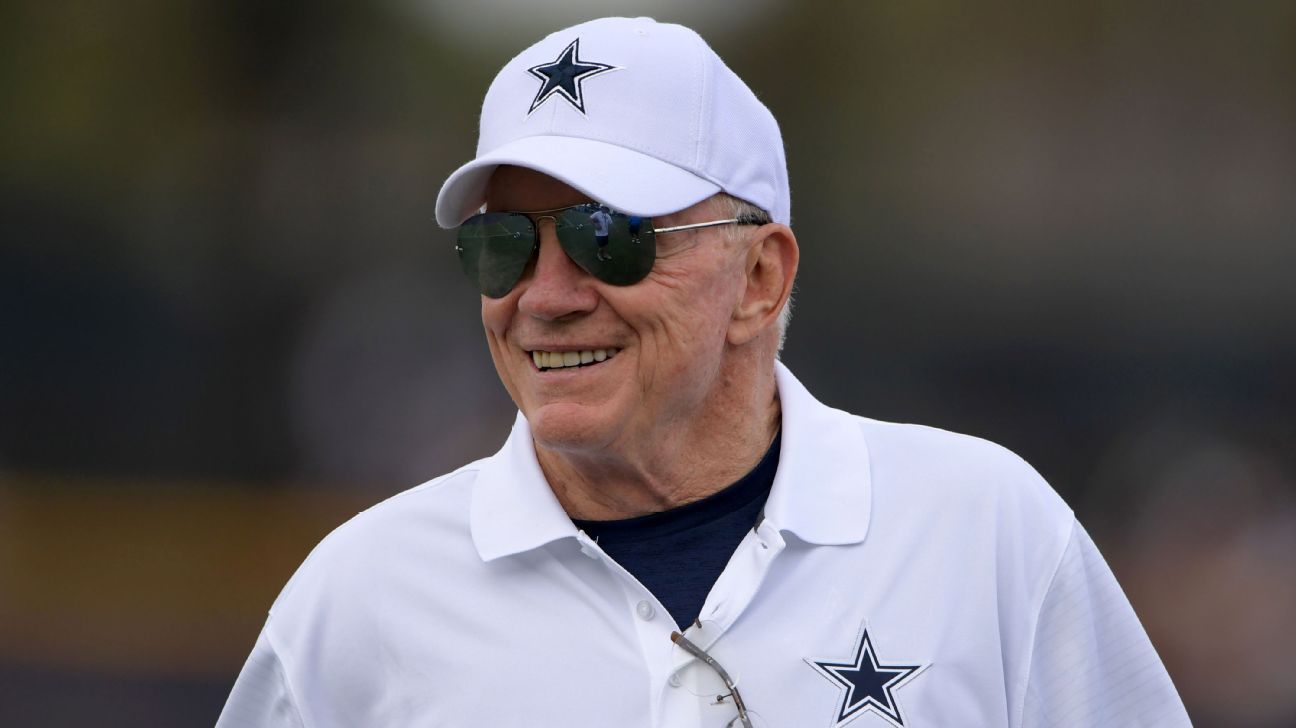
Jerry Jones bought the Dallas Cowboys for $150 million in 1989. Back then, people actually thought he overpaid. The team was bleeding a million dollars a month, they were losing games, and the "America's Team" moniker felt more like a sarcastic jab than a badge of honor. Fast forward to today, and that $150 million looks like the greatest bargain in the history of professional sports.
If you’re asking how much are the cowboys worth right now, the number is staggering. According to the latest 2024 and 2025 valuations from Forbes and Sportico, the Dallas Cowboys are worth roughly $10 billion.
Think about that. $10 billion.
That makes them not just the most valuable team in the NFL, but the most valuable sports franchise on the entire planet. They’ve eclipsed iconic soccer giants like Real Madrid, legendary baseball teams like the New York Yankees, and every NBA powerhouse you can name. But how does a team that hasn't sniffed a Super Bowl since the mid-90s keep seeing its price tag go up? It’s not about the trophies. Honestly, it’s about the business model Jerry Jones built from the ground up.
The $10 Billion Breakdown: Where Does the Money Come From?
When people talk about sports valuations, they often get bogged down in ticket sales. Tickets are peanuts. In the NFL, the real money is baked into a system that basically guarantees every owner gets rich, but the Cowboys have found ways to lap the field.
First, you’ve got the shared revenue. The NFL is a socialist utopia for billionaires. Every team gets an equal slice of those massive TV deals with CBS, NBC, FOX, ESPN/ABC, and now Amazon. In 2023, that meant every single team—including the bottom-dwellers—took home about $400 million just for existing.
But the Cowboys thrive in the "local revenue" category. This is the stuff they don’t have to share with the rest of the league.
AT&T Stadium is a Money Printing Machine
While most teams play in stadiums, the Cowboys play in a revenue engine. "Jerry World" isn't just for football. It hosts monster truck rallies, massive concerts, international soccer matches, and high-profile boxing vents. The luxury suites are the gold mine here. While a smaller market team might have 50 or 60 suites, AT&T Stadium has over 300. These suites can cost hundreds of thousands of dollars per season, and the demand never seems to dip, regardless of whether the Cowboys exit in the first round of the playoffs or not.
Sponsorships and the Blue Star Brand
Jerry Jones did something brilliant in the 90s. He sued the NFL so he could cut his own apparel and sponsorship deals. He won.
While other teams have their merchandise revenue pooled and split 32 ways, the Cowboys have a unique arrangement that allows them to keep a much larger chunk of their branding profits. They are the only team in the league that handles their own distribution and apparel manufacturing. When you buy a Cowboys hat, the path that money takes to Jerry’s pocket is much shorter than when you buy a Jaguars jersey.
Why the Cowboys Worth Outpaces the Rest of the NFL
The average NFL team is worth about $5.9 billion. The Cowboys are nearly double that. That gap is a result of "The Star" in Frisco.
The Star is the team's world headquarters, but it’s actually a massive real estate development. It’s got a luxury hotel, a medical center, high-end retail, and office spaces. It turned the Dallas Cowboys from a football team into a lifestyle brand and a real estate conglomerate. Most owners are just sports fans with deep pockets; Jerry Jones is a developer who happens to own a football team.
There’s also the scarcity factor. In the world of high finance, sports teams are "trophy assets." There are only 32 NFL teams. They almost never go up for sale. When the Denver Broncos sold for $4.65 billion and the Washington Commanders went for $6.05 billion, it set a new floor. If the Commanders—a team with a crumbling stadium and a decimated fanbase—are worth $6 billion, the Cowboys at $10 billion almost seems like a conservative estimate.
The Weird Paradox of Losing and Earning
It's the question every frustrated fan asks: Why do they keep making money if they don't win?
Winning actually doesn't move the needle as much as you'd think for a brand this established. The Cowboys have built a "televisual" empire. They are "America's Team" because people love to watch them win, but just as many people tune in hoping to see them lose.
Ratings drive the value.
The Cowboys consistently play in the most-watched games of the regular season. Whether it's the Thanksgiving Day slot or a random Sunday night game against the Giants, Dallas brings the eyeballs. Advertisers pay a premium for those eyeballs. Sponsors like MillerLite, Ford, and AT&T aren't paying for championship rings; they are paying for the millions of people who stare at the blue star every week.
The Future: Could the Cowboys Hit $15 Billion?
We are currently seeing a massive shift in who is allowed to own NFL teams. Recently, the league voted to allow private equity firms to buy minority stakes (up to 10%) in teams. This is a game-changer for how much are the cowboys worth in the long run.
When you open the door to institutional money—think Arctos Partners or Sixth Street—the valuations skyrocket because these firms have "infinite" capital. If Jerry Jones decided to sell 10% of the team to a private equity firm today, that transaction alone would likely be based on a valuation higher than the current $10 billion estimate.
Furthermore, the legalization of sports betting across the U.S. has created a new, massive revenue stream. Partnerships with gambling platforms are worth tens of millions. Then you have the potential for international expansion. The NFL is obsessed with London, Germany, and Mexico. The Cowboys are already the most popular team in Mexico. As the league grows globally, the Cowboys are the flagship brand leading the charge.
Common Misconceptions About the Cowboys' Value
One thing people get wrong is thinking the value is all "on paper." While Jerry Jones isn't likely to sell, the liquidity of these teams is increasing.
Another mistake? Thinking the value is tied to the players. In the NBA, a team's relevance can die when a superstar leaves. In the NFL, and specifically with Dallas, the brand is the superstar. Dak Prescott, Micah Parsons, CeeDee Lamb—they are all stars, but they become mega-stars specifically because they wear the star. The helmet creates the value, not the other way around.
What You Can Learn From the Cowboys Business Model
Even if you don't have $10 billion under the mattress, the way the Cowboys built their value offers some pretty sharp business insights:
- Vertical Integration: Don't just sell the product; own the factory. By controlling their own merchandising and distribution, the Cowboys kept margins that others gave away.
- Real Estate is King: The team used their brand to build "The Star," making them money 365 days a year, not just on the 8 or 9 days they play at home.
- Content is Currency: They stayed relevant in the off-season. The Cowboys are a 24/7 news cycle. They understand that attention is the ultimate commodity in the digital age.
If you’re tracking the financial health of the NFL, the Cowboys are the North Star. They represent the ceiling of what is possible when sports, entertainment, and real estate collide. The next time you see them lose a heartbreaker in January, just remember: Jerry Jones's bank account probably grew by another few million during the third quarter alone.
Next Steps for Following Team Valuations
To stay ahead of these numbers, keep an eye on the annual Forbes NFL valuation list usually released in August. Also, watch the specific "transaction multiples" when minority stakes in teams start selling to private equity firms over the next 18 months. Those real-world sales will provide the most accurate picture of just how far past the $10 billion mark the Cowboys have actually climbed.