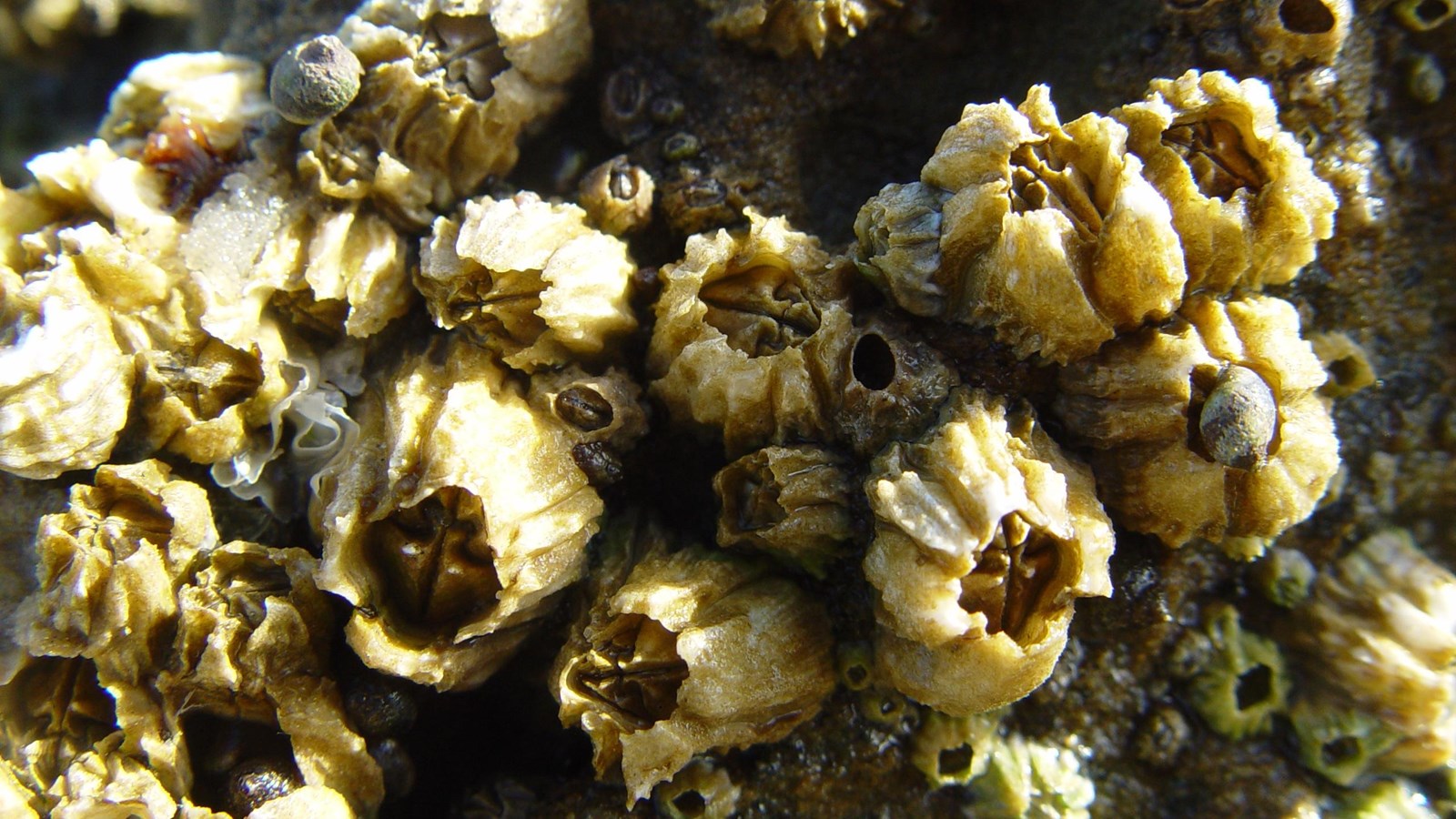
You've probably scraped your knee on one. If you own a boat, you definitely hate them. They look like sharp, stony little volcanoes glued to pier pilings, whale skin, or the bottom of a sailboat. But have you ever actually stopped to think about how are barnacles formed? It’s not like they just grow out of the rock like moss.
Barnacles are animals. Specifically, they are crustaceans, which means they’re technically cousins to the shrimp and lobsters you see on a seafood platter. But unlike their cousins, they spend most of their lives stuck in one spot, glued head-first to a surface.
It’s a bizarre way to live.
Most people assume they are just part of the scenery, but the process of how they get there is a high-stakes, microscopic odyssey. It involves swimming for your life, sniffing out the right neighborhood, and then literally cementing your forehead to a rock for the next decade.
From Tiny Swimmers to Permanent Residents
The story of how a barnacle begins isn't on a rock. It's in the water column.
Barnacles start as microscopic larvae called nauplii. When a group of adult barnacles releases these larvae, they don't look anything like the white shells you see at the beach. They look like tiny, one-eyed aliens with twitchy legs. They spend their first few weeks of life drifting with the current, eating plankton, and trying not to get eaten themselves.
They grow. They molt. They do this about six times.
Eventually, they reach a stage called the cyprid. This is the "scout" phase, and it’s the most critical part of how barnacles are formed. The cyprid doesn't even eat; its only job is to find a home. It has two incredibly sensitive antennae that are essentially high-tech chemical sensors.
Think of it like a tiny, swimming real estate agent.
The cyprid "walks" along surfaces using its antennae to "taste" the substrate. It’s looking for specific chemical cues. Usually, it wants to find other barnacles. Why? Because if other barnacles are surviving there, it’s probably a good spot with plenty of food and oxygen. If the cyprid likes the vibe, it prepares for the permanent move.
The Most Powerful Glue in the Ocean
Once the cyprid finds its "forever home," it does something radical. It releases a two-part cement from its antennae.
This stuff is incredible.
Naturalists and engineers have been obsessed with barnacle glue for years. It’s a protein-based substance that can harden underwater, which is a feat humans still struggle to replicate perfectly with synthetic adhesives. In fact, researchers at MIT and the Woods Hole Oceanographic Institution have spent decades trying to decode the exact molecular structure of this "bio-adhesive."
The bond is so strong that the only way to get a barnacle off is to literally break its shell or the surface it’s attached to. Once that glue sets, the cyprid undergoes a massive metamorphosis. It turns itself inside out, loses its swimming legs, and begins building a fortress.
The Architecture of the Shell
So, how is the actual shell formed? It’s a process of calcification.
Once the larva is stuck, it starts secreting calcium carbonate. This isn't just one solid piece. If you look closely at a barnacle—maybe wear some shoes so you don't cut your feet—you'll see that the shell is made of several overlapping plates.
- The outer wall consists of 6 to 8 hard plates that form the volcano shape.
- The operculum is a set of "trap doors" at the top.
- The base plate is the part actually glued to the rock.
The barnacle grows by adding new layers of calcium carbonate to the bottom and edges of these plates. It’s a slow process. Because the shell is rigid, the animal inside has to molt its soft exoskeleton inside the shell as it grows, which is a bit like trying to change your clothes inside a very tight, locked closet.
As the animal gets bigger, the shell gets taller and wider. If they are crowded together—which they usually are—they grow into tall, narrow columns because there’s no room to expand sideways. This is why some barnacle colonies look like a jagged, cramped city.
Why They Choose Your Boat (and How to Stop Them)
If you're a boat owner, understanding how barnacles are formed is a matter of financial survival. This is known in the maritime world as biofouling.
When barnacles attach to a hull, they create massive amounts of drag. We aren't talking about a little bit of friction. A heavy coating of barnacles can increase a ship’s fuel consumption by up to 40%. It ruins the hydrodynamics.
They love boats because boats move through water, which means a constant stream of fresh plankton is being delivered right to their mouths. It’s like living next to a 24-hour buffet.
Modern Prevention Methods
- Ablative Paints: These are "soft" paints that slowly wear away as the boat moves, taking the young barnacle larvae with them before they can get a solid grip.
- Foul-Release Coatings: Usually silicone-based, these make the hull so slippery that even the world’s strongest natural glue can't get a purchase.
- Ultrasonic Protection: Some modern systems send high-frequency sound waves through the hull, which supposedly disrupts the cyprids’ ability to settle.
Biologists like Dr. Daniel Rittschof at Duke University have studied how chemical signals (pheromones) can be used to trick barnacles into thinking a surface is "full," preventing them from settling in the first place. It's basically a "No Vacancy" sign for crustaceans.
The Ecology of the "Volcano"
It’s easy to view barnacles as pests, but they are vital to the ecosystem.
They are filter feeders. They have feathery appendages called cirri that they kick out of the top of their shells to grab bits of food from the water. In doing so, they help clean the water. They also provide a massive food source for sea stars, whelks, and certain types of fish.
Even the empty shells are useful. Once a barnacle dies, its hollow shell becomes a tiny apartment for small blennies, crabs, and snails.
There’s also the weirdness of their biology. Since they can't move to find a mate, barnacles have evolved the longest penis-to-body-size ratio in the entire animal kingdom. They have to "reach out" and find a neighbor to fertilize. It’s a practical, if somewhat bizarre, solution to the problem of being glued to a rock for life.
Key Insights for Navigating Barnacle Territory
If you're heading to the coast or managing a vessel, here is what you actually need to know about these "sticky" situations.
Check the Tides
Barnacles live in the intertidal zone. They are designed to stay closed and moist when the tide goes out. If you see a rock covered in them, that area will be underwater soon. Don't set up your beach towel there.
Wear Protection
Barnacle shells are made of calcite, and they are razor-sharp. "Barnacle rash" is a real thing for surfers and swimmers. If you're exploring tide pools, sturdy water shoes are a non-negotiable requirement.
Watch for "Bio-Glue" Research
Keep an eye on medical tech news. Because barnacle glue works in wet, salty environments, scientists are trying to adapt its proteins to create surgical glues that can heal wounds inside the human body or repair broken bones.
Clean Hulls Early
For boaters, the best time to clean is immediately after the boat comes out of the water. Once the cement dries and the animal dies, the calcium carbonate bonds even more tightly to the gelcoat. Pressure washing while "wet" is ten times easier than scraping while "dry."
Knowing how barnacles are formed makes you realize they aren't just rocks. They are incredibly successful survivors that have mastered a very specific, very difficult way of life. They've been around for hundreds of millions of years, and honestly, they'll probably be here long after our fiberglass boats have turned to dust.
Next time you see a cluster of them, look for the tiny "trap doors" at the top. If the tide is in, you might see them "kicking" their legs into the water. It’s a tiny, rhythmic dance of survival that’s been happening since the age of the dinosaurs.
Actions to Take Now
- Inspect your gear: Check any submerged equipment (docks, ladders, boat hulls) for the "sandpaper" feel of early cyprid attachment.
- Safety check: If you're hiking near tide pools, ensure your footwear has thick soles to prevent the calcite plates from slicing through.
- Scientific curiosity: Use a magnifying glass on a "dead" piece of driftwood or rock to see the intricate 6-plate structure that protects the animal.
---