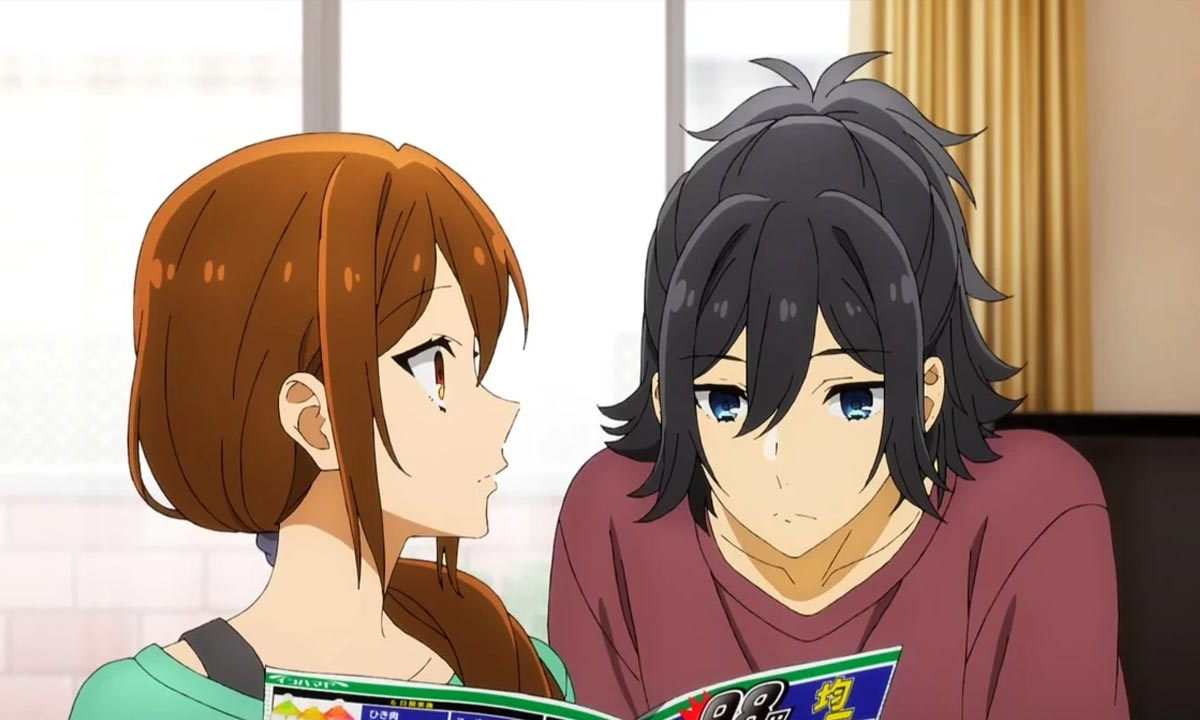
So, you finished the first season of Horimiya and felt that bittersweet ache of a story perfectly told. Hori and Miyamura graduated. They promised each other a future. It felt like the book was closed, locked, and put on the shelf. Then, CloverWorks announced more. Everyone started asking what is Horimiya season 2 about and whether we’d finally see their college years or maybe a wedding.
Honestly? It's not a sequel.
If you go into Horimiya: The Missing Pieces (that’s the official title for the second season) expecting a chronological "what happens next," you’re going to be very confused. It is basically a giant "deleted scenes" reel. When the original 2021 anime aired, the production team made a wild choice. They adapted the entire 125-chapter manga in just 13 episodes. To do that, they had to butcher the source material, cutting out dozens of hilarious, cozy, and weirdly specific subplots to make sure the main romance hit its emotional beats by graduation. Season 2 is CloverWorks going back to pick up everything they dropped on the cutting room floor.
The Weird Timeline of The Missing Pieces
It’s a bit of a head-trip.
One episode you’re watching the gang during their second year of high school, and the next, they’re dealing with a summer heatwave that happened months before the Season 1 finale. It doesn't follow a linear path. Instead, it fills in the gaps of the relationships that felt a little thin in the first run.
You’ve gotta understand that the manga, written by HERO and illustrated by Daisuke Hagiwara, is much more of an ensemble comedy than a straight-up romance drama. The first season focused almost exclusively on the "Hori-Miyamura" progression. Season 2? That’s where the side characters finally get to breathe. We get the sports festival. We get the school trip to Kyoto. These were massive arcs in the manga that fans were devastated to see skipped the first time around. It's essentially "Season 1.5" or a companion piece.
Why the "Missing Pieces" format actually works
Some people hate this. They wanted to see Miyamura with short hair navigating adult life. I get it. But there is something incredibly charming about revisiting these characters when they were still just "getting there."
Basically, the second season explores the mundane. It captures those tiny, insignificant moments that actually make up a high school friendship. Like the time the boys spent an entire afternoon arguing about who had the best "moe" traits, or the subtle tension between Remi and Sengoku that the first season glossed over. It’s less about the destination and more about the vibes.
If you loved the atmosphere of the first season but felt like it moved too fast, this is your correction. It slows everything down to a crawl. You see the group just hanging out in the student council room. You see the awkwardness of the guys at the public baths. It’s pure slice-of-life goodness without the pressure of a ticking clock leading toward graduation.
Exploring the "Unseen" Relationships
The heart of what is Horimiya season 2 about lies in the people who aren't Kyoko Hori or Izumi Miyamura. Specifically, we get a much deeper look at the Kyousuke and Yuriko dynamic—Hori’s parents. Their backstory is surprisingly layered, and seeing how Kyousuke became the lovable bum he is today adds a lot of context to Hori’s own personality.
Then there’s the Toru-Yuki-Sakura triangle. In Season 1, it felt a bit rushed, almost like a subplot that didn't get its due. The "Missing Pieces" allows for those quiet, painful moments of unrequited love to actually land. We see Yuki’s internal struggle with her own indecisiveness more clearly. We see Toru being a genuinely good dude in ways that aren't just "supporting the protagonist."
- The Sports Festival: This is a highlight. It shows Miyamura trying to participate in school life, which is a huge contrast to his loner past.
- The Kyoto Trip: Classic anime trope, but Horimiya does it with its signature brand of social anxiety and sweetness.
- Iura’s Secret Life: We finally see the "loud guy" of the group acting like a responsible older brother at home. It’s one of the best tonal shifts in the series.
Is It Worth Watching if You Don't Like Anthologies?
That’s the big question. If you’re a "plot-first" viewer, you might find the structure frustrating. There is no overarching conflict in Season 2. No "villain," no "will they or won't they." We already know they will. We’ve seen the end.
But for fans of the manga, this was a gift. The original anime felt like a "Greatest Hits" album. This season is the "B-Sides and Rarities." It’s for the people who want to spend more time in that world. You see the characters interacting in combinations we never got before, like Shuu Iura and Miyamura having actual conversations.
Honestly, the animation quality remains top-tier. CloverWorks didn't treat this like a throwaway project. The lighting, the soft color palettes, and the expressive character acting are just as good—if not better—than the 2021 run. It feels like a warm blanket. It's the kind of show you watch on a rainy Sunday when you just want to feel okay about the world for twenty minutes.
Navigating the Watch Order
You might be wondering if you should watch this during Season 1 or after.
Don't try to splice them together. It’s a mess.
The best way to experience it is to watch Season 1 in its entirety first. Let the emotional arc of Hori and Miyamura finish. Once you’re mourning the end of the show, start The Missing Pieces. It acts as a flashback that enhances your memory of the characters. If you try to watch it chronologically, the pacing will feel broken because the production styles and the way scenes are framed are slightly different between the two seasons.
Think of Season 1 as the movie and Season 2 as the limited series that expands the universe. Both are essential, but they serve different purposes. One is for the heart; the other is for the laughs.
Key Moments You Can't Miss
There are a few specific chapters adapted in Season 2 that are genuinely legendary in the fandom. The "Yuki and the coat" scene is a masterclass in subtle characterization. There’s also more focus on the younger brother, Souta, and his friend Yuna. It hints at the future without actually jumping forward in time, showing how the influence of Hori and Miyamura ripples down to the kids around them.
It also doubles down on the comedy. Season 1 had some funny moments, but it was primarily a romance. Season 2 is often hilarious. The interactions between the boys, especially the dynamic between Sengoku and Akane, are gold. Akane is the "perfect" guy who is secretly a disaster, and watching the others deal with his quirks is a highlight of the "Missing Pieces" run.
Actionable Steps for Horimiya Fans
If you're looking to dive back into the world of Katagiri Senior High, here is how to get the most out of the experience without getting lost in the timeline.
Watch Season 1 first. Seriously. Even though Season 2 takes place "during" the events of the first, it assumes you already know these people and love them. The emotional payoff of certain small interactions only works if you've seen the graduation.
Check out the "Hori-san to Miyamura-kun" OVAs. If you still can't get enough, these older animations use a very different art style (closer to the original webcomic). They cover some of the same ground but have a totally different vibe.
Read the manga from Chapter 1. Even with two seasons of anime, there are still tiny character moments and internal monologues that didn't make the cut. The anime is a 9/10, but the manga is the full, unedited vision of the story.
Focus on the side characters. When you start Season 2, shift your focus. Don't just look for Hori and Miyamura. Pay attention to Iura, Sakura, and Remi. That is where the real "meat" of this season lives.
The beauty of Horimiya isn't just in the big confessions or the dramatic hair-cutting scenes. It's in the way a group of different, slightly broken people found a place where they could just be themselves. Season 2 gives you more of that "place," and in the end, that’s exactly what the story needed. It’s not a sequel, but it is a completion.