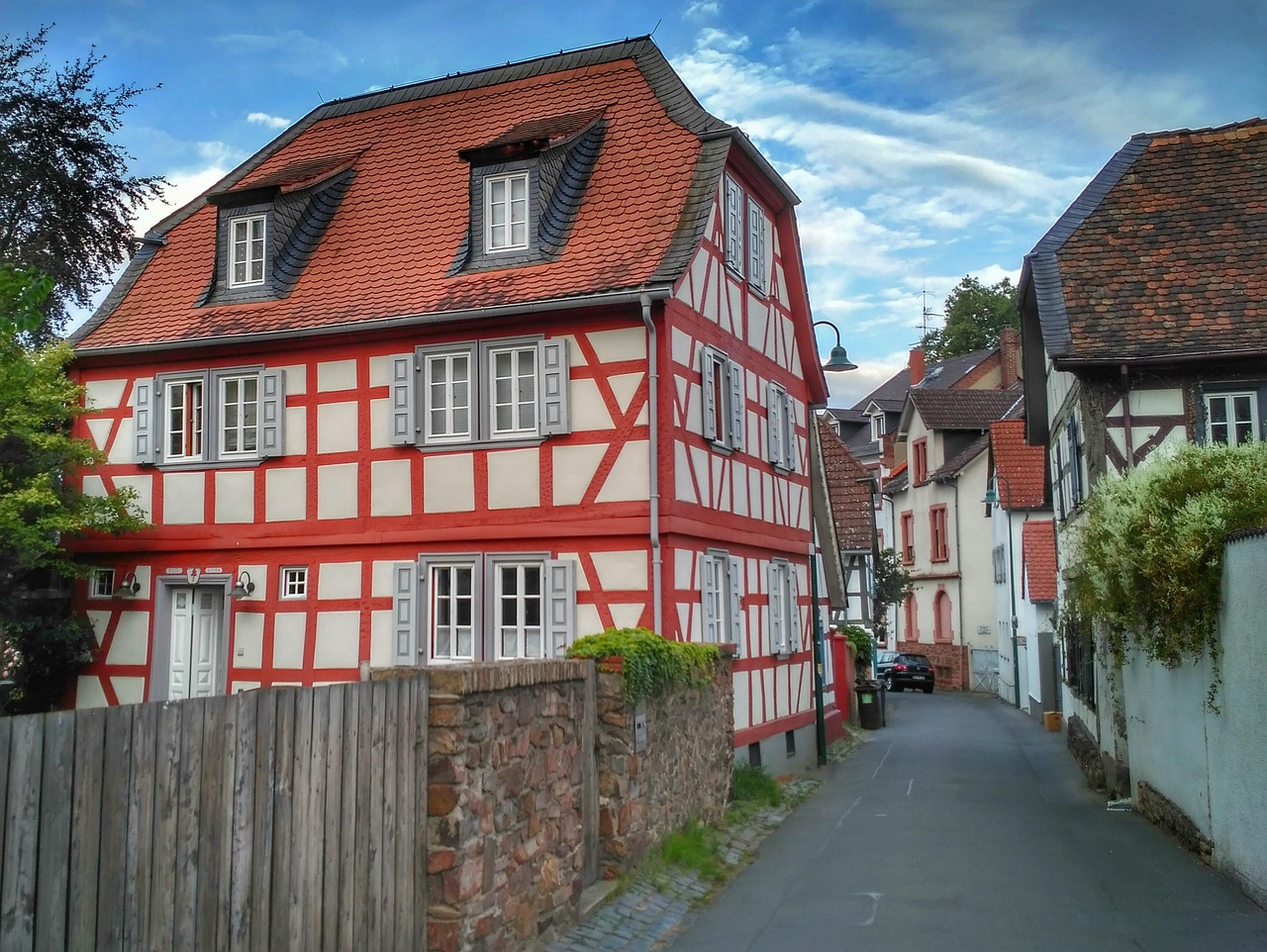
If you’ve ever walked through the Mathildenhöhe in Darmstadt and felt like you stepped into a weird, beautiful fever dream of gold leaf and brick, you’ve seen the ghost of Hesse-Darmstadt. It’s one of those places. You know the type. It’s a region that technically doesn't exist on a modern political map in its old form, yet it defines almost everything about the cultural DNA of south-central Germany.
Honestly, history books make it sound dry. They talk about the Landgraviate of Hesse-Darmstadt becoming a Grand Duchy in 1806 because Napoleon wanted a buffer state. That’s the "official" version. But the real story? It’s about a tiny state that punched way above its weight class, marrying into the Russian Czars' families and basically inventing the concept of modern "lifestyle" design before the rest of the world knew what a font was.
The Identity Crisis of Hesse-Darmstadt
The first thing you have to understand is that "Hessen" is a mess of historical borders. Back in the day, the House of Hesse split because of an inheritance dispute in 1567. Philip the Magnanimous died, and his sons did what siblings do—they fought over the toys. This created Hesse-Kassel and Hesse-Darmstadt.
While Kassel went the route of being a military powerhouse (selling "Hessian" mercenaries to the British during the American Revolution), Darmstadt took a different path. It was smaller. It was often poorer. It had to be smarter. By the time the 19th century rolled around, the Grand Duchy of Hesse (often called Hesse-and-by-Rhine) was a patchwork of territories. You had the capital in Darmstadt, but you also had Mainz, Worms, and Bingen.
This created a weird cultural split. You had the gritty, industrial energy of the Rhine-Main area mixed with the sleepy, intellectual vibe of the Odenwald forest. It wasn't a monolith. It was a collection of vibes.
Why the Grand Duchy Became a Global Hub
People forget that Darmstadt was basically the Silicon Valley of the 1900s, but for art and science. Grand Duke Ernst Ludwig was the catalyst. He was the grandson of Queen Victoria and a man who was, frankly, bored with traditional royalty. He didn't want more soldiers; he wanted more soul.
In 1899, he founded the Artists’ Colony on the Mathildenhöhe. He invited guys like Joseph Maria Olbrich and Peter Behrens to just... build. They created the Wedding Tower (Hochzeitsturm), which looks like a giant hand reaching into the sky. It was the birth of Jugendstil—the German version of Art Nouveau.
But it wasn't just about pretty buildings. This era in Hessen, Germany, saw the bridge between art and industry. Peter Behrens, who started in Darmstadt, went on to work for AEG and essentially invented corporate identity. Every time you look at a sleek logo or a well-designed kitchen appliance, you’re looking at a descendant of the Darmstadt school of thought.
The Russian Connection
This is the part that feels like a Netflix drama. The Grand Ducal family of Hesse-Darmstadt had some of the highest-stakes marriages in European history. Princess Alix of Hesse? She became Alexandra Feodorovna, the last Empress of Russia. Her sister Elisabeth also married into the Romanovs.
It ended in tragedy, obviously. The Russian Revolution wasn't kind to the Hessian princesses. But if you visit the Russian Chapel in Darmstadt today—a stunning piece of architecture built on actual Russian soil brought over by train—you can feel that weight. It’s a weirdly specific bit of geopolitical history sitting right in the middle of a German residential neighborhood.
Modern Hessen: Is the Legacy Still Alive?
If you go to Darmstadt today, people call it the "City of Science" (Wissenschaftsstadt). It’s home to the European Space Operations Centre (ESOC). When Europe lands a probe on a comet, they’re controlling it from a building that sits on what was once the Grand Duke’s turf.
The transition from a tiny duchy to a tech hub wasn't accidental. The Grand Dukes invested heavily in the TU Darmstadt (Technical University), which was the first university in the world to set up a chair for electrical engineering in 1882. Think about that. While most of the world was still figuring out lightbulbs, Hessen was teaching the theory behind them.
Today, the region of Hesse-Darmstadt is absorbed into the modern state of Hessen, but the cultural boundaries remain visible. You see it in the wine. The "Rheinhessen" region, which was part of the Grand Duchy, produces some of the most underrated Rieslings in the world. It’s a landscape of rolling hills and volcanic soil that feels worlds away from the skyscrapers of nearby Frankfurt.
What Most Travelers (and Locals) Get Wrong
Most people think of Hessen and think of Frankfurt. They think of banks and the airport. But Frankfurt was a Free City; it wasn't part of Hesse-Darmstadt. The rivalry is real.
Darmstadt locals will tell you their city is the "real" Hessen heartland. It’s smaller, greener, and arguably more intellectual. If you spend your whole trip in Frankfurt, you miss the actual soul of the region. You miss the Odenwald, where the Brothers Grimm gathered some of their darker tales. You miss the Bergstraße, where spring hits earlier than anywhere else in Germany, turning the whole highway into a corridor of pink blossoms.
Practical Insights for Exploring the Region
If you actually want to "feel" what remains of the old Grand Duchy, don't just look at monuments. Eat the food. Try the Handkäse mit Musik—a pungent cheese marinated in onions and vinegar. It’s an acquired taste. Actually, it's a "you'll hate it the first three times" taste. But it is quintessential Hessian soul food.
The Mathildenhöhe is a must. It’s now a UNESCO World Heritage site. Don't just take a photo of the tower. Walk through the plane tree grove. The ground is covered in crushed quartz that crunches under your feet in a specific way the architects planned a century ago. It’s intentional sensory design.
Check out the Merck connection. The pharmaceutical giant Merck is headquartered in Darmstadt. They started as a small pharmacy (the Engel-Apotheke) in the 1600s. The family stayed, the company grew, and they’ve funded much of the city's modern cultural life. It's a rare example of a dynasty that transitioned from feudalism to global capitalism without leaving its backyard.
Go to the Odenwald for a hike. Specifically, look for the Felsenmeer (Sea of Rocks). It’s a giant slope of boulders that looks like a river of stone. The Romans used it as a quarry. It’s weird, it’s ancient, and it explains why the people of this region have such a grounded, almost stubborn character.
How to Experience Hesse-Darmstadt Today
- Start at the Darmstadt State Museum (Hessisches Landesmuseum). It’s one of the few museums left that hasn't "modernized" its soul away. You’ll find everything from prehistoric fossils to Joseph Beuys installations. It captures the frantic, polymath energy of the old Grand Duchy.
- Drive the Bergstraße. Start in Darmstadt and head south toward Heidelberg. You’re following the edge of the Rhine Rift Valley. The microclimate here is so mild that figs and almonds grow in the wild.
- Visit the Rose Heights (Rosenhöhe). It’s a park where the Grand Ducal family is buried. It’s quiet, floral, and deeply melancholic. It’s the best place to understand the human side of the "Grand Duchy" title—the family that lost their power but left behind a garden.
- Drink the Apfelwein. But do it in a traditional Wirtschaft in a place like Bessungen. Don't ask for a beer first. In this part of Hessen, Germany, the tart, fermented apple wine is the social glue. If you find it too sour, ask for a "Sauergespritzter" (mixed with sparkling water). Just don't ask for lemonade in it unless you want the waiter to judge your entire lineage.
The story of Hesse-Darmstadt isn't over; it just changed its outfit. It went from a royal playground to a center for space exploration and avant-garde art. It’s a reminder that geography usually outlasts governments. The borders on the map changed in 1945, but the vibe of the place—that mixture of high-brow intellect and rugged, forest-dwelling pragmatism—isn't going anywhere.