You’ve probably seen the trailers. The high-contrast shadows, the flickering film grain, and that unmistakable 1950s cinematic crackle. It looks incredible. Sucker Punch didn't just slap a "noir" filter on their open-world epic and call it a day. They went deep. They called it Kurosawa Mode, and honestly, it changes everything about how you experience Jin Sakai's journey. But if you think it's just a visual gimmick, you’re missing the point entirely.
Ghost of Tsushima black and white mode is a love letter to the golden age of Japanese cinema. Specifically, it’s a tribute to Akira Kurosawa, the man who basically defined the samurai genre with masterpieces like Seven Samurai and Sanjuro. The developers didn't just guess what those movies looked like. They actually got the blessing of the Kurosawa estate. They studied the specific film curves of 35mm stock from the 50s. They analyzed how deep the blacks should be and how much the whites should pop.
It’s moody. It’s gritty. It's also remarkably difficult if you aren't prepared.
It’s Not Just a Filter, It’s a Time Machine
Most games have a "black and white" toggle in the settings. Usually, it just desaturates the image. Boring. In Ghost of Tsushima, Kurosawa Mode actually alters the game's internal systems.
First, there's the film grain. It isn't static. It dances across the screen with scratches and dust motes that feel like they’re coming off an old projector. Then there’s the audio. This is the part that catches people off guard. The audio team built a custom tool to mimic the frequency response of 1950s megaphones and TV speakers. The sound is "crunched." It’s less dynamic, a bit muffled, and emphasizes the wind and the clashing of steel over the orchestral swell.
The Hidden Gameplay Cost
Here is the reality: playing in black and white makes the game harder. No two ways about it. Ghost of Tsushima relies heavily on visual color cues for its combat and exploration.
- Unblockable Attacks: In the standard color mode, an enemy’s unblockable attack flashes red. A parryable "glint" flashes blue. In Kurosawa Mode? Everything is a varying shade of white or light gray. You have to learn the actual physical animations of the enemies because you can no longer rely on the "Red = Run" instinct.
- The Wind: The "Guiding Wind" is a central mechanic. In color, it’s easy to see against the lush green fields. In monochrome, it can sometimes get lost in the white-hot sunlight reflecting off the pampas grass.
- Tracking Quests: There is a specific quest in Act 1 where you have to find "violet flowers." Good luck doing that when the entire world is shades of ash. You’ll be spinning in circles for ten minutes before you realize the "violet" flowers just have a slightly darker gray petal than the rest.
Why the Kurosawa Estate Actually Signed Off
It’s rare for an estate of a legendary filmmaker to let a video game use their name. Usually, they’re protective. But Sucker Punch showed them the "movement" of the game. Kurosawa was obsessed with movement—the way rain falls, the way a cape flaps in the wind, the way a line of soldiers moves in unison.
The game’s wind system isn't just for navigation; it’s a cinematic tool. When you activate Ghost of Tsushima black and white mode, the wind effects are actually "cranked up." The grass sways more violently. The leaves fall more frequently. It captures that frantic, high-energy feeling of a standoff in a Kurosawa film where the environment is just as much a character as the swordsman.
Honestly, the commitment to the bit is staggering. Most developers would have stopped at the visuals. Sucker Punch went into the curves of the film's "gamma" to make sure the contrast felt authentic to the specific era of Yojimbo.
The Historical Accuracy Debate
Let’s be real for a second. The game isn't a history textbook. It’s a period piece. The "Samurai Code" or Bushido as it’s depicted in the game is actually much more of a 19th-century romanticization than 13th-century reality. In 1274, during the first Mongol invasion, samurai were more than happy to use whatever tactics worked.
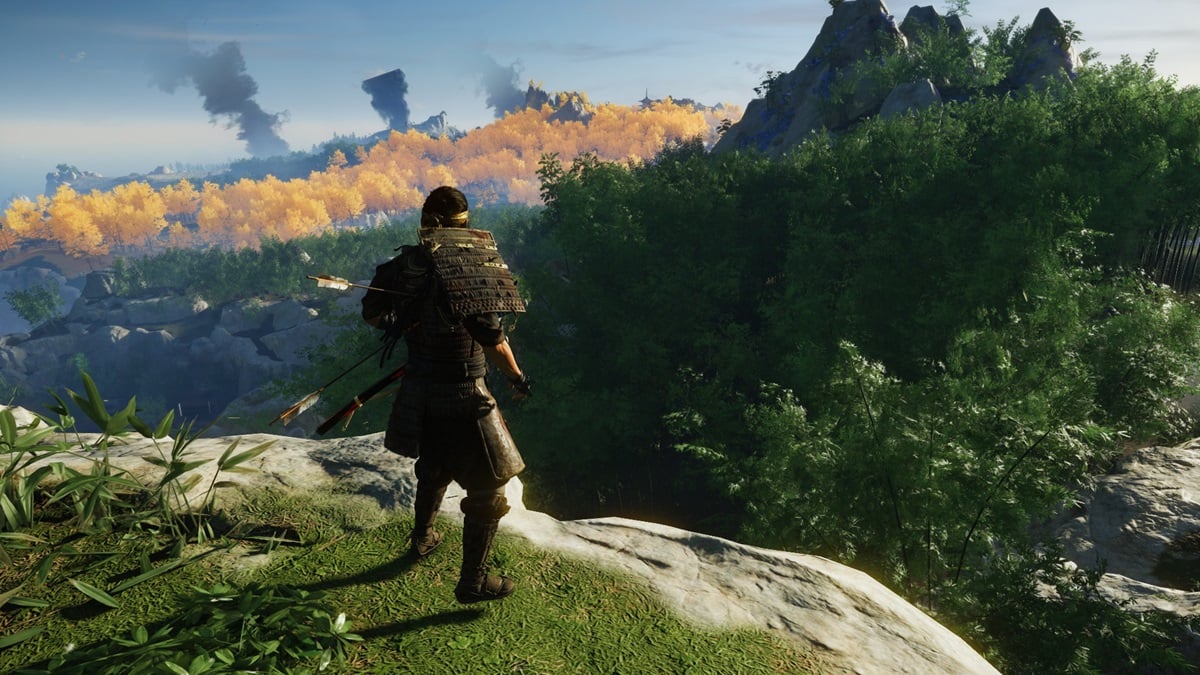
But that's why the black and white mode fits so well. It acknowledges that you aren't playing a documentary. You’re playing a movie. The game is a "Jidaigeki"—a period drama. By removing the color, you’re leaning into the myth rather than the history. The island of Tsushima is one of the most beautiful digital environments ever created, and some people argue that turning off the color is a crime. They aren't necessarily wrong. The red maple leaves and golden forests are stunning. But the black and white mode offers a starkness that feels more "honest" to Jin’s internal struggle.
Technical Tips for the Best Experience
If you’re going to commit to a Kurosawa Mode run, don't just flip the switch and hope for the best. You need to tweak a few things to make it playable.
- Switch to Japanese Audio: It’s almost mandatory. The lip-syncing was updated in the Director’s Cut to actually match the Japanese voice actors. Listening to Daisuke Tsuji (English Jin) is great, but Kazuya Nakai (Japanese Jin) sounds like a classic cinema star.
- Adjust the Contrast: Depending on your TV or monitor, the "Dramatic" contrast setting usually works best for black and white. It prevents the image from looking "milky" or washed out.
- Learn the Stances Early: Since you can't rely on color-coded flashes, you need to know which stance beats which enemy type by heart. Stone for swordsmen, Water for shields, Wind for spears, Moon for brutes.
- Use the Map: If you get stuck on a "find the flowers" quest, just peek at the map or temporarily toggle the color back on. There is no shame in it.
Is it worth it for a first playthrough?
Probably not. The color palette of Tsushima is a core part of the game's soul. Seeing the white blossoms of the Hidden Springs or the deep purples of Omi Village for the first time in full HDR is a core gaming memory for many.
However, for a New Game+ run? It’s the only way to play. It changes the pacing. It makes the violence feel more sudden and the world feel more dangerous. It’s less about "sightseeing" and more about the "vibe."
Actionable Next Steps
If you want to truly appreciate what Sucker Punch did here, don't just jump into the game. Do a little homework first. It makes the experience hit way harder.
- Watch "Seven Samurai" or "Sanjuro": You will immediately recognize the shots Sucker Punch "stole" (with love). The standoffs, the way characters stand in the rain, the framing of the sword duels—it’s all there.
- Check your HDR settings: Black and white mode lives or dies by its "nits" (brightness levels). If your blacks are crushed into one big blob, you won't be able to see enemies in the shadows.
- Toggle it during Duels: If you don't want to play the whole game this way, at least turn it on for the "Duel among the Spider Lilies." It turns a beautiful fight into a haunting, legendary encounter.
The Ghost of Tsushima black and white mode isn't for everyone. It's grainy, it's muffled, and it's intentionally "lo-fi." But as an artistic achievement in a triple-A game, it remains practically unmatched. It turns a great game into a cinematic masterpiece that feels like it was unearthed from a vault in Tokyo.