You’ve probably seen the phrase Frank Ocean forbidden from the beginning floating around TikTok or deep-reddit threads lately. It sounds like some lost prophecy or a banned gospel from the church of R&B. Honestly, it’s one of those things that sounds way more mysterious than the reality, but the reality is actually more interesting because it involves the messy, corporate machinery of the music industry.
Frank Ocean has always been an outlier. He doesn't play the game. When most artists are begging for a seat at the table, Frank was busy building his own table and then lighting the old one on fire. But the idea that he was "forbidden" isn't about some secret society; it’s about the legal and creative shackles he wore during his early days at Def Jam.
Why Everyone Says Frank Ocean Was Forbidden From the Beginning
When we talk about Frank Ocean being forbidden, we have to talk about Christopher Breaux—the guy who moved to LA with nothing but a suitcase and a dream of songwriting. He was a ghostwriter first. He was writing hits for Justin Bieber and John Legend while his own career sat in a dusty corner of a record executive's office.
Def Jam signed him in 2009. They didn't do anything with him.
Imagine being one of the most gifted songwriters of a generation and having a multi-million dollar label basically tell you to stay in the shadows. That is the literal definition of being forbidden from the beginning. They didn't want the "Frank Ocean" brand; they wanted his labor. They wanted the songs, not the soul behind them. He was essentially a "shelf artist," a term used for musicians who are signed just so they don't sign with a competitor, but who never actually get a release date.
The Nostalgia, ULTRA Rebellion
Frank got tired of waiting. In 2011, he did something that was, at the time, a total career suicide move. He released Nostalgia, ULTRA for free on his Tumblr.
He didn't ask for permission. He didn't clear the samples. He didn't wait for a marketing budget.
This is where the "forbidden" aspect gets spicy. The mixtape heavily featured samples from The Eagles and Coldplay. Specifically, "American Wedding" used the entire instrumental of "Hotel California." Don Henley of The Eagles was famously livid. Legal threats flew everywhere. Because Frank released this music without the label's blessing—and with uncleared samples—the album was technically "forbidden" from being sold or monetized. It was a phantom project. It lived on the internet, but it couldn't exist in a store.
Even today, you won't find the full Nostalgia, ULTRA on Spotify or Apple Music. It remains a "forbidden" piece of art in the eyes of copyright law.
The Blonde Finesse: A Masterclass in Breaking Rules
If the beginning of his career was defined by being held back, the middle was defined by the greatest heist in music history.
By 2016, the world was starving for the follow-up to Channel Orange. Frank owed Def Jam one more album. If he released his masterpiece under them, they would own the masters and take a massive cut of the profit. So, Frank played them.
He released Endless.
It was a visual album. It was black and white. It featured him building a staircase. It was beautiful, but it was also a "contract filler." By releasing Endless, he technically fulfilled his deal.
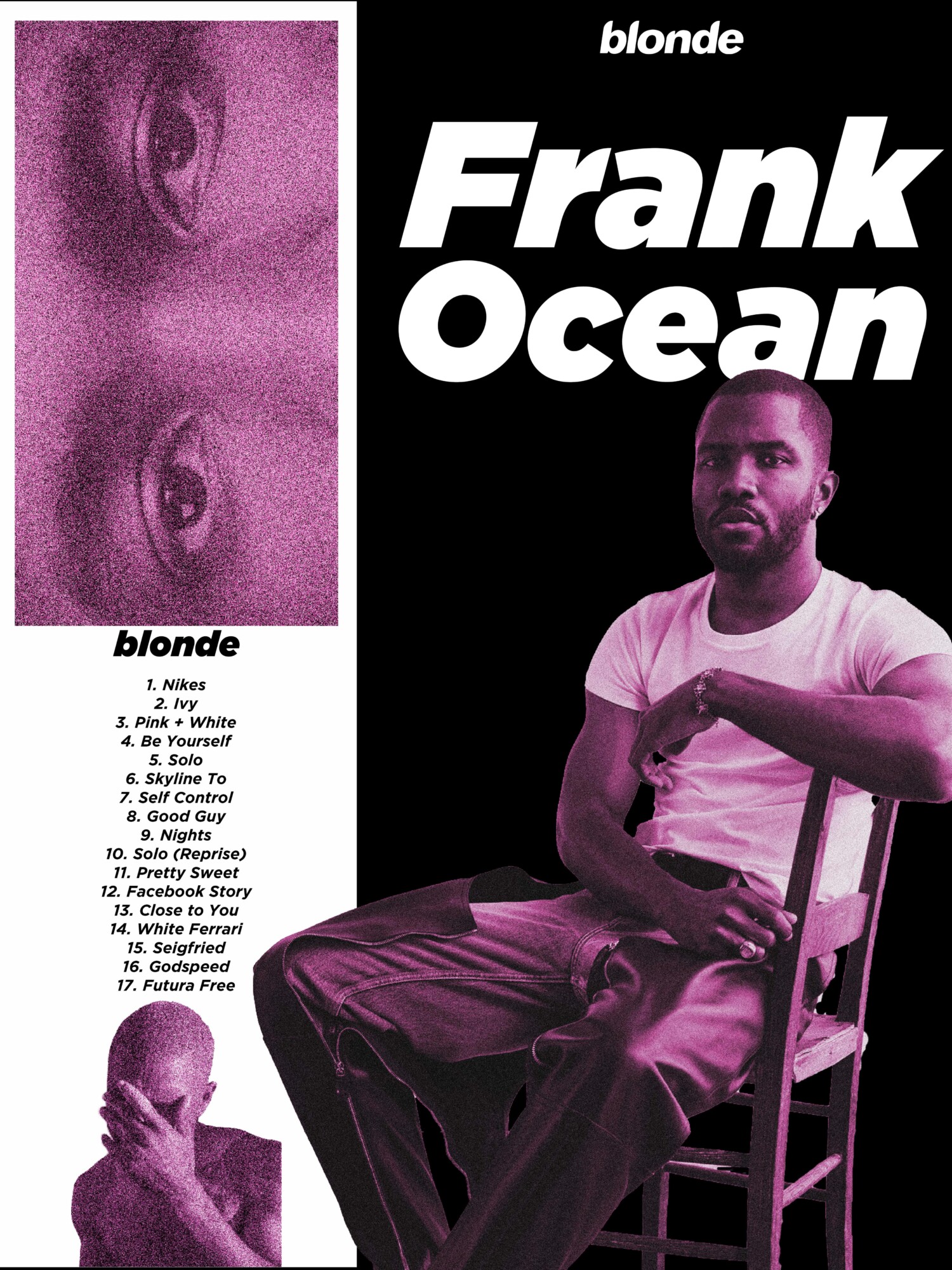
Twenty-four hours later, he independently released Blonde.
The industry was stunned. Universal Music Group (Def Jam’s parent company) was so embarrassed and angry that they reportedly banned their artists from doing streaming-exclusive deals for a period after that. Frank had navigated a system that tried to forbid his independence, and he won.
The Myth of the "Forbidden" Sound
There’s also a sonic element to this. Frank’s music often feels like something you’re not supposed to hear. It’s private. It’s intimate.
Take "Blonde" as an example. It lacks traditional drums for most of the runtime. In a pop landscape dominated by booming 808s and radio-ready hooks, a minimalist, avant-garde R&B album should have been a commercial failure. The industry logic would suggest that this sound should be "forbidden" from the charts.
Yet, it debuted at number one.
His lyrics often touch on themes that were, for a long time, "forbidden" in the mainstream hip-hop and R&B space. When he posted his famous open letter on Tumblr in 2012 about his first love being a man, he broke a glass ceiling. He didn't wait for a publicist to "manage" the narrative. He just spoke. He took a topic that was often treated as a career-ender and made it the cornerstone of his authenticity.
The Coachella 2023 Fallout
You can't talk about Frank being "forbidden" without mentioning the 2023 Coachella incident. After years of silence, his return was the most anticipated event in music. Then, it all went sideways.
The ice rink was scrapped. The livestream was cancelled. He performed in a weird, semi-obscured bunker on stage.
Fans were devastated. Many claimed he was "forbidden" from performing the way he wanted to by the festival organizers, while others argued he was just being difficult. The reality was likely a mix of a serious ankle injury and Frank's own refusal to compromise his vision for a "standard" festival set. It added another layer to the myth: Frank Ocean, the man who is constantly at odds with what the public and the industry demand of him.
Realities of the "Frank Ocean Forbidden" Search Trend
Why are you searching for this now? It’s mostly because of a resurgence in "lost media" culture.
Gen Z is obsessed with things that feel rare. In an era where every song ever recorded is available for $10 a month, a mixtape like Nostalgia, ULTRA feels like a secret. A song like "Eyes Like Sky," which was scrapped from Channel Orange, feels like a treasure.
- The Unreleased Vault: There are dozens of leaked tracks like "Pyrite" or "Bedtime Story" that represent the "forbidden" Frank.
- The Homer Brand: Even his jewelry brand, Homer, feels exclusive and gated. It’s not for everyone. It’s "forbidden" by price point and accessibility.
- The Silence: Frank’s greatest marketing tool is his absence. By not speaking, he makes everything he has ever done feel more significant.
How to Access the "Forbidden" Catalog
If you're trying to actually hear the music that the industry tried to keep under wraps, you have to go off the beaten path. You won't find the essence of Frank Ocean forbidden from the beginning on a curated "Chill R&B" playlist.
- Check Local Files: Most hardcore fans download the original Nostalgia, ULTRA files and "The Lonny Breaux Collection" (a massive 64-track collection of his early demos) and upload them to their own Spotify library via the "Local Files" feature.
- SoundCloud and YouTube: These remain the only places to hear the uncleared samples that started it all.
- Physical Media: Frank occasionally drops vinyl—like the Blonde represses or the Endless CD/DVD—that sell out in minutes and then go for $500 on Discogs. This scarcity is a choice.
Frank Ocean wasn't forbidden by some dark force. He was "forbidden" by a rigid industry that didn't know what to do with a queer, Black man who wanted to make experimental art instead of radio hits. He spent the first half of his career fighting to be heard and the second half fighting to be left alone.
The "forbidden" nature of his work is exactly why it stays relevant. We always want what we can't easily have. Frank understands that better than anyone.
To dive deeper into this, your best move is to stop looking for a "new album" and start looking backward. Explore the Lonny Breaux era. Listen to the way his voice changed from a polished pop-demo singer to the raw, emotive force on Blonde. The transition is where the real story lies. Keep an eye on his "Blonded" radio episodes on Apple Music; those are usually the only times he breaks his silence to share what's actually on his mind. He doesn't do interviews, but he does play records.