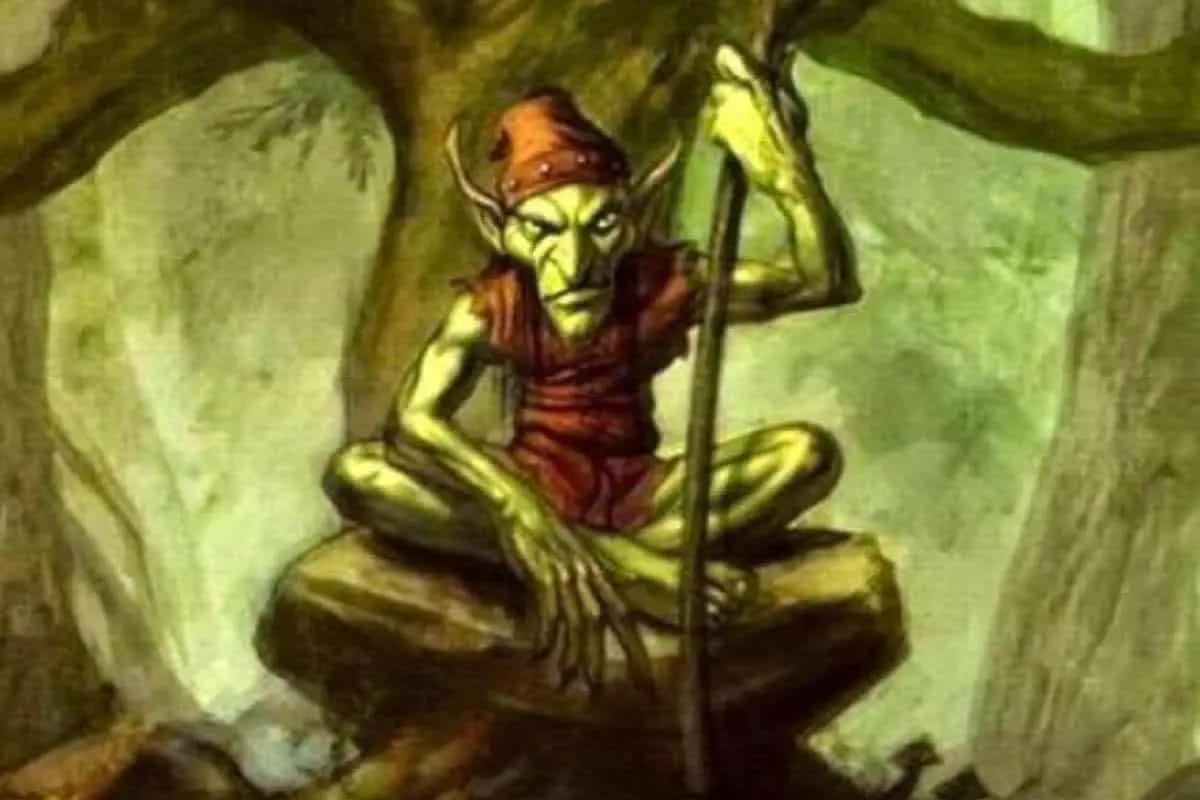
You've seen them. Those grainy, shaky videos from a backyard in Argentina or a dark forest in Mexico where a tiny, hat-wearing figure scurries across the frame. People go nuts over fotos de el duende because they tap into a very specific, very ancient kind of fear. It’s that "did I really just see that?" feeling. Most of the time, your brain is just playing tricks on you, a phenomenon called pareidolia. But honestly, some of these images are so weird they’ve managed to stump local news stations and skeptics for years.
The obsession with capturing a duende on camera isn't just a hobby for paranormal investigators; it’s a massive part of cultural identity in Latin America and Spain. We aren't talking about cute garden gnomes here. We're talking about the Duende—the mischievous, sometimes dangerous entity of folklore.
Why Everyone Is Obsessed With Fotos de el Duende
Social media loves a good mystery. A single blurry photo can rack up millions of views on TikTok or Facebook in hours. Why? Because unlike ghosts, which are ethereal and floaty, duendes are supposed to be physical. They’re "real" in the sense that they occupy space, move objects, and, theoretically, can be photographed.
Back in 2008, a video from General Güemes in Salta, Argentina, basically broke the internet before "breaking the internet" was even a common phrase. A group of teenagers filmed a dark, pointy-hatted figure walking sideways. It looked jittery. It looked wrong. Even today, if you search for fotos de el duende, that specific screengrab is usually the first thing that pops up. Local police were actually called. The town was in a genuine panic. Skeptics pointed out it could easily be a puppet or a small child in a costume, but the raw terror in the kids' voices? That’s hard to fake.
The Science of the "Blurry Small Man"
Let’s be real for a second. Most photos of duendes are terrible. They’re out of focus, taken at night, and usually involve a lot of digital noise.
There's a reason for this. Cameras struggle with low light. When a sensor can't find enough information, it fills in the gaps with grain. Our brains are hardwired to find faces and human shapes in that grain. It's an evolutionary survival trait. You're better off mistaking a bush for a predator than mistaking a predator for a bush. So, when someone looks at a messy photo of a tree stump in the woods of Guatemala, they don't see bark. They see a face. They see a hat. They see a duende.
Then you have the "forced perspective" trick. This is the same thing they used in The Lord of the Rings to make the hobbits look small. If you place a regular-sized doll or a person further back in a shot with no clear points of reference for scale, they look like a tiny humanoid. Many fotos de el duende that go viral are just clever uses of depth of field.
The Evolution of the Hoax
Technology has made it way too easy to lie. Ten years ago, you needed a copy of Photoshop and some decent skills to fake a duende. Now? You can download a "Ghost in Photo" app that has pre-rendered assets of goblins and gnomes. You just drop them into your kitchen photo, adjust the transparency, and boom—you’ve got a viral hit.
I’ve seen dozens of "leaked" photos that use the exact same asset. It’s usually a hunched-over figure with a long nose. If you see the same duende in a forest in Chile and a basement in Spain, it's a digital stamp. Period.
Cultural Context: More Than Just a Photo
In places like Mexico or Belize (where they call them Aluxes or Tata Duende), these aren't just internet memes. They are serious business. Farmers in the Yucatán still build small houses—kahtal alux—to appease these spirits. If you don't, they say your crops will fail.
So, when a farmer takes fotos de el duende, they aren't looking for clout. They are looking for evidence of a neighbor they’ve lived with for generations. This adds a layer of "authenticity" that’s hard to debunk because the witness genuinely believes what they saw. It’s not a prank to them; it’s a report.
Famous Cases That Still Spark Debates
- The Argentine "Creepy" Duende (2008): As mentioned, the Salta video. It remains the gold standard for duende sightings. The way the creature moved—a weird, lateral scuttle—didn't look quite human.
- The Mexican "Alux" Photo (2023): Even the President of Mexico, Andrés Manuel López Obrador, once posted a photo on Twitter claiming it showed an Alux. The internet quickly pointed out the photo had been circulating for years and was likely just a weirdly shaped tree or a deliberate hoax, but the fact that a world leader shared it shows how deeply ingrained this is.
- The "Duende de Santa Fe": A more recent clip showing a small figure running behind a child playing soccer. These are the ones that actually creep people out because the interaction with the environment (the way the grass moves or the lighting changes) is harder to fake with cheap apps.
How to Spot a Fake
If you're scrolling through your feed and see a "real" photo, look for these red flags. First, check the lighting. Does the shadow of the duende match the shadows of the trees or furniture around it? Often, fakes have shadows that are either too sharp or pointing the wrong way.
Second, look at the edges. If the figure looks "pasted" on, with a weird halo or a different level of graininess than the rest of the photo, it’s a composite.
Finally, consider the source. Is it from a reputable local news outlet that interviewed witnesses, or is it a "repost if you're brave" account on Instagram? Most real-deal anomalies come with a story, a location, and a name.
The Psychological Impact of Seeing the Unseen
There’s a reason we want these photos to be real. The world feels a bit smaller and more boring than it used to. Everything is mapped by GPS. Everything is filmed in 4K. Having a tiny, magical, potentially grumpy man living in the woods makes the world feel vast and mysterious again.
When people share fotos de el duende, they are sharing a piece of wonder. They’re asking, "What if?" What if the stories our grandfathers told us by the fire weren't just stories? What if there’s something else living in the margins of our civilization?
Analyzing the "Jumping" Duendes
A common theme in the videos is the "jump." The figure usually appears for a split second, leaps, and disappears. This is a classic filmmaking technique. It limits the amount of time the viewer has to process the image, making it much harder to spot the flaws in the costume or the CGI. If the camera stayed still and focused on the duende for ten seconds, the illusion would shatter. Speed is the friend of the hoaxer.
Practical Steps for Evaluating Paranormal Media
Don't just take a photo at face value. If you find a compelling image, use a reverse image search like Google Images or TinEye. You’ll often find that the "shocking discovery from last night" was actually a still from a 2012 horror movie or a student film project.
Also, look for the "Master File." Every digital photo has metadata (EXIF data). While you can't see this on a social media repost, if you can track down the original uploader, the metadata will tell you what camera was used, the shutter speed, and whether it was edited in Photoshop. If a photo was allegedly taken in a remote forest but the metadata says "Adobe Photoshop CC," you have your answer.
Keep an eye out for the environment. Duendes are usually sighted in places with lots of visual "noise"—tall grass, cluttered rooms, or dense foliage. This noise provides the perfect camouflage for both psychological tricks and digital manipulation. If you ever see a high-definition photo of a duende standing in the middle of a clean, white-tiled floor in broad daylight, that’s when you should really start paying attention. Until then, stay skeptical but stay curious.
To properly analyze any sighting, always cross-reference the location with local legends. Often, "sightings" are staged in areas known for tourism to drive foot traffic. If you're serious about the phenomenon, look into the work of folklorists like Judith Devlin or researchers who study "legend tripping"—the act of visiting places where these entities are said to reside. Understanding the history of the myth is just as important as looking at the pixels in the photo.
Verify the source of any viral clip by searching for the original uploader's handle across multiple platforms. Often, these "sightings" originate from accounts dedicated to VFX (visual effects) portfolios. Once you find the creator, you'll frequently find a "making of" video or a breakdown of the 3D model used to create the creature. This doesn't make the folklore any less fascinating, but it does help separate digital art from potential reality.
Observe the reaction of animals in the videos if they are present. Dogs and cats have much better senses than we do. If a "duende" runs past a dog and the dog doesn't even flinch or look in that direction, you're almost certainly looking at something added in post-production. Animals react to movement and scent; a digital overlay provides neither. This is one of the simplest ways to debunk a high-quality video edit.