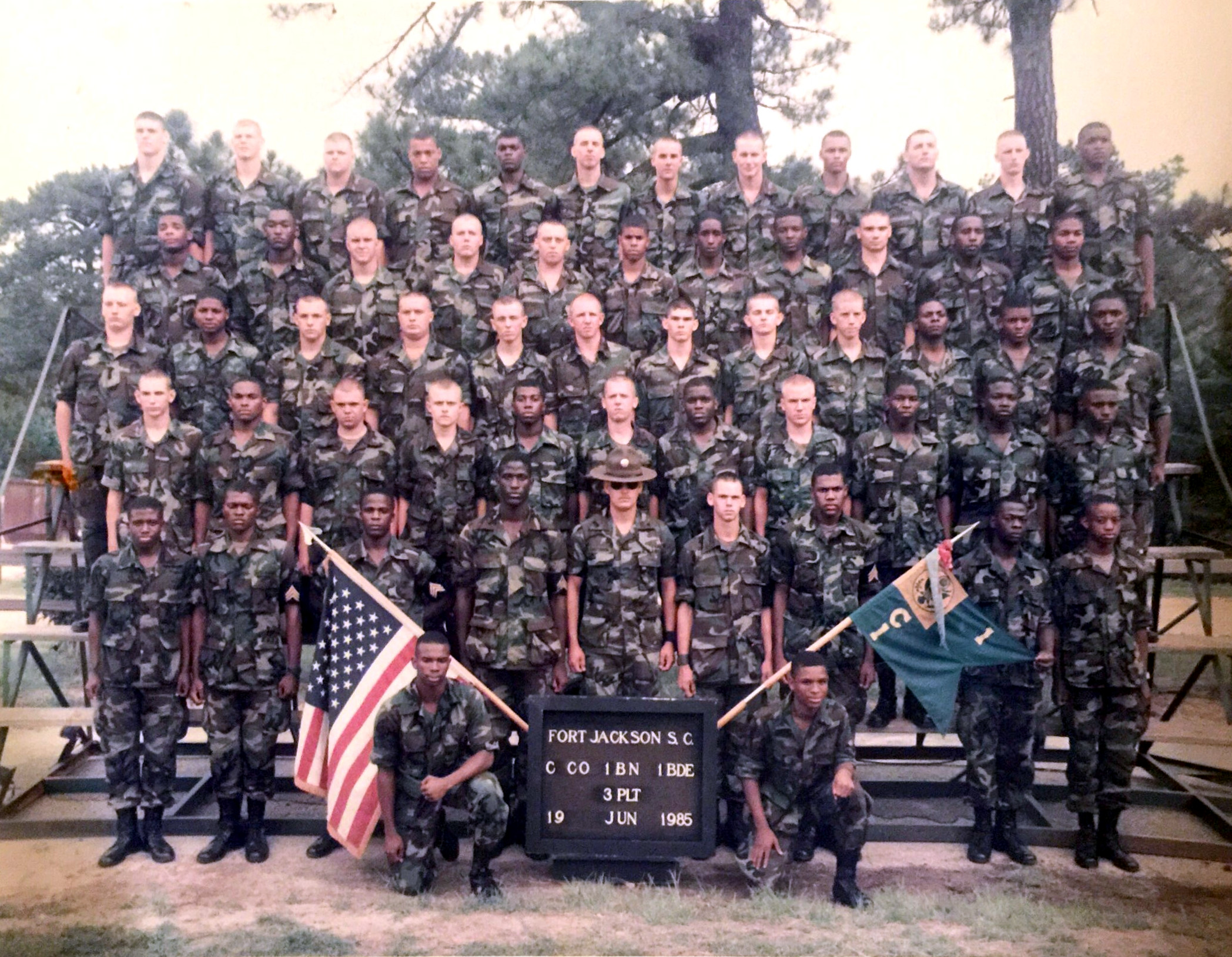
You’re standing on a yellow footprint, it’s 2:00 AM, and someone is screaming at your earlobes. Welcome to South Carolina. Most people think they know what Fort Jackson SC basic training looks like because they watched Full Metal Jacket once or saw a 30-second TikTok of a drill sergeant losing their mind. Reality is a bit more nuanced. Fort Jackson isn't just "Victory Starts Here"—it’s a massive, sweltering, 52,000-acre machine that processes roughly 50% of all Army recruits and about 60% of all women entering the service. It’s the biggest BCT (Basic Combat Training) center in the Department of Defense, and honestly, the humidity alone is enough to make you reconsider your life choices before you even touch a rifle.
If you’re heading there, you aren’t just "going to the Army." You're going to the "Jackson Hilton," as the infantry guys at Fort Moore (formerly Benning) like to joke. Don't let the nickname fool you. There are no room service trays. You’re still rucking 12 miles with a 35-pound pack in 95-degree heat while the sand gnats try to colonize your eyelids.
The First Week is a Total Blur of Paperwork and Eye Rolls
Reception is the worst part. Period. Before you actually start Fort Jackson SC basic training, you spend about a week at the 120th Adjutant General Battalion. It’s a liminal space of beige hallways, fluorescent lights, and sheer boredom punctuated by moments of panic. You’ll get your head shaved—yes, even the "cool" haircuts go—and you’ll sit on a cold floor for hours waiting for someone to yell your name so you can get a vaccine or a pair of boots.
It feels like a DMV that never closes. You’re sleep-deprived. You’re wearing "smurf" sweatsuits or your first set of OCPs (Operational Camouflage Pattern) that probably don't fit right yet. You haven’t seen a phone in three days. This is where the mental game starts. Most recruits quit mentally right here because they realized they signed a contract and can't just "log out." But once you load onto that cattle car (a literal bus designed for human transport) to meet your real Drill Sergeants, the boredom ends. Very quickly.
Phase One: The Red Phase is Pure Chaos
The first three weeks are designed to break your civilian habits. You’ll learn how to stand. You’ll learn how to walk in a straight line. You’ll learn that "five minutes early" is actually late. At Fort Jackson, the Red Phase is legendary for the "Shark Attack," though the Army officially transitioned away from the traditional chaotic "bag toss" style of arrival a few years ago in favor of the "First 100 Yards" event.
The First 100 Yards is a series of high-intensity physical tasks meant to build teamwork immediately. It’s less about a Drill Sergeant making you cry and more about you realizing that Private Smith next to you is the only person who can help you finish this task. You’ll spend a lot of time in the "pit"—a sandy area where you’ll do push-ups until the ground is wet with your sweat. It's gross. It's effective.
The Gas Chamber (CBRN)
This is the day everyone dreads. You’ll head to the Confidence Chamber to test your mask. You go in, you take the mask off, you try to say your name, and your lungs feel like they’re being scrubbed with steel wool and hot sauce. Pro tip: Don't rub your eyes. Just don't. The CS gas reacts with moisture, so if you rub your sweaty face, you're just grinding the irritant into your skin. Just walk out, flap your arms like a bird, and let the South Carolina breeze clear it out. You’ll be fine in ten minutes, and you’ll have a weirdly strong bond with everyone who just snot-cried next to you.
White Phase: Finding Your Aim at Fort Jackson
White Phase is when the "Combat" part of Fort Jackson SC basic training actually kicks in. This is mainly about the M4 carbine. You will spend weeks at the ranges. You’ll learn "BRM" (Basic Rifle Marksmanship). You will learn to love your rifle, then hate it because you have to clean it for four hours, then love it again.
- The Engagement Skills Trainer (EST): This is basically a giant, multi-million dollar video game. You shoot laser rifles at a screen to learn the basics of trigger squeeze and breathing before you waste real ammo.
- Zeroing: This is the most frustrating part. If your sights aren't aligned to your specific eye, you won't hit anything. You’ll spend hours adjusting tiny dials.
- Qualification: To graduate, you have to hit at least 23 out of 40 pop-up targets. If you hit 36+, you get the "Expert" badge. It’s a point of pride. Don't be the person who gets "Marksman" (the bare minimum) if you can help it.
The heat during the White Phase at Jackson is a legitimate safety hazard. They use a flag system—Green, Yellow, Red, and Black. If it's a Black Flag day, it means the wet-bulb temperature is so high that outdoor training is restricted. You’ll drink more water than you thought humanly possible. You’ll become an expert on "silver bullets"—the giant water tanks that are usually lukewarm and taste slightly like plastic.
Blue Phase and The Forge: The Final Hurdle
By the time you hit Blue Phase, the Drill Sergeants might actually start talking to you like a human being. Occasionally. You’re more of a soldier now and less of a "total disaster." This phase culminates in The Forge, a 96-hour cumulative training exercise.
The Forge is roughly 40 miles of marching over four days. You’re living in the woods. You’re eating MREs (Meals Ready to Eat). You’re doing night infiltration courses where you crawl under live machine-gun fire (it’s higher up than it looks, but still terrifying). You’ll be tired. Your feet will have blisters that have blisters. But when you finish that final ruck march back to the main post, usually in the dark of early morning, and you see the lights of Fort Jackson, it hits you. You’re actually doing it.
The Rite of Passage
At the end of The Forge, there’s a ceremony. It’s not the big graduation with parents; it’s the "Soldier Ceremony." You trade your "Patrol Cap" for a Beret. It sounds cheesy, but after ten weeks of being told you’re nothing, putting that beret on is one of the most emotional moments most recruits ever experience. You aren't a "trainee" anymore. You’re a Soldier.
What Nobody Mentions: The Logistics of Daily Life
Let's talk about the stuff that isn't in the brochure.
- The Food: The DFAC (Dining Facility) at Fort Jackson is actually pretty decent compared to some other bases. You get "Performance Triad" meals. They use color-coded labels (Green for high performance, Yellow for moderate, Red for "this is basically just fat"). The Drill Sergeants will watch what you put on your tray. If you grab a brownie in Red Phase, God help you.
- Laundry: You’ll do it in the middle of the night. You’ll lose socks. You will eventually have someone else’s underwear in your locker because the dryer situation is a free-for-all.
- Mail Call: It is the highlight of your existence. Getting a letter feels like winning the lottery. If your family sends you "care packages" with cookies, the Drill Sergeants will likely make you eat the whole box in front of everyone or share them until they're gone in 30 seconds. Tell your mom to stick to letters and photos for the first few weeks.
- Church: Even if you aren't religious, many recruits go to Sunday services just to get out of the barracks and have an hour of relative peace. It’s a mental reset.
Why Fort Jackson is Different for Women
Because Fort Jackson handles the majority of female recruits, the infrastructure is better suited for integrated training than some older posts. There are specific medical resources and female Drill Sergeants available to address issues that male-centric posts sometimes struggle with. The Army is integrated at the squad level, meaning men and women train, ruck, and sweat together. It creates a much more realistic environment for what the actual "Big Army" looks like.
Common Misconceptions About "Relaxin' Jackson"
People call it "Relaxin' Jackson" because it’s not a combat-arms-only post like Moore. That’s a myth. The standards for the ACFT (Army Combat Fitness Test) are the same everywhere. A 12-mile ruck at 4:00 AM hurts just as much in South Carolina as it does in Georgia. In fact, the "Victory Tower"—a 40-foot rappelling and climbing obstacle—is one of the most physically demanding parts of BCT, and it's unique to Jackson's landscape. If you have a fear of heights, this is where you'll face it. No one gets a pass.
Survival Tips for the New Recruit
If you’re reading this because you’ve got a ship date, pay attention.
- Break in your boots now. Don't wait until you get to South Carolina to find out your heels turn into raw meat after two miles. Buy a pair of AR 670-1 compliant boots and walk in them.
- Run. Then run some more. The Army is obsessed with running. If you can comfortably run 3 miles without stopping before you arrive, you’ll be in the top 10% of your platoon.
- Shut up and listen. The "smartest" guy in the platoon is usually the one who gets everyone smoked because he argued with a Drill Sergeant. Even if the Drill Sergeant is wrong, they are right.
- Hydrate starting a week before you leave. You want your body to be a well-oiled machine, not a dried-out sponge.
Final Practical Steps
The transition from civilian to soldier at Fort Jackson SC basic training is a 10-week blur of stress and growth. When you finally stand on Hilton Field for graduation, looking at your family in the stands, you won't remember the boredom of the 120th AG. You’ll remember the weight of the rifle and the sound of your platoon cadence.
- Download the Sandboxx App: This is how your family will send you letters. It’s faster than regular mail and includes a return envelope for you, which is a lifesaver when you have zero time to hunt for stamps.
- Study the "General Orders" and "Rank Structure" today. If you know who a Sergeant First Class is versus a First Sergeant before you get there, you’ll avoid a lot of unnecessary push-ups.
- Prepare your finances. Make sure your bills are on autopay. You won't have access to your bank account for a while, and the last thing you want is a dip in your credit score while you're at the firing range.
- Get your "Phase 1" mindset ready. Understand that the first 3 weeks are a theatrical performance. The Drill Sergeants are playing a role to see if you can handle pressure. Don't take it personally.
Once you graduate, you’ll head to AIT (Advanced Individual Training) to learn your actual job. Some people stay at Fort Jackson for this, while others ship out to other bases across the country. Regardless of where you go next, the foundation you built in the South Carolina sand will stay with you for your entire career. Victory starts there, but it’s up to you to keep it going.