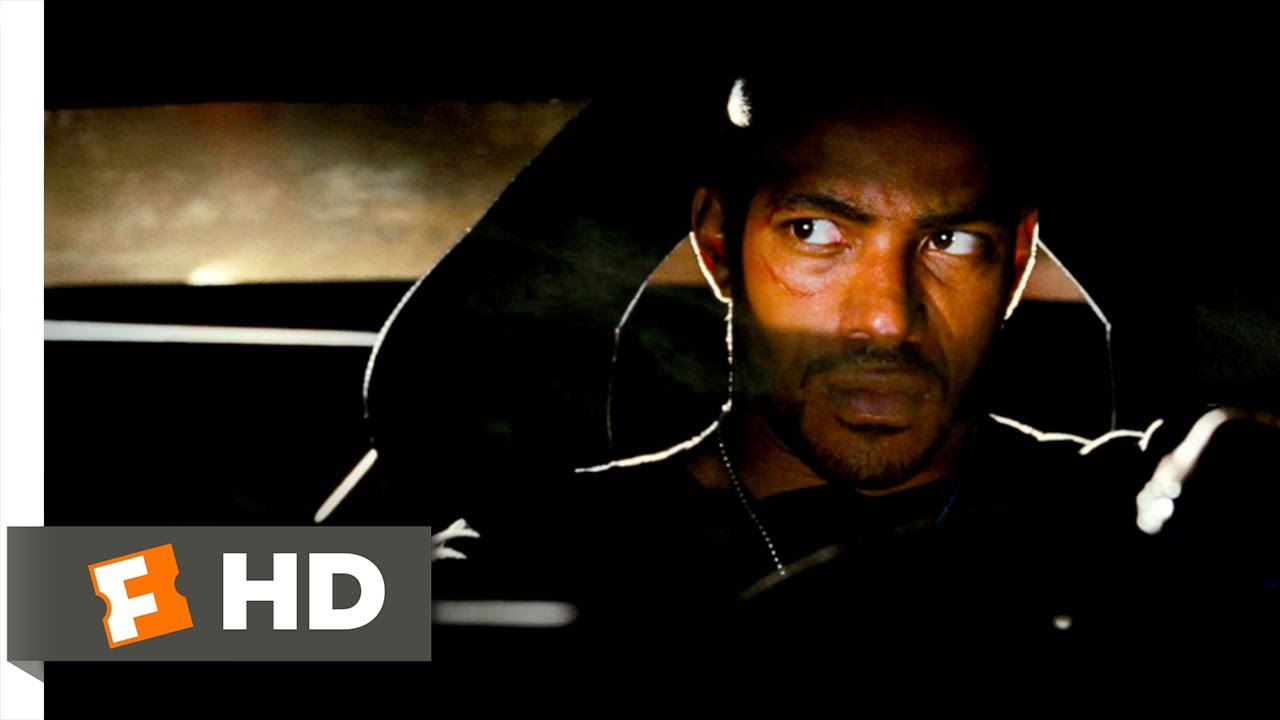
You probably remember the vault heist in Rio or the tank on the Spanish highway, but honestly, the most grounded and genuinely menacing era of the Fast saga traces back to a name most casual fans forget: Arturo Braga. He wasn't some cyber-terrorist with a "God’s Eye" or a super-soldier with mechanical implants. He was just a guy with a lot of heroin, a fleet of tuners, and a massive ego. When we talk about Fast and the Furious Braga, we’re talking about the pivot point that turned a street-racing flick into a global espionage powerhouse.
John Ortiz played him with this weird, quiet intensity that totally threw Brian O'Conner and Dom Toretto off their game. He wasn't loud. He was a ghost.
Remember the fourth movie? Fast & Furious (2009). It was a soft reboot. It brought the "Big Four" back together, but it needed a catalyst. That catalyst was Braga. Most people think the movie is just about Letty "dying," but the real engine of that plot is the mystery of who Braga actually is. For the first half of the film, we don’t even see his face. We see a surrogate. We see the myth.
It was clever. It was actually one of the few times the franchise felt like a genuine detective thriller rather than just a demolition derby.
Who Was Arturo Braga, Really?
Arturo Braga was the kingpin of a massive Mexican drug cartel. But he wasn't your stereotypical Hollywood villain. He had a system. He recruited street racers to haul "packages" (mostly heroin) across the border through impossible-to-track tunnels under the desert. He didn't care about the cars; he cared about the skill.
He operated under the radar by using a double. Remember Ramon Campos? That was the name he used while pretending to be his own second-in-command. It’s a classic trope, but Ortiz made it feel slimy and believable. He’d sit right in front of the FBI and the racers, watching them, testing their loyalty, and basically laughing at them from behind a glass of expensive tequila.
The stakes were high. Letty Ortiz (Michelle Rodriguez) was working undercover for the FBI to clear Dom’s record. She got too close to Braga’s operation. Fenix Calderon, Braga’s lead enforcer—the guy with the green Ford Torino—was the one who supposedly took her out. This set the whole "Justice for Letty" arc in motion. Without Fast and the Furious Braga, we don't get the emotional core that sustained the next six movies.
The Tunnel Run: Why It Matters
The climax of the 2009 film involves a high-speed chase through those clandestine tunnels. It’s claustrophobic. It’s dark. It’s everything the later, more "open-world" movies aren't.
Braga’s downfall wasn't some grand explosion. It was his own arrogance. He thought he could hide in plain sight in Mexico, protected by the church and his money. But Dom and Brian didn't care about jurisdiction. They snatched him right out of his own sanctuary. It was a brutal, messy kidnapping that showed just how far the duo was willing to go.
The Surprising Return in Fast & Furious 6
Most villains in this franchise either die or become part of "The Family." Just look at Deckard Shaw. One minute he’s killing Han, the next he’s at the backyard BBQ holding a beer.
Braga is different.
He didn't get an invite to the cookout. Instead, he popped back up in Fast & Furious 6 in a high-security prison. This is where the lore gets interesting. It turns out Braga was working with Owen Shaw all along. He was the middleman. He helped Shaw build his empire from behind bars.
When Brian goes undercover into the prison to talk to him, we see a different Braga. He’s scarred. He’s bitter. But he’s still got that edge. He’s the one who confirms that Letty is alive but suffering from amnesia. He essentially acts as the bridge between the old-school drug cartel era and the new-school international mercenary era.
He is the "connective tissue" of the series.
Why John Ortiz Made Braga Work
Usually, Fast villains are physical threats. Think of Jakob Toretto or Dante Reyes. They can go toe-to-toe with Vin Diesel in a fistfight.
John Ortiz? He’s not a big guy. He’s a character actor. He used his eyes and his voice to project power. He made you feel like he had ten snipers aimed at your head at any given moment. That kind of psychological threat is something the later movies often lack in favor of bigger explosions.
Actually, if you look at the series as a whole, Braga is one of the few villains who actually "won" in a way. He killed (or thought he killed) a core member of the team, he successfully ran a cross-border empire for years, and he survived two separate movies without being blown up by a drone. That’s a better track record than most.
The Logistics of the Braga Cartel
If you’re a gearhead, the Fast and the Furious Braga era was a goldmine. The cars were actually grounded in some semblance of reality. We had:
- The 1970 Chevrolet Chevelle SS (Dom’s car).
- The Nissan Skyline GT-R R34 (Brian’s car).
- The F-Bomb Camaro.
- The Ford Torino (Fenix’s car).
Braga’s "audition" for new drivers was a chaotic race through Los Angeles traffic. It wasn't about who had the most horsepower; it was about who could navigate the GPS-guided route without dying. This reflected Braga’s business model: high risk, high precision.
He treated his drivers as disposable parts. Once the delivery was made, Fenix would execute the drivers to keep the tunnels a secret. It’t a grim, dark business model that grounded the movie in a way that felt more like Sicario and less like Star Wars.
Misconceptions About the Character
A lot of people think Braga was just a pawn for Owen Shaw. That’s not quite right. While Fast 6 retconned their relationship to show they were connected, the 2009 film makes it clear that Braga was a titan in his own right. He controlled the flow of narcotics across the US-Mexico border. Shaw might have had the tech, but Braga had the infrastructure.
Another misconception? That he’s dead.
As far as the official canon goes, Arturo Braga is still sitting in a prison cell. He survived his encounter with Brian in the sixth movie. With the franchise always looking for ways to bring back familiar faces, there’s no reason he couldn't return for the final installments. Imagine a world where the legends have to go back to the guy who started the chaos to find a way to stop a new threat.
The Legacy of the 2009 Film
The 2009 Fast & Furious is often ranked in the middle of the pack by critics. They’re wrong. It’s the most important film in the series because it established the "Modern Fast" formula. It moved away from the "Point Break with cars" vibe of the first film and the "Miami Vice" vibe of the second.
It introduced the idea of a global, interconnected underworld. And Braga was the face of that underworld.
He forced Dom and Brian to grow up. They couldn't just be racers anymore; they had to be outlaws. They had to learn how to dismantle an organization from the inside. This set the stage for their later work with Mr. Nobody and the Agency.
Without the hunt for Braga, the characters never leave the streets of LA.
Actionable Insights for Fans and Lore Buffs
If you're looking to revisit this era of the franchise or understand the deeper lore of the cartel storylines, here are the steps to take:
- Watch the 2009 film and the 2013 sequel back-to-back. Pay close attention to the dialogue in the prison scene in Fast & Furious 6. It completely changes how you view Braga’s actions in the fourth movie.
- Analyze the "camouflaged" tunnel sequence. This was one of the last times the series used practical-heavy stunts to simulate high-speed precision driving in tight spaces. It’s a masterclass in tension.
- Look for the subtle cues. John Ortiz plays "Campos" with a subservient attitude that disappears the moment he’s revealed as Braga. It’s a great example of "acting within acting" that you don't usually see in big-budget action flicks.
- Track the Fenix Calderon connection. Fenix is the one who actually pulled the trigger (so to speak) on Letty. His relationship with Braga is one of absolute loyalty, a dark mirror to the loyalty Dom expects from his own family.
The story of Arturo Braga isn't just a footnote. It’s the foundation. He was the first villain to take something permanent from the team, and his influence echoes through every street race and heist that followed. He reminded us that in this world, there are no "just racers." There are only those who drive, and those who get driven over.