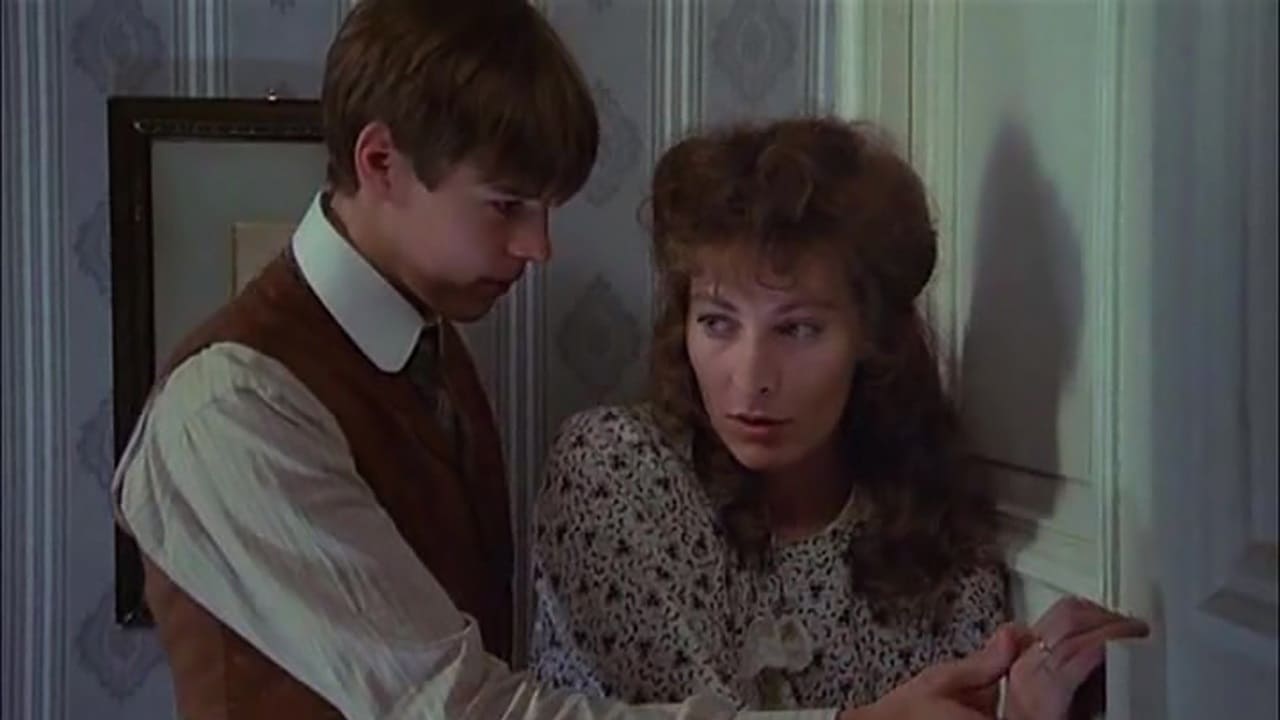
It was 1986. Cinema was in a weird, transitional spot. In America, we had the gloss of John Hughes movies, but over in Europe, they were doing something much more daring, or perhaps just much more blunt. If you’ve ever gone down a rabbit hole of 80s cult cinema, you’ve likely stumbled upon Exploits of a Young Don Juan 1986. It’s a film that sits in a very specific, somewhat uncomfortable niche of erotic comedy and period drama. Honestly, it’s the kind of movie that probably couldn't get made today—at least not with the same breezy, nonchalant attitude toward its subject matter.
The movie is an adaptation of Guillaume Apollinaire’s 1911 novel, Les Exploits d'un jeune Don Juan. Apollinaire was a titan of French literature, a guy who basically coined the term "surrealism," so the source material has a pedigree that you might not expect from a film often relegated to late-night cable slots or dusty corners of streaming sites.
What Really Happens in Exploits of a Young Don Juan 1986?
The plot is deceptively simple. We’re in 1914. Europe is on the brink of a massive, world-altering war, but for Roger, our protagonist, the only thing that matters is the massive, hormone-fueled curiosity he has about the women in his life. He’s a teenager spending the summer at his family’s country estate. While the adults are fretting over politics and the impending mobilization, Roger is busy spying on his sisters, the maids, and his mother.
It’s a classic "summer of awakening" story.
Roger isn't exactly a hero. He’s a voyeur. He’s manipulative. He’s basically a kid who has figured out that the social boundaries of the Edwardian era are incredibly flimsy if you know which keyhole to look through. The film captures that specific heat of a summer where time seems to stand still right before it all goes to hell. The war serves as this dark cloud on the horizon, giving Roger’s escapades a sense of "last chance" urgency.
Director Gianfranco Mingozzi didn't shy away from the explicit nature of the book. While the film is often categorized as a comedy, there’s a strange, almost melancholic atmosphere to it. You see the opulence of the French upper class, the beautiful linen suits and sun-drenched gardens, but you also see a complete lack of moral compass.
The Apollinaire Connection and Literary Roots
You can't talk about Exploits of a Young Don Juan 1986 without mentioning Apollinaire. He wrote the book as "gallantry" literature—a polite way of saying it was early 20th-century erotica. But because it was Apollinaire, the prose was sharp. He wasn't just writing smut; he was satirizing the stifling boredom of the bourgeoisie.
The film tries to keep some of that. It doesn't always succeed.
Sometimes it feels like a high-end European art film; other times, it feels like a proto-version of American Pie if it were directed by someone who had spent too much time reading Freud. The contrast is jarring. You’ve got these lush, cinematic shots of the French countryside, and then you’ve got scenes that are designed purely to shock the sensibilities of a mid-80s audience.
Why the 1986 Version Stands Out
There’s a reason people still search for this specific 1986 version. It features a young Fabrice Josso as Roger, who plays the role with a mix of innocence and terrifying calculation. But the real draw for many was the casting of the women, including Serena Grandi and Marina Vlady. Grandi, in particular, was an icon of Italian cinema at the time, often associated with the "fringe" of mainstream film.
The production design is surprisingly high-quality for a movie that is essentially about a kid trying to lose his virginity. The costumes are period-accurate. The lighting is golden and hazy. It looks like a painting by Renoir, which makes the actual content of the scenes feel even more transgressive. It’s that juxtaposition—the high art look versus the low-brow subject—that defines the "Don Juan" experience.
Most people get it wrong when they call this a "romance." There is almost zero romance here. It’s about power, curiosity, and the breakdown of Victorian-era structures. Roger isn't looking for love; he’s looking for experience. He treats his conquests like a checklist. In a way, the film is a cynical look at how the "Great War" didn't just kill men on the battlefield; it killed the idea of innocence back home long before the first shot was even fired.
The Controversies and the "Unrated" Legacy
When Exploits of a Young Don Juan 1986 hit theaters and later the home video market, it ran into trouble. Censorship boards in different countries had a field day with it. In some regions, it was hacked to pieces to fit a "Mature" rating, while in others, it was banned outright or released only in "Blue" cinemas.
The film explores themes that are, frankly, radioactive today.
It deals with age gaps and family dynamics that make modern audiences wince. If you’re watching it through a 21st-century lens, it’s a difficult sit. But if you view it as a historical artifact—a piece of 80s transgressive cinema trying to adapt a controversial 1911 novel—it becomes a fascinating study in what was considered "acceptable" art forty years ago.
The 1980s were a peak time for this kind of "erotic-lite" European cinema. You had directors like Tinto Brass making big-budget films that were unashamedly focused on the carnal. Mingozzi’s film fits right into that pocket. It’s more sophisticated than a "slasher" flick but less "serious" than something by Bertolucci.
Is it Actually a Good Movie?
That depends on what you're looking for.
If you want a tight, narrative-driven plot with a satisfying character arc, you’re going to be disappointed. Roger doesn't really "learn" anything. He doesn't become a better person. He just gets older and more cynical.
However, if you appreciate cinematography and the "vibe" of 80s European film, there’s a lot to like. The score is evocative. The pacing is slow, almost languid, mimicking the feel of a hot summer afternoon where nothing and everything is happening at the same time. It’s a mood piece.
One thing is for sure: it doesn't hold your hand. It assumes you know the context of the era. It assumes you understand that these characters are trapped in a world that is about to disappear forever in the trenches of WWI. That looming tragedy is the only thing that gives the "exploits" any real weight. Without the war, it’s just a story about a bratty kid. With the war, it’s a story about the end of an era.
How to Find and Watch It Today
Finding a high-quality version of Exploits of a Young Don Juan 1986 is a bit of a treasure hunt. Because of its cult status and the various censored versions, you have to be careful which cut you're getting.
- Look for the "Uncut" or "Original French" versions. These usually preserve the director’s vision and the intended pacing.
- Check specialized boutique labels. Companies that focus on cult and Euro-cult cinema occasionally release restored versions on Blu-ray.
- Streaming is hit or miss. It occasionally pops up on platforms like MUBI or CultPix, but it rotates frequently due to licensing issues.
The film remains a polarizing piece of work. Some see it as a masterpiece of European erotica, while others find it dated and voyeuristic. Both are probably right. It’s a product of its time—both the 1910s when the story was set and the 1980s when it was filmed.
Final Insights for the Cult Film Collector
If you're diving into this, go in with your eyes open. It’s not a romantic comedy. It’s a harsh, sun-drenched look at the loss of innocence and the decadence of a dying class.
To get the most out of the experience, it helps to read a bit about Apollinaire first. Understanding his desire to shock the French establishment makes Roger’s actions in the film feel less like random teenage rebellion and more like a deliberate middle finger to the societal "purity" of the time.
Watch the film for the atmosphere and the historical context. Note the way Mingozzi uses the camera to create a sense of claustrophobia despite the wide-open spaces of the estate. Pay attention to the sound design—the buzzing of cicadas, the distant sound of trains, the rustle of silk. These are the things that make the 1986 version superior to other attempts to tell this story.
Actionable Steps for Enthusiasts:
- Verify the Runtime: The full version is roughly 95 minutes. If you find a version that is significantly shorter (around 75-80 minutes), you are watching a heavily censored edit that loses the thematic nuance.
- Compare to the Source: If you can find a copy of Apollinaire’s Les Exploits d'un jeune Don Juan, read the first few chapters. It provides a much deeper understanding of Roger's internal monologue which the film sometimes struggles to convey through visuals alone.
- Contextualize the Cast: Research Serena Grandi’s filmography from the mid-80s. Understanding her "persona" in European cinema at the time explains why her presence in this film was such a big deal for audiences in 1986.
- Explore the Soundtrack: The music by Nicola Piovani (who later won an Oscar for Life is Beautiful) is worth a standalone listen. It captures the "sweet-and-sour" tone of the movie perfectly.
The film is a relic. It’s a strange, beautiful, and sometimes off-putting postcard from a version of the past that probably never existed, filmed in a decade that had its own unique obsessions. Whether you love it or hate it, you won't forget it.