When you’re traveling or looking into international law, the specifics matter. A lot. Most people assume European laws are all identical—one big, happy, harmonized legal block. That’s just not how it works. Bulgaria has its own specific quirks, and if you’re trying to figure out the age of consent Bulgaria, you’re going to find some nuance that isn't always obvious on a quick search.
Honestly, the law here is pretty straightforward on paper, but the context around it—how it’s enforced and what the "Romeo and Juliet" exceptions look like—is where things get a bit more complex.
The baseline is 14.
That’s lower than the UK or many US states. It often catches people off guard. But wait. Before anyone jumps to conclusions, you’ve got to understand that "legal" and "socially acceptable" are two very different things in Sofia or Plovdiv compared to the rural villages.
The legal nuts and bolts of Article 151
The Bulgarian Penal Code is the ultimate authority here. Specifically, Article 151. It states quite clearly that sexual intercourse with a person who has not reached the age of 14 is a serious crime. We’re talking about a prison sentence that usually ranges from two to eight years. It doesn't matter if there was "consent" in the colloquial sense; under Bulgarian law, a 13-year-old legally cannot consent. Period.
It's a hard line.
Once a person hits 14, they reach the legal age of consent in Bulgaria. However, there’s a massive "but" coming. While 14 is the technical floor, the legal system still keeps a very close eye on the age gap between partners. This is where the Bulgarian legal system tries to balance individual freedom with the protection of minors from exploitation.
What about the "Age Gap" and Romeo and Juliet laws?
Bulgaria doesn't have a specific, named "Romeo and Juliet" law like some American jurisdictions do, but the judicial system does apply common sense—mostly.
If you have two 15-year-olds, the law isn't looking to throw anyone in a cell. But, if there is a significant power imbalance—say, a 30-year-old and a 14-year-old—prosecutors have other tools in their belt. They look at Article 153, which deals with "compulsion" or taking advantage of a position of dependence. Basically, if an adult uses their status, money, or influence to pressure a minor who is technically "of age" (14 or 15), they can still face massive legal blowback.
It’s about "shades of gray."
The Bulgarian authorities, influenced heavily by EU directives and the Council of Europe's "Lanzarote Convention," have been tightening up how they handle these cases. They’ve realized that a flat age number isn't enough to protect kids from grooming.
Understanding the age of consent Bulgaria in a modern context
Socially, Bulgaria is a bit of a contradiction. You have the vibrant, tech-heavy culture of Sofia where everyone is on Instagram and TikTok, and then you have deep-seated traditional values in the Balkan Mountains.
The age of consent Bulgaria reflects a society that is transitioning. While 14 remains the legal number, the average age for a first sexual encounter in Bulgaria has actually been rising slightly or stabilizing around 16 or 17, according to various public health surveys conducted over the last decade.
- The law says 14.
- Public health experts often recommend 16 as a more "mature" threshold.
- Most parents will tell you their kid isn't ready until they're 18.
Education plays a huge role here. Bulgaria has historically struggled with a lack of standardized sex education in schools. Often, teenagers are left to learn from the internet, which creates a gap between what is "legal" and what is "safe" or "informed." Organizations like the Bulgarian Family Planning and Sexual Health Association (BFPA) have been shouting from the rooftops about this for years. They argue that the legal age is less important than the level of education and empowerment a young person has.
Comparing Bulgaria to its neighbors
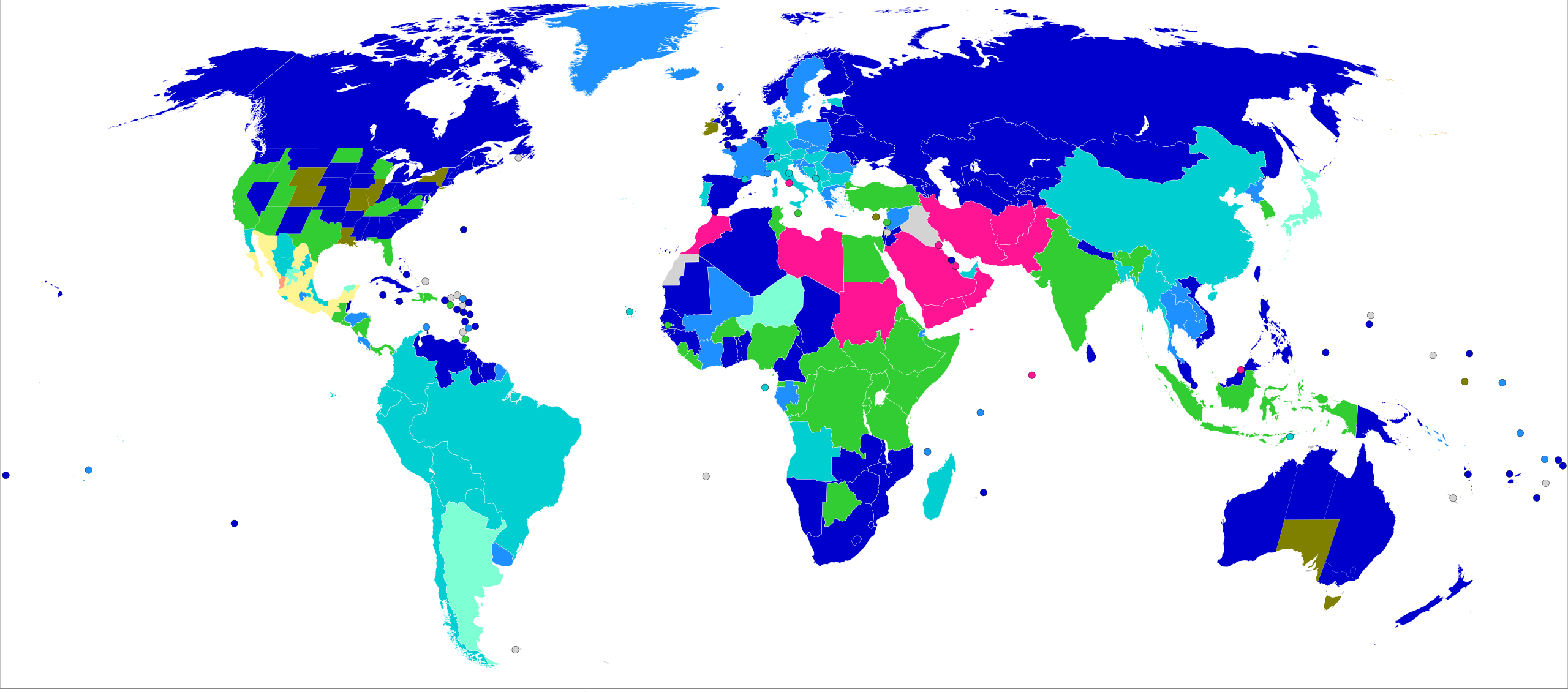
If you look across the borders, the 14-year-old threshold isn't actually that rare in the region.
- Serbia? It’s 14.
- Hungary? 14.
- Romania? They recently bumped theirs to 16 for most acts to align with stricter EU recommendations.
Bulgaria has stayed at 14 for a long time. There have been sporadic debates in the Narodno Sobranie (the Bulgarian Parliament) about raising it to 16. Usually, these talks happen after a high-profile case hits the news. But so far, the status quo has held. Why? Mostly because the legal focus has shifted away from the "age number" and toward "consent" and "exploitation."
Modern Bulgarian law is becoming more interested in whether someone was coerced than just how many birthdays they've had. This is a subtle but huge shift in legal philosophy. It moves the burden onto the adult to prove they weren't being predatory.
Common misconceptions people have
One of the biggest myths is that the age of consent Bulgaria is lower for specific ethnic groups or in certain regions.
That is 100% false.
The Penal Code applies to every single person on Bulgarian soil, regardless of their background, religion, or location. There are no "cultural exemptions." While early marriages do happen in some marginalized communities, the Bulgarian government has been under intense pressure from the European Union to crack down on this. It’s a point of major political friction. The state officially views early marriage or cohabitation with a minor as a violation of the law, and they have been increasingly prosecuting these cases to meet international human rights standards.
Another weird myth is that the age of consent is different for same-sex couples.
Nope.
In 2002, Bulgaria equalized the age of consent for everyone. Before that, there was a discriminatory gap where same-sex acts were held to a higher age threshold. Today, it’s 14 across the board, regardless of gender or orientation. This was a prerequisite for Bulgaria joining the EU, as they had to align their human rights laws with the European Convention on Human Rights.
The role of digital consent and "Sexting"
We can't talk about this without mentioning phones. In 2026, the law has had to catch up with the fact that a lot of "encounters" happen on a screen.
In Bulgaria, if an adult solicits explicit photos from a minor, the age of consent Bulgaria doesn't protect them. The law regarding "distribution of pornographic material" and "solicitation" is extremely strict. Even if a 15-year-old sends a photo "voluntarily," the adult receiving it or asking for it is in deep, deep trouble. The Bulgarian Cybercrime Unit is surprisingly active and works closely with Europol. They don't mess around with this stuff.
Actionable insights for navigating the landscape
If you are a parent moving to Bulgaria, or just someone trying to understand the local legal framework, here is the ground reality you need to operate by:
Know the hard floor. Anything involving a person under 14 is a felony. There are no excuses, no "we're in love," and no "I didn't know." The law assumes you knew.
The "18 Rule" for safety. While 14 is the legal limit, the "age of majority" in Bulgaria is 18. This is when a person can sign contracts, get married without parental permission, and buy alcohol. For most social and professional situations, treating 18 as the threshold for "adult" behavior is the only way to stay out of legal and social hot water.
Watch the power dynamics. The Bulgarian legal system is increasingly looking at "positions of authority." Teachers, coaches, or bosses who enter relationships with people aged 14-17 are almost always going to be viewed as predators under Article 153, even if the "consent" was technically there.
Documentation matters. In the rare cases where age is disputed, Bulgarian courts rely heavily on the "Civil Registration" system. Every Bulgarian citizen has a Uniform Civil Number (EGN) that encodes their birth date. It's impossible to fake your age to the authorities once they check your ID.
Bulgaria is a country where the law is written in black and white, but the society operates in technicolor. The age of 14 is a legal artifact that remains from an older era, but it's bolstered by modern protections that focus on preventing exploitation. If you stay informed and respect the clear boundaries set by the Penal Code, the legal landscape is easy enough to navigate. Just remember that "legal" is the bare minimum, not the gold standard for behavior.
To stay updated on any legislative shifts, keep an eye on the official gazette of Bulgaria, the "Durzhaven Vestnik," where all new amendments to the Penal Code are published. While no major increase to the age of consent is currently scheduled for 2026, the conversation around digital safety and "cyber-grooming" is constantly evolving, which often leads to stricter interpretations of existing laws. Keep your information current and your boundaries clear.