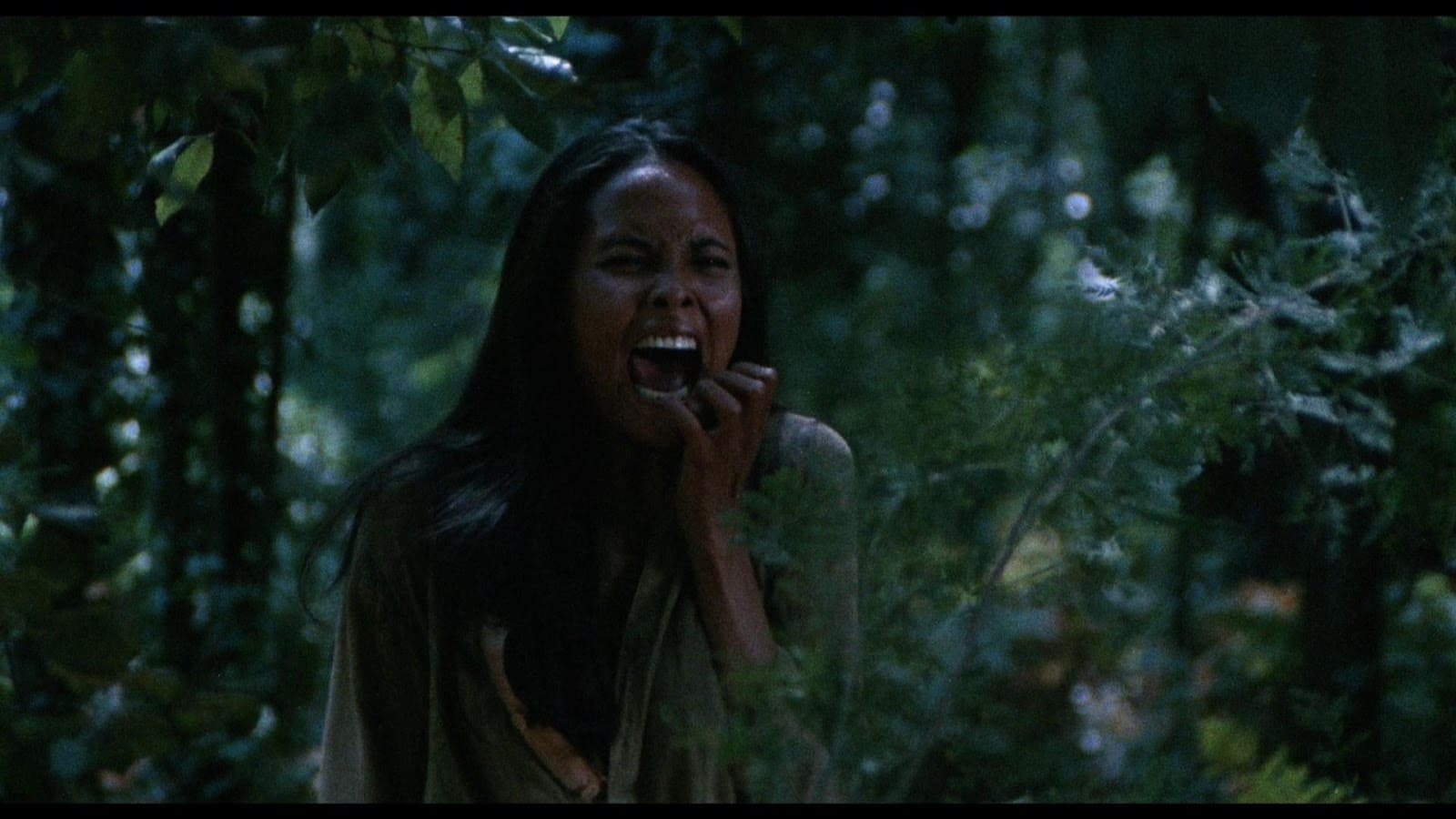
If you’ve ever fallen down a rabbit hole of 1970s Italian exploitation cinema, you’ve likely bumped into a title that sounds like a fever dream: Emanuel and the Last Cannibals. It sounds ridiculous. It sounds like something that shouldn't exist, yet it serves as a bizarre bridge between two of the most infamous subgenres in movie history.
We aren't talking about high art here. This is "grindhouse" in its purest, most unapologetic form.
But there is a weird layer of confusion that usually trips people up immediately. Most folks search for this movie thinking it’s part of the famous "Emmanuelle" series—you know, the softcore French films starring Sylvia Kristel that basically defined 70s adult-skewing drama. It isn't. Not exactly. This movie is a product of the Italian "Emanuelle" rip-off cycle, starring the legendary Black actress Laura Gemser.
By adding "Cannibals" to the title, director Joe D’Amato (Aristide Massaccesi) was essentially trying to smash two profitable trends together to see if they’d make money. It worked. But the story behind how this film fits into the cannibal boom of the late 70s is actually way more interesting than the movie itself.
Why Emanuel and the Last Cannibals Isn't What You Think
To understand why this film matters to cult cinema historians, you have to look at the name. Notice the spelling. It’s "Emanuelle" with one 'm' in many regions, but the film we’re talking about is often listed as Emanuel and the Last Cannibals (or Emanuelle e gli ultimi cannibali) to dodge copyright lawyers.
Laura Gemser played "Black Emanuelle." She was an investigative journalist. In this specific 1977 outing, her character discovers a girl in a mental hospital who has a penchant for biting people. This leads her to the Amazon.
It’s a bizarre premise. Honestly, the first thirty minutes feel like a standard sleazy mystery. Then, suddenly, the movie pivots. It becomes a survival horror film deep in the jungle. This was D’Amato’s response to the success of Deep River Savages and the rising "cannibal" trend that would eventually lead to the infamous Cannibal Holocaust.
People often get these movies mixed up. You’ll see forum posts asking if this is the one where the turtle gets killed (that’s Cannibal Holocaust) or if it’s the one with the hook (that’s A Man From Deep River). Emanuel and the Last Cannibals is its own weird beast. It’s sleazier, cheaper, and somehow more frantic than its peers. It doesn't have the "found footage" realism that later films tried to fake. It just has Joe D'Amato's signature style: fast, dirty, and surprisingly well-shot for something made on a shoestring budget.
The Joe D'Amato Factor
You can't talk about this film without talking about Joe D’Amato. The man was a machine. He directed, produced, and often acted as his own cinematographer. He worked under dozens of pseudonyms.
In Emanuel and the Last Cannibals, his eye for composition is actually visible. Even when the subject matter is objectively "trashy," the lighting in the jungle scenes has a certain humid, oppressive quality that makes the atmosphere work. He knew how to make a dollar look like five.
Critics at the time absolutely hated it. They called it "reprehensible" and "devoid of merit." But if you look at the film today through the lens of exploitation history, it’s a fascinating time capsule. It represents the exact moment when the "Mondo" (pseudo-documentary) style died and the "Cannibal" gore-fest was born.
D'Amato wasn't trying to make a statement about colonialism or the "noble savage." He was trying to sell tickets in Rome, New York, and London. He knew that putting a glamorous journalist in the middle of a tribe of cannibals was a winning formula for the international market.
A Note on the "Gore" and Practical Effects
If you’re squeamish, this isn't for you. But for fans of practical effects, the film is a masterclass in low-budget ingenuity. We’re talking about 1977. No CGI. Just latex, corn syrup, and animal parts from the local butcher.
The special effects were handled by folks who had to be creative. They used sponges for muscle tissue. They used red-dyed Karo syrup for blood. It looks "fake" by today's standards, but there is a visceral, tactile quality to it that digital blood just can't replicate. It’s messy. It’s gross. It’s exactly what the audience paid to see.
The Controversy of "Realism" vs. Exploitation
One of the biggest issues people have with the cannibal subgenre—and Emanuel and the Last Cannibals specifically—is the blurred line between fiction and reality.
In 1977, audiences were much more gullible. Or maybe they just wanted to be fooled. Marketing for these films often suggested the footage was real. While this movie doesn't go as far as Cannibal Holocaust in its "mockumentary" style, it still utilizes that gritty, handheld camera work that makes you feel like a voyeur.
- The Problematic Elements: Let's be real. The depiction of indigenous tribes is terrible. It’s rooted in 1970s tropes of "primitivism."
- The Gender Dynamics: The film is inherently exploitative toward its lead. Laura Gemser was a talented actress who often deserved better material, but she became the face of this specific brand of "erotic adventure."
- The "Mondo" Influence: You can see traces of the Mondo Cane films in the way D'Amato lingers on "shocking" cultural rituals, most of which were entirely made up for the screen.
Is it "bad"? By traditional standards, yes. Is it culturally significant? Absolutely. It represents a specific era of "Transcontinental" filmmaking where Italian crews would fly to South America or Southeast Asia, film for three weeks, and come back with a movie that would play in grindhouses for a decade.
Why People Still Search for This Movie in 2026
You might wonder why anyone cares about a 50-year-old Italian gore-fest.
The answer is the "Video Nasties" phenomenon. In the UK during the 1980s, the Director of Public Prosecutions released a list of films that were deemed "liable to corrupt." Emanuel and the Last Cannibals found itself on that list. Being banned is the best marketing a movie can ever get.
For decades, collectors hunted for bootleg VHS tapes of the "uncut" version. It became a badge of honor for horror fans to say they had seen the most extreme version. Today, companies like Severin Films or Vinegar Syndrome have released beautiful 4K restorations. When you see it in high definition, you realize how much work went into the production design, despite the low-brow subject matter.
Navigating the Different Versions
If you decide to seek this out, be careful. There are a dozen different cuts.
Some are titled Trap Them and Kill Them. Others are called Emanuelle and the Last Cannibals. Some versions have the hardcore "inserts" that were added for specific territories like the Netherlands or Germany. These inserts weren't even filmed by D'Amato; they were often spliced in later by distributors to make the movie more "adult."
If you want the "true" experience, look for the Italian theatrical cut. It balances the tension and the shock without the unnecessary fluff added by greedy distributors.
Common Misconceptions
- Is it a sequel? Sort of. It’s part of the "Black Emanuelle" series, but these films were mostly standalone adventures. You don't need to see the others to understand what's happening.
- Is it real? No. No one was actually eaten. No one was actually hurt. It is purely a work of fiction, unlike some of the more controversial entries in the genre that featured actual animal cruelty.
- Who is the target audience? Cinephiles interested in the history of exploitation, horror fans, and people who enjoy the "weird side" of 70s cinema.
How to Approach This Era of Film Today
If you're going to dive into the world of Emanuel and the Last Cannibals, you need to adjust your expectations. This isn't a modern horror movie with jump scares every five minutes. It’s a slow-burn travelogue that explodes into violence.
It’s also important to acknowledge that these films are products of their time. They are politically incorrect, frequently offensive, and often nonsensical. But they also have a raw energy that modern, over-polished studio horror lacks.
The "cannibal" genre eventually ate itself (pun intended). By the mid-80s, the shock value had worn off. Audiences moved on to slashers like Freddy and Jason. But for a brief window between 1972 and 1981, movies like this were the kings of the drive-in.
Actionable Next Steps for Film Buffs
If you’re interested in exploring this weird corner of cinema history, here’s how to do it right:
- Check the labels: Only buy or stream versions from reputable boutique labels like Severin Films or 88 Films. They provide the historical context through documentaries and interviews that help you understand what you're watching.
- Research the "Video Nasties": If you want to understand the censorship history, look up the UK's 1984 Video Recordings Act. It explains why movies like this were hidden for years.
- Contextualize the genre: Watch Deep River Savages (1972) first. It’s the film that started the whole trend. It will give you a baseline for what D'Amato was trying to imitate and escalate.
- Separate the Actress from the Role: Read up on Laura Gemser. She is a fascinating figure who worked with major directors like Federico Fellini before becoming the queen of Italian exploitation. Her career is a testament to the strange opportunities (and exploitative traps) available to international actors at the time.
Ultimately, Emanuel and the Last Cannibals remains a polarizing, gritty, and undeniably unique piece of film history. It's not for everyone. Honestly, it's barely for anyone. But for those who want to see exactly where the boundaries of "good taste" were pushed in the 1970s, it’s an essential watch. Just don't expect a polite dinner party.
Key Takeaway: While it shares a name with the famous French erotic series, Emanuel and the Last Cannibals is a standalone pillar of Italian exploitation. It’s a hybrid of eroticism and jungle horror that defined the "Video Nasty" era and remains a subject of intense study for cult cinema fans due to its director, Joe D'Amato, and its star, Laura Gemser.