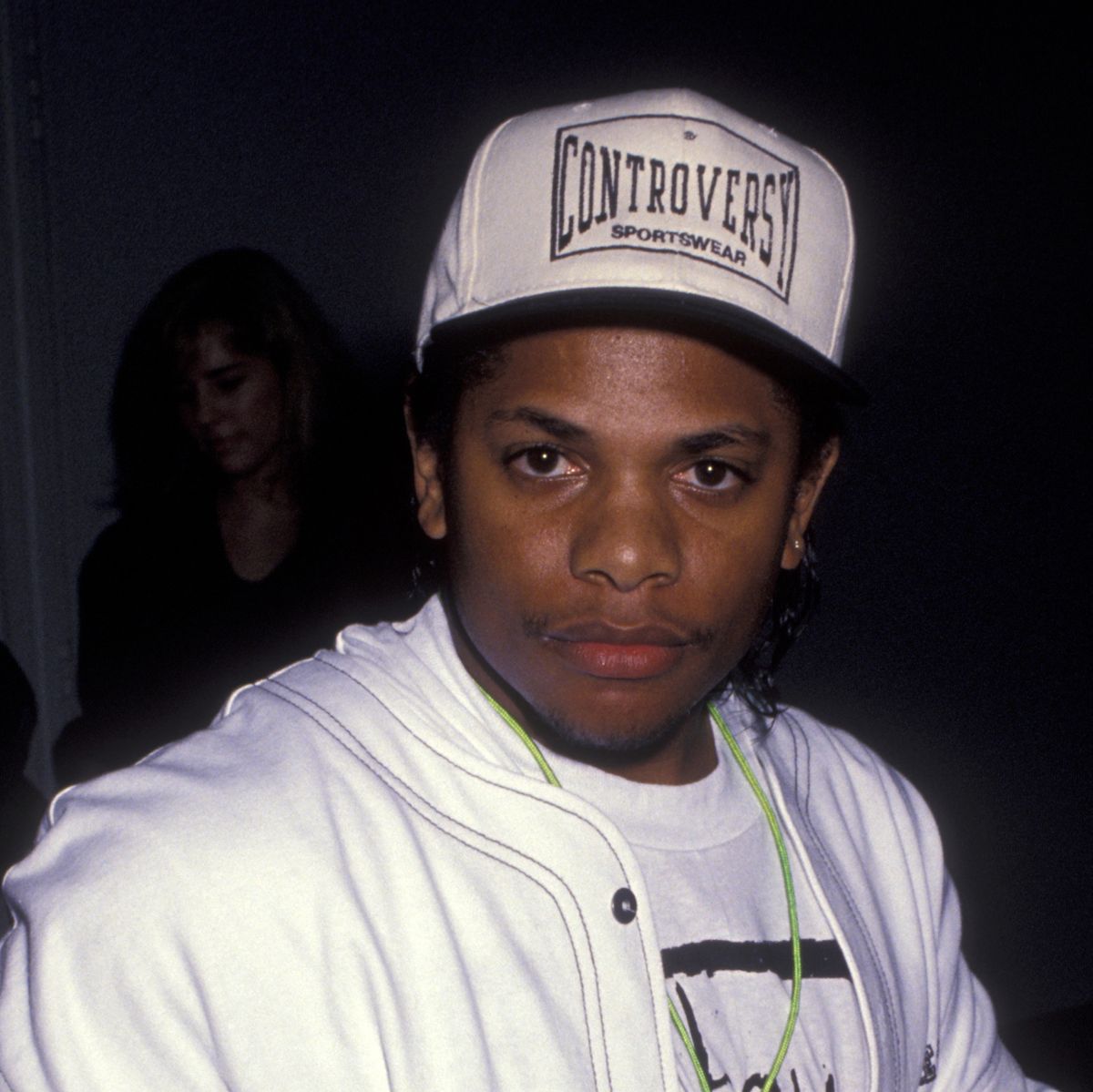
The image is grainy. It’s a bit out of focus, taken in a rush or with a cheap disposable camera, but the face is unmistakable. Eric Wright, better known to the world as Eazy-E, stands there with his signature locs and that defiant look that helped define West Coast rap. People have obsessively dissected the Eazy-E last photo for decades, hunting for clues about his final days, his health, and the rapid, tragic decline that took him from us in 1995.
It's heavy stuff.
When we talk about the godfather of gangsta rap, we’re talking about a guy who went from selling drugs on the streets of Compton to having lunch at the White House. He was a paradox. So, when he suddenly fell ill and died just weeks after a public diagnosis, the vacuum he left was filled with conspiracy theories and blurry snapshots. Most of what you see circulating on Reddit or old hip-hop forums as "the last photo" actually isn't. People get it wrong all the time.
Honestly, the timeline of Eazy’s final month is a blur of hospital visits, a sudden wedding, and a legal battle that started before he even stopped breathing. Understanding the context of these final images isn't just about being a fan; it's about seeing the human side of a guy who seemed invincible until he wasn't.
The Reality Behind the Eazy-E Last Photo and His Final Days
Most people point to a specific shot taken in February 1995 as the Eazy-E last photo. In it, he’s wearing a black "Ruthless" cap—obviously—and he looks... thin. That’s the thing that hits you first. If you compare it to his appearance during the It's On (Dr. Dre) 187um Killa era, the weight loss is staggering. This particular photo was reportedly taken during one of his final public appearances or a studio session shortly before he checked into Cedars-Sinai Medical Center on February 24, 1995.
He thought it was asthma. That’s what his friends, like DJ Yella and Bone Thugs-N-Harmony, have said in countless interviews. He was wheezing. He couldn't catch his breath. For a guy who lived a high-octane life, a little respiratory trouble didn't seem like a death sentence. But it was actually the onset of AIDS-related pneumonia.
There is another image, often whispered about but rarely seen in high quality, purportedly taken while he was in the hospital. Some claim a "last photo" exists of him in his hospital bed, but the Wright family has been incredibly protective—and rightfully so. Most of the "hospital" photos you see online are actually stills from music videos or clever edits. The true last images of Eric Wright as a healthy, functioning man came during the early weeks of 1995, specifically around the time he was promoting the burgeoning success of Bone Thugs.
The speed of his decline was terrifying. He went from being the CEO of Ruthless Records to being gone in about a month.
Why We Are Still Obsessed With That Final Glimpse
Why does it matter? It's been over thirty years.
It matters because Eazy-E didn't go out like a typical celebrity. There was no long, public battle. There was no "farewell tour." One day he was the king of Compton, and the next, there was a press release being read by his attorney, Ron Sweeney, announcing that Eric had full-blown AIDS. It was a sledgehammer to the chest of the hip-hop community.
The Eazy-E last photo serves as the only visual bridge between the legend and the reality of his illness. Fans look at it trying to find a sign. Was he in pain? Did he know?
The truth is, Eazy was working until the end. Bone Thugs-N-Harmony have frequently talked about how he was still "the boss" even when he started feeling sick. Bizzy Bone has mentioned in interviews that Eazy’s spirit never really flagged, even if his body was giving out. When you look at those final pictures, you aren't just looking at a dying man; you’re looking at a guy who was trying to finish his work.
Misconceptions and Fake Images
Let's clear some stuff up because the internet is a mess of misinformation.
- The "Hologram" Confusion: Sometimes, younger fans see images of the Eazy-E hologram from Rock the Bells 2013 and think it’s a rare, high-def photo. It’s not. It’s digital.
- The Funeral Photos: There are photos of the open casket from his funeral on April 7, 1995. Thousands of people attended. These are often labeled as "last photos," but they are obviously post-mortem. They show him in his trademark flannel and "Compton" hat, looking peaceful, but they don't capture the man.
- The Studio Shots: There are shots of him with various Ruthless artists that look "late-era," but if he isn't looking noticeably gaunt, they probably date back to mid-1994.
The Tragic Timeline of March 1995
If you want to understand the Eazy-E last photo, you have to look at the calendar. It’s a brutal read.
February 24: Eric checks into the hospital. He thinks he has a severe respiratory infection.
March 16: He officially announces his diagnosis to the world. He releases a statement that is still heartbreaking today. He said he wasn't looking for sympathy, but he wanted to warn the younger generation that "it’s real."
March 26: Eric Wright passes away.
Think about that. Ten days.
In those ten days, he married Tomica Woods in the hospital. He reportedly made peace with Snoop Dogg and Dr. Dre. Suge Knight’s name always pops up in these discussions too—usually in a darker context involving theories about "tainted needles"—but if we stick to the facts, the fact is that Eazy’s time was up before most people even knew he was sick.
The photos from that final year show a man who was shifting. He was moving away from the "beef" with Death Row and focusing on his legacy. You can see it in his eyes in the later shots. There’s a certain gravity there that wasn't present in the 1988 "N.W.A. and the Posse" era.
The Cultural Impact of His Departure
When Eazy died, it changed how the world viewed HIV/AIDS, especially in the Black community and the hyper-masculine world of rap. Before Eric, it was a "them" problem. After Eric, it was an "us" problem.
The last photo of Eazy-E isn't just a piece of macabre trivia. It represents the moment the invincibility of the 90s rap era shattered. If it could happen to the man who founded N.W.A., it could happen to anyone.
People like Jerry Heller, his longtime manager, later expressed immense guilt and sadness over the ending of their relationship and the speed of Eazy's death. Heller often spoke about Eazy's final days in his book Ruthless, describing a man who was still trying to navigate a complex web of business and personal betrayals while his health failed.
How to Verify Authentic Eazy-E History
If you're digging into this, don't just trust a Pinterest board. The most reliable visual records of Eric Wright's final months come from:
- Official Ruthless Records archives: Photos used for the posthumous release of Str8 off tha Streetz of Muthaphukkin Compton.
- Reputable photographers: Guys like Ricky Powell or Chi Modu (though most of Chi's work was earlier).
- Family-sanctioned documentaries: Specifically, the works produced by his daughter, Ebie Wright, who has spent years trying to uncover the full truth of her father's passing.
There's a lot of "lost footage" out there. Every few years, someone claims to have found a New Year's Eve 1994 tape or a final interview. Most of it is just marketing for some new YouTube channel. The real Eazy-E—the one who changed music forever—is found in the music he left behind and the few, precious, authentic photos that captured his final months.
He looked tired. He looked thin. But he still looked like Eazy.
The weight of the Eazy-E last photo is really about the "what if." What if he had stayed healthy? What if he and Dre had actually finished their planned reunion? The photos don't give us those answers. They just remind us that he was here, he was powerful, and he was human.
To truly respect the legacy of Eric Wright, focus on the primary sources. Look at the verified interviews from 1994 and early 1995. Listen to the shift in his voice in his final recordings. The clues to his state of mind aren't just in a blurry photo; they're in the urgency of his final work. He was a man out of time, and he seemed to know it, even if he didn't want to admit it to the world.
Check out the documentary The Life and Timez of Eric Wright for a more granular look at these dates. Also, the book Eazy-E: The Godfather of Gangsta Rap offers some of the best-researched insights into the corporate chaos that surrounded his final hospital stay. If you want to see the real man, stay away from the conspiracy Tik-Toks and stick to the people who were actually in the room. That’s where the truth lives.
Stop looking for a "conspiracy" in a grainy image and start looking at the lessons he tried to teach in his final press release. That’s the most important image he ever left us. It’s a picture of a man taking responsibility when he knew the end was near. That's a lot more powerful than a "last photo" taken in a dark studio.
Next Steps for Hip-Hop Historians:
- Audit the Timeline: Compare the release dates of Bone Enterprise (Bone Thugs) with Eazy's hospital admission to see how he was managing talent until his final weeks.
- Study the 1995 Press Statement: Read the full text of Eazy-E's AIDS announcement. It provides more context than any photo ever could.
- Verify Photo Metadata: If you find "new" photos, check the background—look for specific 1995-era technology or fashion that confirms the date.