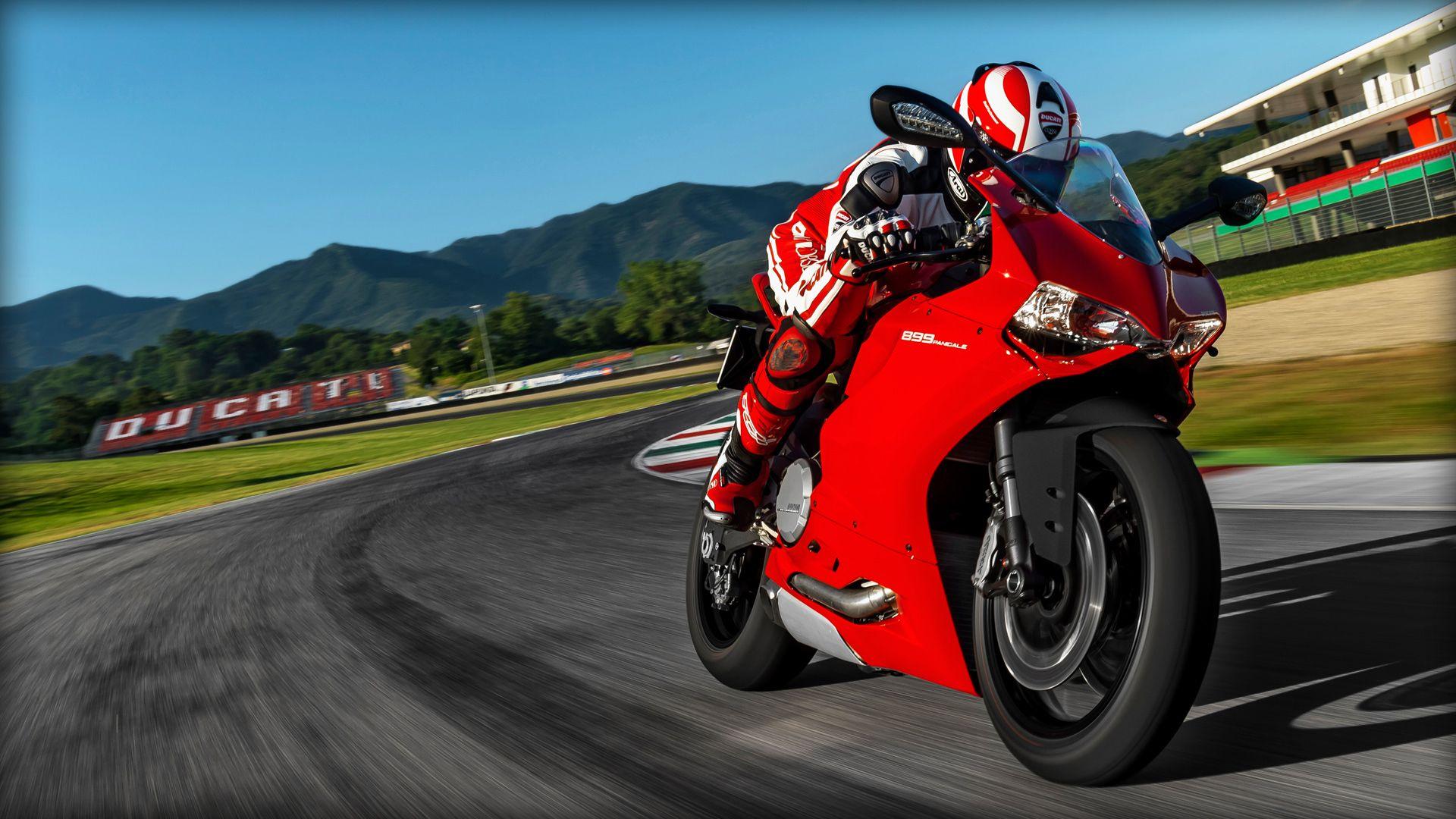
You’re tucked in tight. Chin on the tank, elbows pinned against your ribs, the scream of the Superquadro L-twin echoing off your helmet’s visor. The digital speedo is climbing fast—155, 160, 165. For most riders, the Ducati Panigale 899 top speed is a number they’ll only see on a YouTube thumbnail or a spec sheet at the local coffee shop. But if you’ve actually pinned the throttle on a long enough straight, you know the reality is a bit more nuanced than a single marketing figure.
Honestly, people obsess over the peak velocity like it's the only thing that matters. It isn't. But let’s satisfy the curiosity first: in a perfect world, under perfect conditions, a stock 899 Panigale will tap out at an indicated 170 mph (approx 274 km/h).
Some riders claim they’ve seen 173 or 175 on the dash. Others swear it won't budge past 168. Why the discrepancy? It usually comes down to the "Italian speedometer" factor—Ducati’s gauges are notoriously optimistic. If you’re tracking it with a high-precision GPS, you’re likely looking at a true speed closer to 161-163 mph.
The Engine That Punches Up
The heart of this machine is the 898cc Superquadro engine. It’s a masterpiece of engineering from the mid-2010s that still holds its own today. While its big brother, the 1199, was a literal beast that tried to rip your arms off, the 899 was always the "sensible" choice.
Sensible is a relative term here.
You’ve got 148 horsepower peaking at 10,750 rpm. That’s plenty. More importantly, the torque curve is surprisingly flat for a high-revving twin. It delivers about 73 lb-ft of torque, which means it pulls hard out of corners even if you aren't in the perfect gear. This is exactly why the 899 is often faster around a technical track for "mortal" riders than the 1199—it’s actually usable.
Real World vs. The Spec Sheet
On a typical highway or a shorter track straight, you aren't hitting 170. You just aren't. Aerodynamics become a brick wall once you pass 140 mph. The 899 has a smaller profile than the liter bikes, which helps it slice through the air, but at those speeds, every tiny bit of drag matters.
Wind direction.
Ambient temperature.
What you had for lunch.
All of these play a role. A cold morning with dense air helps the engine breathe, but it also increases drag. Conversely, a hot afternoon might let you slip through the air easier, but your engine will be down a few ponies due to the heat.
Why the 899 Still Matters in 2026
You might be wondering why we’re still talking about a bike that stopped production in 2015. Well, look at its successors. The 959 and the Panigale V2 are incredible, but they also got "soft" in some ways—or at least, more refined.
The 899 was the last of the raw, double-sided swingarm middleweights. It didn't have a slipper clutch from the factory (though many owners added them). It was loud. It was vibration-heavy. It felt alive.
When you’re pushing the Ducati Panigale 899 top speed, you feel every bit of that mechanical aggression. The 959 added weight to meet Euro 4 emissions and even though it has a bit more displacement, the 899 feels more eager to rev. It’s a "purer" experience for many Ducati purists.
The Gearbox Limitation
The 899 uses a 15/44 final drive ratio. Some riders find that the bike actually hits the rev limiter in 6th gear before the engine truly runs out of steam. If you’re chasing a higher top-end, dropping a tooth on the rear sprocket (to a 43) can technically increase your theoretical top speed, but you’ll sacrifice that punchy acceleration that makes the bike so fun in the first place.
Basically, you’re trading "fun everywhere" for "bragging rights on a 2-mile runway."
Handling the Velocity
Speed is nothing without control. The 899 features a monocoque frame where the engine is a stressed member. This makes the bike incredibly light—around 425 lbs wet. When you’re doing 160 mph, a light bike can feel a bit twitchy.
The Showa Big Piston Forks (BPF) and the Sachs rear shock do a decent job, but they need to be dialed in. If your sag isn't set for your weight, the front end can get "flighty" at high speeds. It’s a common complaint among 899 owners who try to chase top speed without touching their clickers.
- Tires: The stock Pirelli Diablo Rosso Corsas are great, but for high-speed runs, you want something with a stiffer carcass.
- Electronics: The Ducati Traction Control (DTC) is excellent, but at very high speeds, wheel spin can actually trigger it, cutting power right when you’re trying to eke out those last few mph. Most track riders turn it down to level 1 or 2 for top-speed attempts.
Is It Safe? (The Expert's Take)
Look, doing 170 mph on two wheels is never "safe." But the 899 is built for it. The Brembo Monobloc M4.32 calipers are absolute anchors. If you need to shed 100 mph in a hurry, they’ve got the bite and the feel to do it without fading.
However, the 899 is a heat-generating machine. The rear cylinder exhaust loop sits right under your seat. In traffic, it’s a toaster. At top speed, it’s a furnace. If you’re doing back-to-back high-speed runs, keep an eye on your coolant temps. These bikes don't like to sit still, and they don't like being thrashed in extreme heat without plenty of airflow.
Comparing the Rivals
How does the 899 stack up against its contemporaries?
- Suzuki GSX-R750: Often faster on the top end, but feels like an old tractor compared to the Ducati's chassis.
- MV Agusta F3 800: Beautiful and fast, but good luck finding a mechanic who can fix it on a Tuesday.
- Triumph Daytona 675R: Better handling, but lacks the raw top-speed lung capacity of the Italian twin.
The 899 sits in this "Goldilocks" zone. It's faster than a 600 but easier to live with than a 1000.
Technical Breakdown
To really understand why the 899 stops where it does, you have to look at the drag coefficient. A motorcycle is an aerodynamic nightmare. The rider is a giant, flapping sail.
$F_d = \frac{1}{2} \rho v^2 C_d A$
This formula for drag force shows that as your velocity ($v$) increases, the force pushing back against you increases by the square. To go twice as fast, you need significantly more than twice the power. The 148 hp of the 899 is simply the physical limit for pushing a human-shaped object through the atmosphere at ~170 mph.
Actionable Insights for Owners
If you actually want to see what your 899 can do, don't just pin the throttle and hope for the best.
- Check your chain tension. A tight chain creates friction; a loose one is dangerous. Aim for the "loose" end of the factory spec.
- Tape your seams. Sounds nerdy, but taping over the gap between your windscreen and fairing can actually add 1-2 mph by reducing turbulence.
- Lose the backpack. Even a small bag creates massive drag at triple-digit speeds.
- Fresh oil. The Superquadro engine shears oil quickly. If you're going to push it to the redline in 6th gear, make sure you aren't running 3,000-mile-old swamp water.
- Check your tire pressure. High speed causes massive heat buildup. Run your pressures according to the manual's "high speed/track" recommendations, not your daily commuter settings.
The Ducati Panigale 899 top speed is a badge of honor for the bike, but the real magic is how it gets there. It’s the sound, the vibration, and the way the front wheel gets light over crests. Whether you hit 160 or 170, the bike remains one of the most rewarding sportbikes ever produced.
If you’re planning a top-speed run, make sure your steering damper is in good shape. The 899 comes with a non-adjustable Sachs unit that is... okay. But if you're serious about high-speed stability, upgrading to an adjustable Öhlins damper is the single best modification you can make for peace of mind at 160+ mph. Inspect your fairing bolts too; the vibrations at high RPMs have a way of backing out anything that isn't torqued to spec.