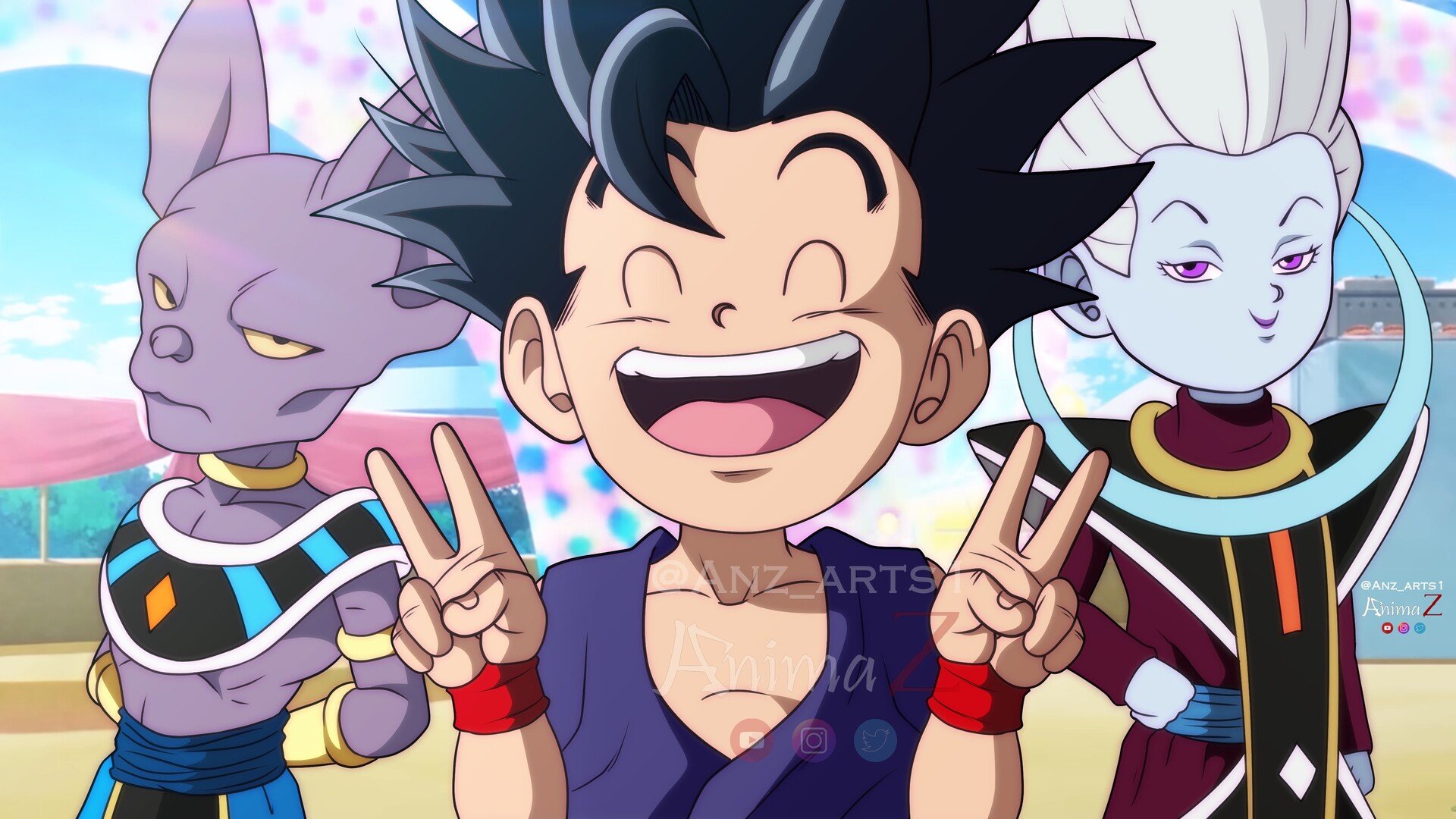
Let’s be real. Seeing Goku turned back into a kid for the second time in the franchise's history felt like a weird case of déjà vu for a lot of us. After Dragon Ball GT did the "Goku is small again" trope decades ago, fans were understandably skeptical when Akira Toriyama announced a similar premise for Dragon Ball Daima. But this isn't a retread. It’s a weird, whimsical, and surprisingly deep dive into the Demon Realm, a place the series has teased since the days of Dabura but never actually explored in detail.
The core hook of the Dragon Ball Daima characters revolves around a "conspiracy" that sees the entire main cast—yes, even Vegeta and Piccolo—shrunk down into "Mini" versions of themselves. This isn't just a cosmetic change. It fundamentally shifts how they fight, how they move, and how they interact with a world that is suddenly much larger and more dangerous than the one they dominated as literal gods.
The Mini Transformation: It’s Not Just About Height
When Gomah, the new King of the Demon Realm, uses the Dragon Balls to wish everyone small, he isn't just doing it for the laughs. He’s terrified of the Z-Fighters. By turning them into children, he effectively nerfs their reach and, in some cases, their ability to utilize the massive power levels they achieved during Dragon Ball Super. Seeing a "Mini" Vegeta struggle with his center of gravity or a "Mini" Piccolo dealing with a cape that’s now way too heavy is honestly hilarious, but it also forces the characters to go back to basics.
Goku, of course, takes it in stride. He’s the heart of the show. Since his body is smaller, he can't rely on the raw, planet-breaking power of Ultra Instinct or Super Saiyan Blue as easily. Instead, he brings back the Power Pole (Nyoibo). It’s a massive nostalgia trip. Using the staff isn't just fan service; it’s a tactical necessity because his limbs are too short to land punches on full-sized demons.
The "Mini" versions of the cast are voiced by their original Japanese actors (like the legendary Masako Nozawa) using a slightly higher pitch, which adds to the charm. But don't let the cuteness fool you. These are still the same battle-hardened warriors. They just have to figure out how to function when they can’t reach the top shelf of the fridge, let alone take on a Demon King.
Glorio and the New Faces of the Demon Realm
One of the standout Dragon Ball Daima characters is Glorio. He’s a brand-new face, a pilot from the Demon Realm who shows up with a very specific mission. He’s got this cool, detached vibe that reminds me a bit of a younger, more cynical Shin (the Supreme Kai). Glorio flies a "Plane" that looks like something straight out of a 1980s sci-fi manga, and his knowledge of the three different "Demon Worlds" is our roadmap for the series.
He isn't a hero in the traditional sense. He's a mercenary. He needs Goku's strength, and Goku needs his ship. It’s a classic buddy-cop dynamic, but with more energy blasts and weird alien food.
Then we have Panzy. She’s the daughter of a local ruler in the Second Demon World. She’s spirited, brave, and acts as the emotional anchor for the group when things get too "Dragon Ball-y." Her inclusion highlights something Toriyama did better than almost anyone else: creating side characters who feel like they have a life outside of the main plot. She isn't there to fight the big bad; she's there because her world is being ruined by Gomah’s greed.
The Villains: King Gomah and Degesu
Gomah is a fascinating coward. Unlike Frieza, who wants to rule the universe through fear, or Cell, who wanted perfection, Gomah is just... insecure. He took over the throne after Dabura was killed by Majin Buu, and he’s been looking over his shoulder ever since. He’s short, green, and wears a cape that looks like it's wearing him.
He is joined by Degesu, the younger brother of the Supreme Kai. This is a massive bit of lore. Knowing that the Kai race has members who defected or stayed in the Demon Realm explains so much about the balance of the Dragon Ball universe. Degesu is the brains of the operation, providing the technical and magical know-how to pull off the "Mini" wish. He’s arrogant and looks down on "mortals," making him the perfect foil for the humble, food-obsessed Goku.
Why the Demon Realm Matters Now
For years, the Demon Realm was just a footnote. We knew Dabura was its King. We knew the "Makai" existed. But Daima actually takes us there. It’s a world of purple skies, strange flora, and physics that don't quite align with Earth’s.
The Dragon Ball Daima characters we meet there aren't all evil. That's a huge misconception. The Demon Realm is just another place where people live, eat, and try to survive. Some are blue, some have horns, and some look like giant bugs, but they aren't inherently "demonic" in the biblical sense. This nuance makes the world-building feel more like the original Dragon Ball search for the orbs and less like the "save the multiverse" stakes of Super.
Shin’s Role and the Glaring Absence of High-Level Forms
One of the most interesting things about the Dragon Ball Daima characters is how Shin (the Supreme Kai) is handled. He’s also been turned "Mini," and he’s arguably more useful here than he has been in a decade. Without the ability to just call Beerus or Whis to solve their problems, Shin has to rely on his actual knowledge of ancient lore.
There’s a real sense of vulnerability here. You won't see Goku instantly tapping into God Ki. In fact, the show goes out of its way to explain that in the Demon Realm, certain types of energy are harder to manifest. This is a brilliant narrative move. It levels the playing field. When Goku fights a group of thugs in a bar, it feels dangerous again. You’re worried he might actually lose because his stamina is lower and his reach is shot.
Technical Nuance: The Animation of "Smallness"
The character designs, handled by Katsuyoshi Nakatsuru and based on Toriyama's final sketches, are incredibly expressive. There is a specific "weight" to how these characters move. When Mini Vegeta tries to cross his arms, his chest is too wide and his arms are too short, so he looks grumpy and awkward. It’s a physical comedy that requires top-tier animation to land.
The fight choreography also reflects the change. Instead of just hovering in the air and firing beams, the Dragon Ball Daima characters spend a lot of time on the ground. They use the environment. They hide. They sneak. It’s a return to the martial arts roots that made the series famous in the first place.
Common Misconceptions About the Daima Cast
- Is this a sequel to Super? Chronologically, it takes place after the defeat of Kid Buu but before the end of Z (the peaceful era) and arguably before the heavy-hitting events of Super. This is why characters like Beerus aren't the primary focus.
- Are they actually kids? No. They are adults trapped in children's bodies. Their personalities, memories, and techniques remain intact, though their physical capacity to execute them is hampered.
- Is it just for kids? While the art style is "cuter," the themes of political overthrow in the Demon Realm and the high-stakes survival elements are definitely aimed at long-time fans.
Moving Beyond the "Mini" Gimmick
To truly appreciate the Dragon Ball Daima characters, you have to look past the "chibi" aesthetic. This is a story about adaptation. Goku’s journey through the three Demon Worlds isn't just about finding the Dragon Balls to turn back to normal; it’s about rediscovering what it means to be a fighter when you aren't the strongest person in the room.
The introduction of the "Tamagami"—monstrous guardians of the Demon Realm Dragon Balls—adds a layer of "boss fight" energy that feels fresh. These aren't just guys in spandex; they are elemental forces that require strategy to defeat.
Actionable Insights for Fans and Collectors
If you're looking to dive deeper into the world of Dragon Ball Daima, there are a few things you should keep an eye on to stay ahead of the curve.
First, pay close attention to the background characters in the Demon Realm markets. Many of these designs are pulled directly from Akira Toriyama’s one-shot mangas like Sand Land or Cowa!. It’s a treasure trove of Easter eggs for hardcore fans.
Second, if you’re a gamer, keep an eye on Dragon Ball Sparking! ZERO. Several Dragon Ball Daima characters, including Goku (Mini) and Glorio, have been added as DLC or base roster characters. Playing as them gives you a much better feel for the "shorter reach" mechanics I mentioned earlier. You can actually see how the Power Pole changes the neutral game compared to adult Goku.
Lastly, watch the subbed version if you can. While the dub is great, the nuances in the Japanese honorifics used in the Demon Realm provide a lot of context for the social hierarchy between King Gomah and his subjects. It makes the world feel much more lived-in and real.
The best way to experience these characters is to approach the show with an open mind. It isn't Z, and it isn't Super. It’s something different—a whimsical, dangerous adventure that reminds us why we fell in love with a monkey-tailed boy in the first place.