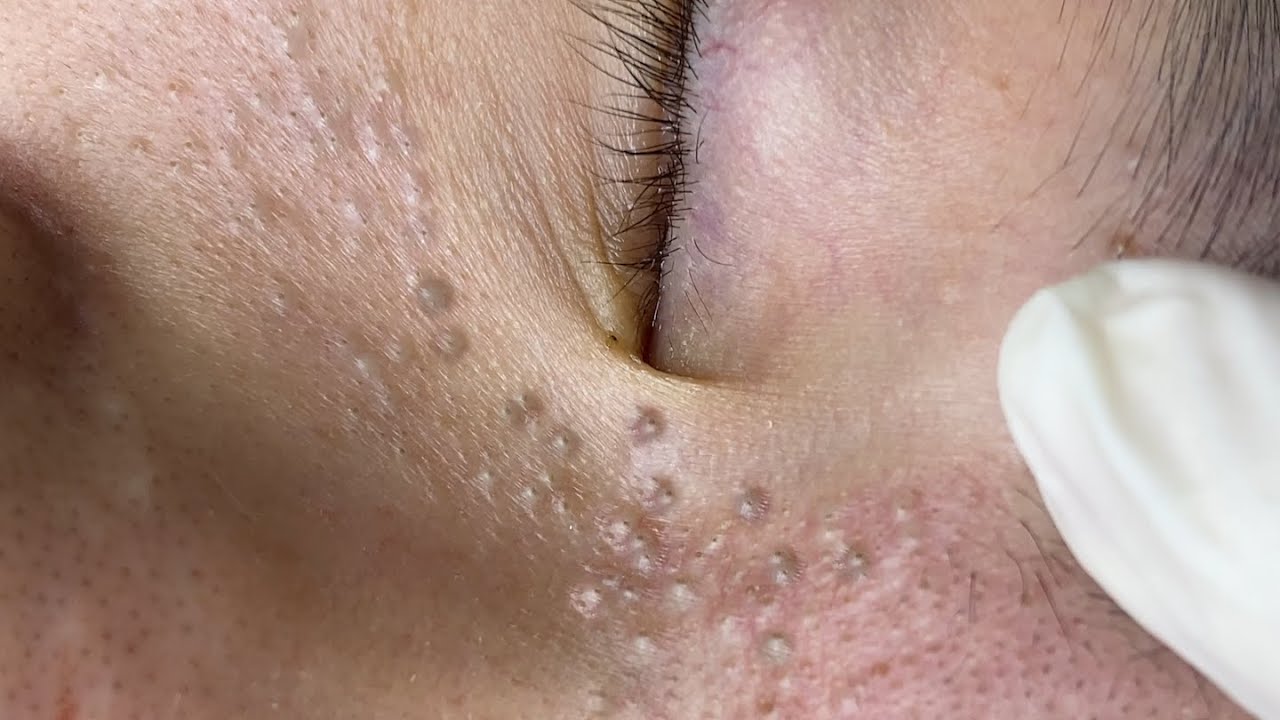
You’ve probably seen the thumbnail. A massive, dark, almost obsidian-looking plug sitting right near a woman's ear. It looks like a pebble or maybe a stray piece of charcoal. For millions of "pop-aholics" across the globe, this isn't just a medical procedure; it’s the holy grail of dermatology. We’re talking about the dr sandra lee biggest blackhead ever caught on camera—the legendary case of Doris and her 55-year-old "friend."
Honestly, it’s kinda wild how something so small can become a global phenomenon. But when Dr. Sandra Lee—the world-famous Dr. Pimple Popper—posted this extraction, it broke the internet. It wasn't just a pimple. It was a time capsule of skin cells and sebum that had been hanging out for over half a century.
The Mystery of the 55-Year-Old Blackhead
So, what exactly was it? Medically speaking, this wasn't just a standard blackhead you’d find on a teenager's nose. Dr. Lee diagnosed it as a Dilated Pore of Winer (DPOW).
Basically, a DPOW is like a blackhead on steroids.
It happens when a single pore becomes so clogged with dead skin and keratin that it stretches out the hair follicle. Over decades, that material hardens. Because the top is exposed to the air, it oxidizes and turns that deep, ink-black color. Doris, the patient, had been carrying this around for five and a half decades.
Think about that.
That pore had been there through the Moon landing, the invention of the internet, and the rise of social media. It was literally a part of her identity. She even joked that it was her "little lump of coal."
Why This Extraction Felt Different
Most of Dr. Lee’s videos are "soft pops"—quick squeezes that take a few seconds. This was a "hard pop." Because the pore had been dilated for so long, the skin around it had thickened. Dr. Lee couldn't just use a comedone extractor and call it a day.
She had to get surgical.
Watching the video, you see her use a punch biopsy tool and a scalpel to carefully loosen the edges. When it finally comes out, it’s not a liquid or a paste. It’s a solid, calcified mass. It looks like a small stone. Dr. Lee herself was visibly excited, calling it a "unicorn" of a case because you just don't see them that old or that perfectly preserved very often.
What Most People Get Wrong About Big Blackheads
There’s this common misconception that blackheads are caused by "dirty" skin. You'll see people in the comments saying, "Why didn't she just wash her face?"
That’s not how it works.
Dirt has nothing to do with it. A blackhead—even the dr sandra lee biggest blackhead—is made of keratin (the stuff in your hair and nails) and sebum (skin oil). The black color isn't dirt; it's just the chemical reaction of those oils hitting the oxygen in the air.
In Doris’s case, the pore was so large that no amount of scrubbing or over-the-counter salicylic acid was going to touch it. Once a pore is that dilated, it’s basically a permanent pocket in the skin.
- The "Ombre" Effect: One of the coolest parts of the extraction was seeing the color change. The top was black, but as Dr. Lee pulled it out, the bottom was gray and then white. This is because the deeper layers hadn't been exposed to oxygen.
- The Aftermath: You can't just pull out a giant blackhead and leave a hole. If you do, it’ll just fill right back up.
- The Fix: Dr. Lee actually had to "excise" the pore. This means she cut out the stretched-out lining and used stitches to pull the skin back together.
Doris’s face looked totally different afterward. She said she felt younger, and honestly, seeing the relief on her face was better than the pop itself.
Why We Can't Stop Watching
It’s a bit of a psychological mystery, isn't it? Why do millions of us watch a dermatologist pull a 55-year-old plug out of someone's skin?
Experts call it "benign masochism." It’s the same reason we like rollercoasters or spicy food. It’s a sense of danger or "grossness" that we experience from a safe distance. There’s also the "just world" hypothesis—the idea that something "bad" or "wrong" (the giant blackhead) is being removed and the person is being "cleansed."
It feels productive. It’s satisfying.
The Real Danger of "DIY" Giant Pops
Look, it’s tempting. You see a "blackhead" and you want to go at it with a pair of tweezers or a safety pin.
Don't.
The biggest risk with something like a Dilated Pore of Winer is infection and scarring. If you don't remove the entire "sac" or the lining of the pore, it will 100% come back. Plus, if you're not in a sterile environment, you risk turning a cosmetic issue into a medical emergency.
Dr. Lee uses local anesthesia, sterile tools, and surgical techniques to ensure the skin heals flat. If Doris had tried to do this at home, she likely would have ended up with a massive scar or a staph infection near her ear.
What You Should Do Instead
If you have a blackhead that seems "stuck" or is getting larger, here is the professional path to take:
- Stop Picking: Every time you squeeze, you risk pushing the debris deeper or tearing the pore wall.
- Use Salicylic Acid: If it's a normal blackhead, a 2% BHA (Beta Hydroxy Acid) can help dissolve the "glue" holding the plug together.
- Consult a Pro: If it looks like a "stone" or has been there for years, see a board-certified dermatologist. They can determine if it's a DPOW or even something else, like a pilar cyst or a basal cell carcinoma (which can sometimes look like a blackhead).
- Ask About Excision: If you want it gone forever, ask if they can excise the pore. It’s a quick procedure, and the scar is usually much smaller than the original hole.
Doris’s story ended with a smile and a "lump of coal" in a specimen jar. It reminds us that skin issues aren't something to be ashamed of—they're just part of being human. Sometimes, those parts just take 55 years to finally leave.
Actionable Insight: If you’re dealing with persistent blackheads, check your skincare labels for "non-comedogenic" ingredients. If a blemish has been present for more than a few months and isn't responding to topicals, skip the home extraction and schedule a consultation with a dermatologist to avoid permanent skin dilation or scarring.