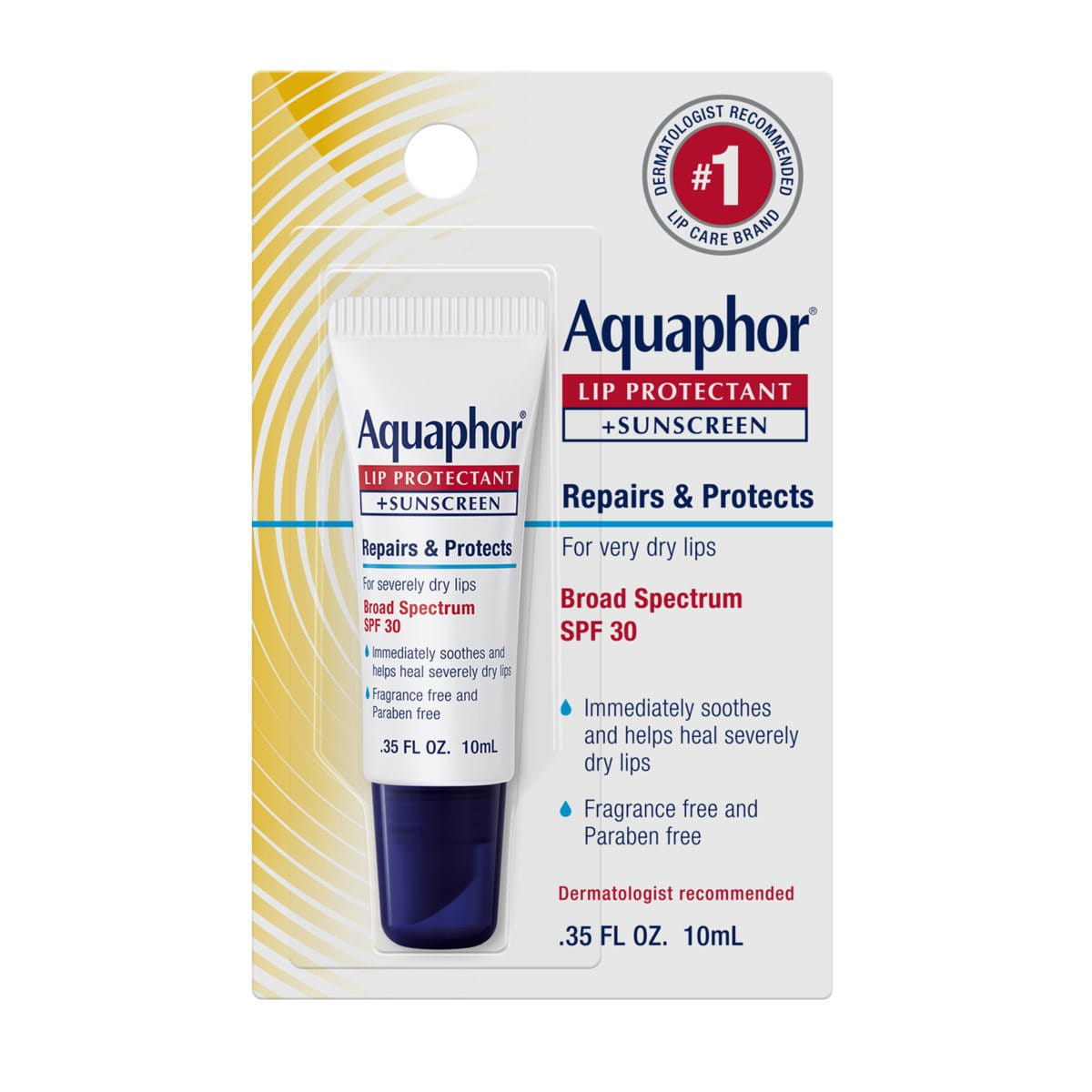
You're standing in the skincare aisle, squinting at that iconic blue-and-white tube. It’s a staple. Most of us have a tub of Aquaphor Healing Ointment somewhere—probably in a junk drawer, a gym bag, or sitting on the nightstand. It’s the "everything" balm. Dry elbows? Aquaphor. New tattoo? Aquaphor. Cracked cuticles? You get the point. But as the weather warms up, a common question starts trending: does Aquaphor have SPF? The short answer is usually no.
Honestly, it’s a dangerous misconception. People see that thick, shiny barrier and assume it’s protecting their skin from everything, including the sun. It’s not. In fact, slathering standard Aquaphor on your face before a beach day might actually be doing more harm than good.
The Science of the "Slug"
Standard Aquaphor Healing Ointment is an occlusive. Its primary job is to trap moisture. It’s made of 41% Petrolatum, along with mineral oil, ceresin, lanolin alcohol, panthenol, and glycerin. It creates a physical seal. This is incredible for healing compromised skin because it prevents "Transepidermal Water Loss" (TEWL).
But here’s the catch.
Because it’s so thick and oil-based, it can act a bit like a magnifying glass for UV rays if it doesn’t contain active sunscreen filters. Think about how people used to use baby oil to tan in the 70s. While Aquaphor isn’t exactly "tanning oil," that greasy sheen can increase the heat on the skin’s surface. If you’re asking does Aquaphor have SPF because you want to use it as a lip balm at the pool, you need to be careful. Unless the tube specifically says "Broad Spectrum SPF," you are essentially frying your skin.
When Aquaphor Actually Does Have SPF
Now, to be fair to the brand, Beiersdorf (the parent company) isn't oblivious. They know we want sun protection. So, they created specific products.
If you buy the Aquaphor Lip Repair + SPF 30, then yes, it has SPF. This version uses chemical filters like Avobenzone and Octocrylene to shield your lips. Lips are incredibly thin-skinned. They don't have sweat glands or oil glands, which is why they burn and chap so easily. Using the regular ointment on your lips in the sun is a recipe for a painful burn.
There is also an Aquaphor Broad Spectrum SPF 30 Daily Facial Moisturizer. This is a totally different formula. It’s meant for the face, it’s non-comedogenic, and it actually provides the protection you’re looking for. But the "classic" ointment? Zero. Zilch. Nada.
Why People Get This Wrong
It’s about the texture. Humans are intuitive, but sometimes our intuition fails us in chemistry. We feel a heavy layer on our skin and think, "This is a shield."
I’ve seen people use it over their sunscreen to "lock it in." This is a bad idea. dermatologists like Dr. Shari Marchbein have often pointed out that applying a heavy occlusive like petrolatum over sunscreen can actually dissolve the sunscreen film or cause it to migrate, leaving your skin patchy and vulnerable. It’s called "pilling" or "smearing," and it effectively lowers the SPF rating of the product you put underneath.
The Tattoo Trap
This is where things get really dicey. If you’ve ever sat in a tattoo chair, your artist probably told you to use Aquaphor for the first few days. It keeps the scabbing to a minimum.
But what happens when you go outside?
A fresh tattoo is basically an open wound. It is hyper-sensitive to UV light. If you apply classic Aquaphor—which has no SPF—to a new tattoo and walk into the sun, the petrolatum can trap heat against the damaged skin. This can lead to "sun rash" or even bubbling in the ink. You need to keep that ink covered with clothing until it’s healed enough for real sunscreen. Don't rely on the ointment to protect the pigment from fading in those early days.
Real-World Comparisons: Aquaphor vs. The Competition
If you’re looking for that "ointment feel" but desperately need sun protection, you have a few options.
- Vaseline: Like regular Aquaphor, standard Vaseline has no SPF.
- CeraVe Healing Ointment: Also no SPF, though it has more ceramides.
- Sun Bum SPF 30 Lip Balm: This is a better alternative if you want the moisture of a balm with actual protection.
The Myth of "Natural" Protection
Sometimes you’ll hear people claim that the ingredients in Aquaphor have a "natural SPF of 4." This is a dangerous internet myth. Even if a substance had a negligible SPF of 2 or 4, that is nowhere near the dermatological recommendation of SPF 30 or higher. SPF 15 blocks about 93% of UVB rays, while SPF 30 blocks 97%. Anything below 15 is basically negligible for long-term skin health and cancer prevention.
Mixing Aquaphor With Sunscreen: Don't Do It
You might think you’re a kitchen chemist. "I’ll just mix a dab of Aquaphor with my Neutrogena sunscreen!"
Please, stop.
Sunscreen is a highly complex emulsion. The way the minerals (like Zinc Oxide) or chemical filters are suspended in the lotion is precise. When you mix in a heavy ointment, you break that emulsion. You end up with "holes" in your coverage. You won't know those holes are there until you wake up the next day with a splotchy, painful sunburn.
How to Actually Use It Safely
If you love your Aquaphor (and most of us do), use it as a "recovery" tool.
- The PM Routine: Apply your Aquaphor at night. This is "slugging." It lets your skin heal while you sleep, far away from UV rays.
- The Winter Buffer: If you’re skiing, Aquaphor is great for preventing windburn. But you still need a layer of actual SPF underneath it or use the specific SPF versions.
- Post-Sun Care: If you already messed up and got a sunburn (it happens), then you can reach for the Aquaphor. It helps soothe the tightness and prevents some of the peeling by keeping the skin hydrated while it repairs itself. Just make sure the heat has actually left your skin first, or the ointment might trap the heat in. Wait a few hours after coming inside.
Final Verdict on SPF in Aquaphor
Don't guess with your skin. Skin cancer is the most common cancer in the United States, and most of it is preventable.
If you are looking at a tube and wondering does Aquaphor have SPF, look for the drug facts label on the back. If it doesn't have an "Active Ingredients" section listing things like Zinc Oxide, Titanium Dioxide, Avobenzone, or Oxybenzone, it is not protecting you from the sun.
The classic jar is for healing, not for shielding.
Actionable Steps for Sun Protection
- Check your labels: If your Aquaphor tube doesn't explicitly state "Broad Spectrum SPF 30," do not use it as your primary sun defense.
- Layer correctly: Apply your sunscreen first, let it "set" for 15 minutes, and only then apply a very thin layer of ointment if you absolutely must have that extra moisture.
- Upgrade your lip care: Swap your regular ointment for the Aquaphor Lip Repair + SPF 30 version before going for a run or heading to the beach.
- Watch the expiration: SPF filters degrade over time. If you find an old tube of the SPF version in your car from three years ago, toss it. It’s likely ineffective now.
- Reapply: Even the SPF versions of Aquaphor only last about 80 minutes if you are swimming or sweating.
- Nighttime is best: Keep the heavy, non-SPF ointments for your evening skincare routine to avoid any "magnifying" effects during the day.