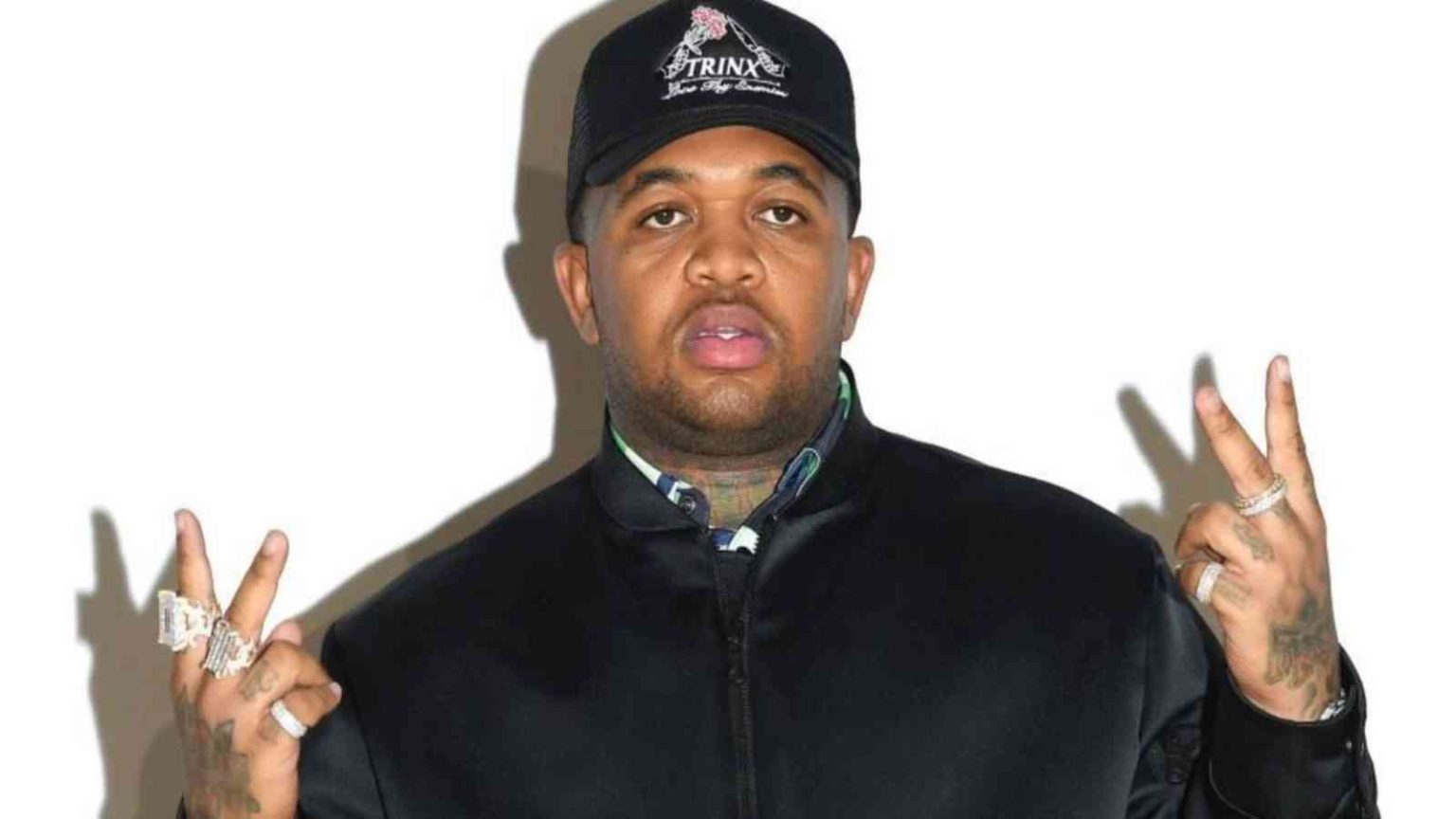
You’ve heard the tag. You’ve probably shouted it in a club or while driving with the windows down. "Mustard on the beat, ho!" It’s arguably the most recognizable producer drop of the last fifteen years. But behind the minimalist basslines and the snappy handclaps that defined the "ratchet music" era, there’s just a guy from South Central Los Angeles who happens to have a very specific birth certificate.
So, let's get right to it. DJ Mustard real name is Dijon Isaiah McFarlane.
Yeah, his parents actually named him Dijon. If you’re wondering whether the chicken or the egg came first, the name definitely preceded the career. Most people assume "Mustard" is just some clever branding he cooked up in a marketing meeting, but it’s literally a play on his first name. Imagine being named after a premium French mustard and not using that for your stage handle. It was right there for the taking.
Why Dijon McFarlane Became Mustard
Honestly, the origin story is pretty grounded. Born on June 5, 1990, Dijon grew up in a household where music wasn't just a hobby; it was the family business, sort of. His uncle was a DJ, and that’s where the spark ignited. When Dijon was only 11 years old, his uncle let him spin at a family party.
He was hooked.
As he started getting better and playing local gigs around LA, the nickname naturally stuck. People started calling him "Mustard" because of the Dijon connection. It wasn't some deep, metaphorical choice about adding spice to the track—though that’s a cool way to look at it now. It was just a bunch of West Coast kids being literal. Eventually, he leaned into it, and DJ Mustard was born.
The Man Behind the "Ratchet" Sound
It’s hard to overstate how much Dijon McFarlane changed the radio. Around 2011, hip-hop was in a weird transition phase. Then came "Rack City" by Tyga. That beat was so sparse it almost felt unfinished, but that was the genius of it.
Dijon calls his style "ratchet music." It’s a sound built on:
- Sub-bass that rattles your teeth.
- The "Hey!" chant that everyone copies now.
- Crisp, dry handclaps.
- Simple, hypnotic melodies played on a synth.
He didn't just stumble into this. Growing up in Los Angeles, he was raised on a diet of Dr. Dre, Snoop Dogg, and the "Jerkin" movement. If you remember the Jerkin era—skinny jeans, bright colors, and fast dancing—you know that the music had to be high-energy and rhythmic. Dijon was right in the middle of that. He even released a compilation called Let’s Jerk in 2010 before he became a household name.
The Name Change: Dropping the "DJ"
You might have noticed that on more recent projects, like his work with Roddy Ricch or Kendrick Lamar, he’s often credited simply as Mustard.
This wasn't an accident or a typo. As he evolved from a guy spinning records in clubs to a Grammy-winning executive and mogul, he wanted a name that felt bigger. "DJ Mustard" sounds like a guy behind a turntable. "Mustard" sounds like a brand. It’s the same move Sean Combs made going from Puff Daddy to P. Diddy to just Diddy.
He founded 10 Summers Records in 2014, and that label gave us Ella Mai. Think about "Boo'd Up"—that’s a Mustard production, but it’s miles away from the "ratchet" sound of 2012. It shows that Dijon Isaiah McFarlane has some serious range. He’s not just the guy who makes you "drop it low" anymore; he’s a composer.
Fact vs. Fiction: What People Get Wrong
There are a few myths floating around about the producer that need clearing up. First off, people often think he’s from the Bay Area because his sound shares some DNA with Hyphy music. Nope. He’s Los Angeles through and through. He grew up around Crenshaw Blvd, which is why his music feels so much like a summer day in Cali.
Another big one? That he and YG are related. They aren't, but they might as well be. Their partnership is the stuff of legend. YG’s debut album, My Krazy Life, was almost entirely produced by Mustard, and it’s basically the "Chronic" of the 2010s for the West Coast. The voice you hear on his famous tag? That’s YG. It was a recorded ad-lib from an early session that they decided to keep.
Personal Life and the "Faith of a Mustard Seed"
Lately, Dijon has been more open about his personal journey. His 2024 album, Faith of a Mustard Seed, isn't just a clever title playing on his name again. It’s a reference to his upbringing and his faith.
He’s gone through a lot of public changes. He had a very public weight loss journey, dropping over 100 pounds at one point because he wanted to be healthy for his kids. He also went through a pretty messy, high-profile divorce from his long-time partner Chanel Thierry, with whom he has three children. More recently, he’s moved on and started a new chapter, including a new relationship and a fourth child.
Life hasn't been all hits and platinum plaques. His father was deported to Jamaica when Dijon was young, a fact he’s spoken about in interviews with The Fader. That kind of stuff leaves a mark. It’s probably why he works so hard to build a legacy—he’s building the stability he didn't always have.
Why 2026 is Still the Era of Mustard
If you thought he was a "one-sound pony," his recent run proved everyone wrong. Producing "Not Like Us" for Kendrick Lamar was a cultural reset. It wasn't just a "beat"—it was a weapon. It showed that even after a decade at the top, Dijon still knows exactly how to capture the energy of the streets.
He’s moved into a space where he’s mentoring the next generation. Through 10 Summers, he’s signing artists who don't necessarily fit his "signature" sound, proving he’s a student of all genres.
What to remember about Dijon McFarlane:
- Identity: His stage name is a direct riff on his real name, Dijon.
- Legacy: He basically revived West Coast hip-hop's commercial viability in the early 2010s.
- Growth: He’s transitioned from a local DJ to one of the most powerful executives in music.
- Influence: Almost every "minimalist" rap beat you hear today owes a debt to his 2011-2014 run.
Next time you hear that "Mustard on the beat" tag, remember you’re listening to the work of a guy who took a literal condiment name and turned it into a multi-million dollar empire.
To really understand his evolution, go back and listen to the difference between Tyga's "Rack City" and Ella Mai's "Trip." Both are Mustard. Both are hits. But they sound like they were made by two different people. That’s the real talent of Dijon McFarlane. He stays the same, but he never stays still.
Keep an eye on his label, 10 Summers. If history is any indication, the next artist he breaks will probably be dominating your playlists for the next five years.
Actionable Insights for Music Fans and Creators:
- Study the Minimalism: If you're a producer, analyze his early tracks. Notice how much space he leaves for the rapper. It's a lesson in "less is more."
- Branding Matters: He turned a "funny" name into a serious brand. Don't be afraid of a unique handle if it has a personal connection.
- Evolution is Key: Don't get stuck in one sound. Mustard survived because he moved from Ratchet to R&B to high-level lyrical rap production.