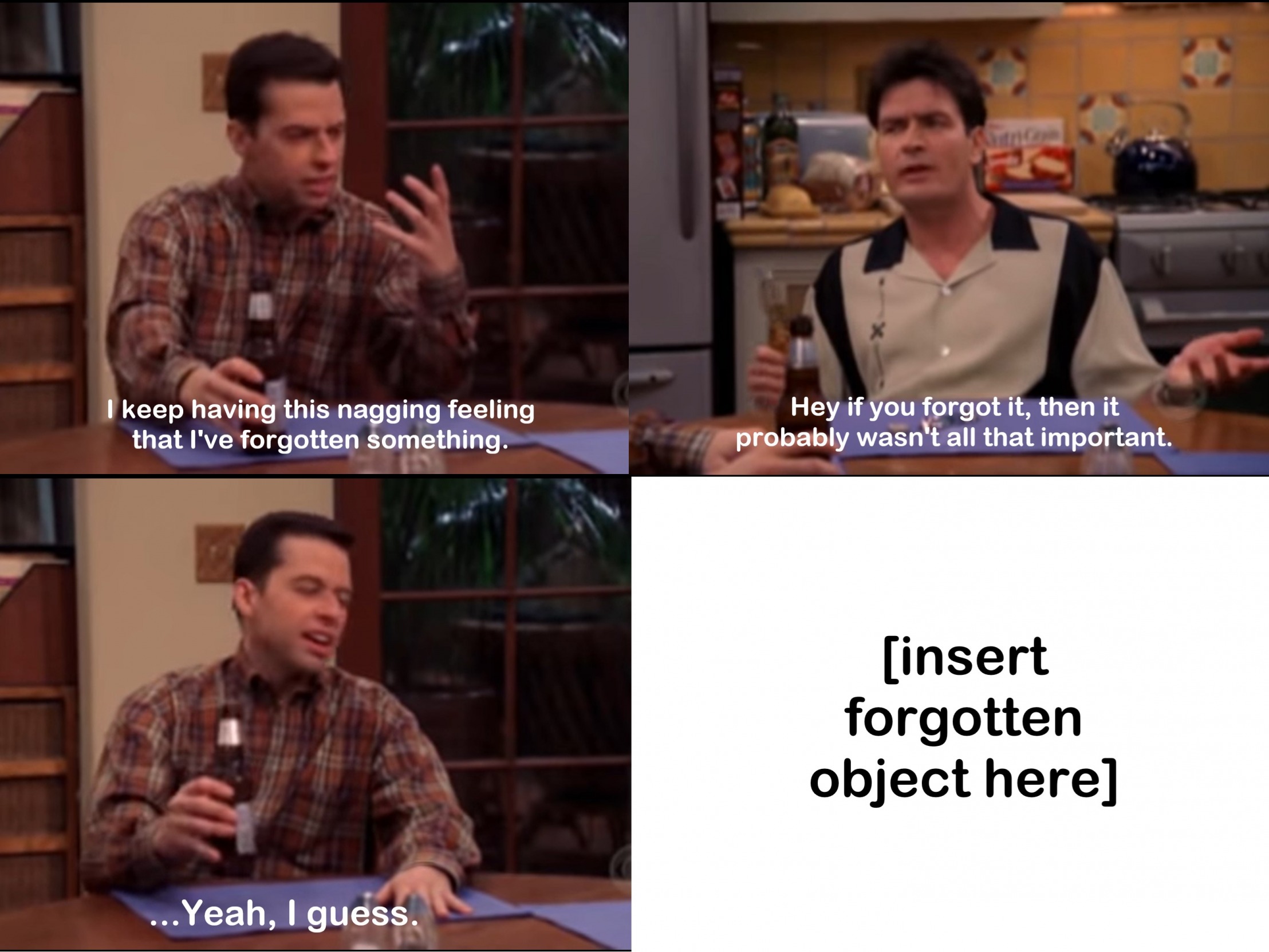
You're standing in the middle of the kitchen. Why? You have no idea. Your brain just... deleted the file. We’ve all been there, and that universal "brain fog" moment is exactly why the damn i forgot meme has survived long past the typical expiration date of internet trends. It’s not just a funny image; it’s a digital shorthand for the collective cognitive struggle of the modern era.
Memes usually die in a week. This one didn't.
Usually, when we talk about internet culture, we’re looking at complex irony or layered meta-humor that requires a PhD in Reddit history to understand. But the "damn I forgot" phenomenon is different because it hits on a primal, frustratingly human experience. It captures that specific, glitchy feeling when your internal processor hits a 404 error.
The Anatomy of a Relatable Memory Glitch
The damn i forgot meme usually features a character—often an animal like a confused-looking dog or a wide-eyed cat—paired with those three simple words. Sometimes it’s a skeleton sitting on a park bench, implying they've been waiting for the memory to return for decades. It’s the visual equivalent of walking into a room and realizing you have zero business being there.
Psychologists actually have a name for this. It’s called the Doorway Effect. Research from the University of Notre Dame suggests that passing through a physical doorway creates a "boundary" in the mind, essentially flushing out your short-term memory to make room for a new environment. When you see a meme capturing this, it’s funny because it’s a shared biological failure.
It's weirdly comforting. You realize you aren't the only one who forgets their own phone number while filling out a form or loses their glasses while they’re literally on top of their head.
Why Visual Simplicity Wins
In the early days of image macros, memes were loud. Impact font, neon colors, heavy editing. The damn i forgot meme often leans into a "low-res" or "cursed image" aesthetic. There is something inherently funnier about a grainy, pixelated image of a hamster looking into the distance than a high-definition stock photo of a confused businessman.
The grit makes it feel more authentic. It feels like how your brain feels: blurry and slightly out of focus.
The Evolution from Image to Video
While it started with static images, the "damn I forgot" sentiment exploded on TikTok and Reels. Creators started using specific sounds—usually a sudden cut in music or a hollow, echoing wind noise—to signify the exact moment the thought left their skull.
Imagine a video of someone about to say something deeply profound, only for their eyes to glaze over as the "Windows XP Shutdown" sound plays. That’s the modern iteration. It’s a performance of the meme. We’ve moved from looking at the meme to embodying it.
Honestly, the sheer volume of these posts says a lot about our current attention spans. We are bombarded with so much data—pings, dings, and notifications—that forgetting why you opened your fridge is practically an Olympic sport at this point.
Is This Just Brain Fog or Something More?
There’s a darker, or at least more serious, side to why the damn i forgot meme resonates so much lately. Since 2020, people have been talking about "quarantine brain" or general burnout. When life feels repetitive and stressful, our brains stop flagging mundane details as "important."
- Information Overload: We consume more data in a day than someone in the 1800s did in a lifetime.
- Context Switching: Jumping from an email to a text to a work task fractures our focus.
- The Stress Response: High cortisol levels are notorious for messing with the hippocampus, which handles memory.
When you share a meme about forgetting, you’re often signaling burnout without having to have a heavy conversation about it. It’s a "low-stakes" cry for help. It says, "I'm overwhelmed," but in a way that makes people laugh instead of worry.
The Different Flavors of Forgetting
Not all "damn I forgot" moments are created equal.
There's the "I forgot your name even though you just said it two seconds ago" vibe. That's the social anxiety version. Then there's the "I forgot the name of a common object" version, where you end up calling a spatula a "flipper-thingy."
Each version of the meme targets a specific flavor of embarrassment. The "Skeleton on a Bench" version is for those long-term goals or tasks you promised to do six months ago. The "Confused Cat" is for the immediate, short-term lapses.
How to Actually Improve Your Focus (If You're Tired of the Meme Being Your Life)
If you find yourself relating to the damn i forgot meme a little too much, it might be time to look at some actual cognitive hygiene. You can't fix a "glitchy" brain with just more scrolling.
- Stop Multitasking. It’s a myth. Your brain just switches back and forth really fast, losing data in the process. Try "single-tasking" for just twenty minutes.
- Externalize Your Memory. Don't try to remember your grocery list. Write it down. Use your brain for processing, not storage.
- The 30-Second Pause. When you move from one room to another, stop at the doorway. Consciously tell yourself what you are going to get. It sounds stupid. It works.
- Manage Your Digital Consumption. If you're scrolling through memes about forgetting while trying to remember to finish a report, you've already lost the battle.
The damn i forgot meme isn't going anywhere because humans aren't getting any less distracted. It serves as a digital pressure valve. By laughing at our own inability to keep a thought in our heads for more than thirty seconds, we make the chaos of modern life a little more bearable.
To take control of your focus, start by identifying your biggest "memory triggers." If it's the doorway effect, try the verbalization technique. If it's digital burnout, set a hard limit on "infinite scroll" apps during work hours. The goal isn't to become a perfect machine—it's just to spend less time standing in the kitchen wondering why you're there.