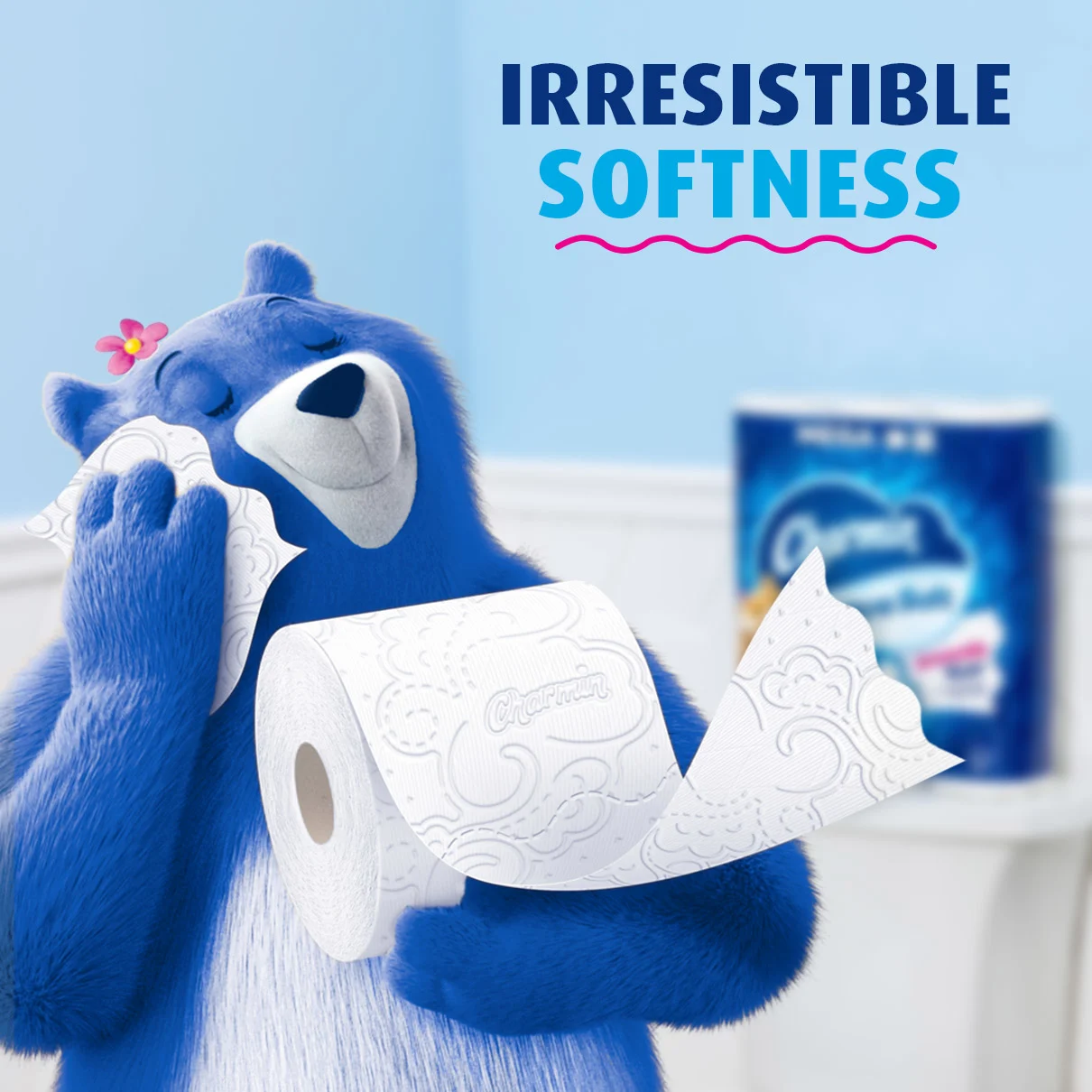
Let’s be real for a second. We’ve all been there, standing in the aisle at Target or scrolling through a massive Amazon listing, staring at the blue and red packages of bears. You want the soft stuff. You need the soft stuff. But then you remember that one TikTok from a frantic plumber claiming that "pillow-soft" paper is basically a death sentence for your septic tank. It’s a classic household dilemma.
When people talk about charmin toilet paper soft, they are usually referring to Ultra Soft—the blue one. It’s the flagship of the brand’s comfort line. Honestly, it’s remarkably thick. It feels more like a fabric than a disposable paper product, which is why it has such a cult following. But there is a massive difference between "softness" as a marketing term and the actual science of fiber dispersion.
Most of us just want to get through the day without irritation. If you have sensitive skin or conditions like prickly heat or hemorrhoids, the texture of your toilet paper isn't just a luxury. It’s a health requirement.
The Physics of Softness: What Is Actually Happening?
How do they even make it that way? Most people think it’s just about adding lotions or perfumes, but Charmin Ultra Soft actually relies on a manufacturing process called Through-Air Drying (TAD). Instead of pressing the paper flat between heavy rollers—which is how the cheap, scratchy "gas station" paper is made—TAD blows hot air through the fibers. This creates more "bulk" without adding more weight. It creates little pockets of air.
Think of it like sourdough bread versus a cracker.
Because of those air pockets, the paper can absorb more moisture. It’s why the brand slogan "Less is More" actually has some truth to it. You technically need fewer squares because the paper isn't just a flat sheet; it’s a three-dimensional sponge. However, that thickness comes with a trade-off that keeps the Roto-Rooter guys in business.
The fibers in charmin toilet paper soft products are designed to stay together. That is literally the point of "strength." But in the world of plumbing, you actually want things to fall apart. Fast. If you drop a square of the Ultra Soft into a bowl of water and don't agitate it, it stays remarkably intact for a long time compared to a generic single-ply brand. This is where the controversy lives.
The Septic Tank Debate
If you live in a city with modern PVC piping and a high-pressure sewer system, you’re probably fine. But if you are on a septic system or live in a charmingly old Victorian house with "vintage" clay pipes? You’re playing a dangerous game.
I’ve talked to professionals who see the same thing over and over. Thick, plush toilet paper doesn't always make it all the way to the tank. It gets caught on a burr in the pipe or a tree root that has intruded into the line. Once one square gets stuck, the others pile up. It’s a snowball effect.
- The "Shake Test": If you want to see if your paper is safe, put one square in a mason jar with water. Shake it three times. If it’s still a solid sheet, it’s a clog risk. If it’s starting to look like snowy slush, you’re golden.
- The Low-Flow Issue: Modern toilets use way less water per flush. This is great for the environment, but it means there is less "push" to get that thick Ultra Soft paper through the system.
Interestingly, Procter & Gamble (the folks behind Charmin) puts a "Septic Safe" label on the packaging. They aren't lying. Under ideal conditions—meaning a well-maintained septic tank with the right bacterial balance—the paper will eventually break down. The problem is that many home systems are far from ideal.
Why Your Skin Prefers the Blue Package
Why do we keep buying it if the pipes hate it? Because your skin is an organ, and it’s a sensitive one. Cheap toilet paper is often made from recycled office paper. That sounds eco-friendly, and it is, but it also means the fibers have been shortened and bleached multiple times. It can be abrasive.
For anyone dealing with chronic irritation, charmin toilet paper soft is often the only thing that doesn't feel like sandpaper. It’s the lack of friction. When you use a TAD-processed paper, you are patting rather than wiping.
There’s also the "lint" factor. You know what I’m talking about. The little white dust bunnies that appear out of nowhere. Ultra Soft is notorious for leaving behind a bit of residue because those fluffy fibers are loosely bound to keep them soft. It’s the price you pay for the cloud-like feel. If the lint bothers you, you usually end up switching to the Ultra Strong (the red one), which is woven more tightly. It’s still soft, but it’s more "industrial" in its integrity.
Comparing the Lineup: Which Soft is Yours?
Charmin has a confusing amount of variations. You’ve got Ultra Soft, Ultra Strong, Essentials, and even the "Sensitive" version which has a hint of aloe and vitamin E.
Most people gravitate toward the Mega Rolls. Have you noticed how "Mega" keeps getting bigger? A "Mega Roll" used to be equal to four regular rolls; now we’re seeing "Super Mega" rolls that barely fit on a standard toilet paper holder. It’s a bit of a psychological trick, but it also reduces the amount of cardboard waste from the inner tubes.
If you’re genuinely worried about your plumbing but can't give up the comfort, the "Essentials" line (in the yellow package) is a decent middle ground. It’s softer than the stuff you find in a public restroom but thinner than the Ultra Soft. It’s basically the "diet" version of the premium stuff.
Practical Steps for the Soft-Paper Addict
You don't have to switch to sandpaper just to save your pipes. You just have to be smarter about how you use it.
First, stop the "mummy wrap." We’ve all seen kids (and some adults) wrap their hand in ten layers of paper like they’re preparing for a boxing match. With charmin toilet paper soft, you really only need three or four squares. The absorbency is high enough that anything more is just asking for a clog.
Second, if you’re on a septic system, consider a bidet attachment. Honestly. It’s the 2026 way to live. Using a bidet reduces your paper usage by about 80%. You only use the soft paper to pat dry, which means you’re sending maybe two squares down the drain instead of a whole wad. It’s the ultimate hack for people who love luxury but hate plumbing bills.
Third, check your toilet’s GPF (Gallons Per Flush). If you have a 1.28 GPF high-efficiency toilet and you’re using the thickest paper on the market, you might want to hold the handle down for a second longer to ensure a full flush.
The Bottom Line on Comfort
At the end of the day, toilet paper is one of those few things in life where "premium" actually feels different. We spend a significant portion of our lives in the bathroom. Why be uncomfortable?
If you have a modern home and you practice a bit of moderation, charmin toilet paper soft is arguably the best-performing product in the category. It consistently wins blind touch tests. It’s consistently the brand people "switch back to" after trying a cheaper generic that left them feeling raw.
Just remember:
- Use less than you think you need.
- Ensure your toilet is actually flushing it all away.
- If you start hearing a gurgling sound in your tub when you flush, it’s time to switch to a thinner ply for a while.
The "best" toilet paper isn't just the softest one; it’s the one that works for both your body and your home’s infrastructure. If you can balance those two, you've won the domestic lottery.
To keep your bathroom running smoothly while staying comfortable, start by measuring your current usage. If you find yourself clearing a "Mega Roll" every two days, you are likely overusing the product. Try switching to a "fold" method rather than a "wad" method; folding creates a flat surface that cleans more efficiently with fewer sheets, reducing the volume of paper hitting your pipes at once. Additionally, once every six months, use a safe, enzyme-based drain cleaner that specifically targets paper fibers to prevent any long-term buildup in your lateral lines.