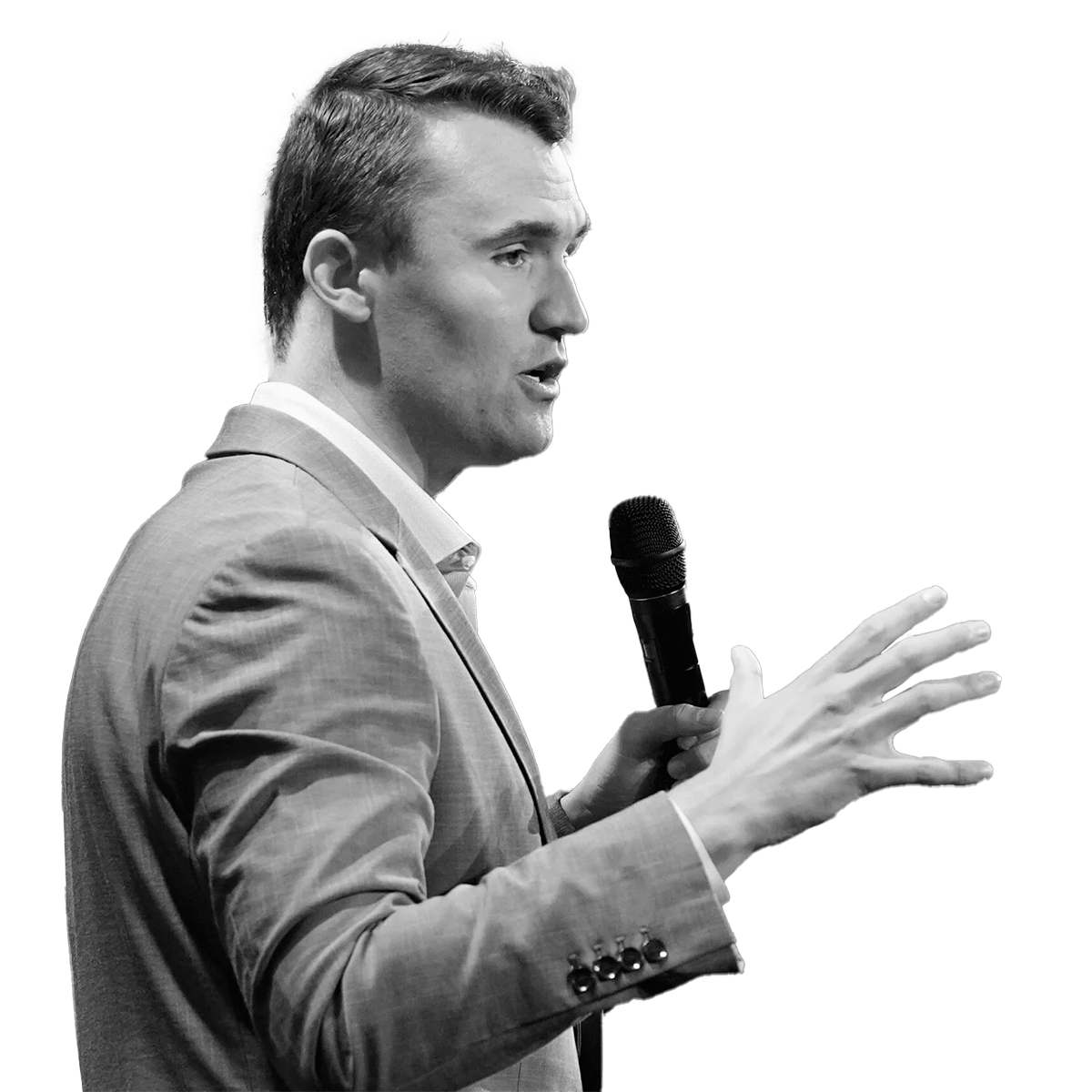
The internet loves a number. Specifically, it loves a number that can be used as a weapon in a political argument. If you’ve spent more than five minutes on X (formerly Twitter) or scrolled through the "Prove Me Wrong" clips on YouTube, you’ve likely seen the question pop up: What is Charlie Kirk’s IQ?
People want a definitive score. They want a digit that either proves he’s a strategic mastermind or justifies their dismissal of him. But here’s the reality that most people miss—there is no public record of Charlie Kirk ever taking a formal IQ test.
He never tweeted a Mensa certificate. He never sat for a proctored Wechsler Adult Intelligence Scale (WAIS) on a livestream. Honestly, anyone claiming to have a specific number for Kirk’s intelligence is basically just guessing based on whether they like his politics or not.
The Mystery of the Number
There is a massive vacuum where a "verified" IQ score should be. Because of that vacuum, the internet has filled the space with wild speculation. On forums like Reddit or Quora, you'll see "estimates" ranging from 100 to 140.
Why the huge gap? It’s purely tribal.
Fans of Turning Point USA (TPUSA) look at a guy who built a $95 million political powerhouse by the age of 31 and assume he must be in the top 1%. They see his ability to recall specific dates or legislative facts during a high-pressure campus debate as evidence of a high "processing speed."
On the flip side, his critics point to his lack of a college degree or his more controversial takes—like his comments on "prowling" groups or his skepticism of certain scientific consensus—as proof that he isn’t the intellectual heavyweight his followers claim.
But IQ isn't a measure of "being right" or "being successful." It’s a measure of cognitive potential. And since Charlie Kirk hasn't opened his medical or academic records to the public, that number remains a ghost.
Academic Background vs. Cognitive Ability
To get a better handle on the Charlie Kirk IQ debate, you have to look at his actual track record. Numbers aside, his life has been an exercise in a very specific kind of intelligence: strategic communication.
Kirk grew up in the Chicago suburbs and was an Eagle Scout. That takes a certain level of discipline and organizational skill. But his academic path was non-traditional, to say the least.
- The West Point Rejection: Kirk famously applied to the United States Military Academy at West Point. He didn't get in. He later claimed he was passed over for a "less-qualified candidate" due to affirmative action, a claim that became a cornerstone of his early political identity.
- The Community College Stint: He briefly attended Harper College, a community college in Illinois. He didn't stay long. He dropped out at 18 to start TPUSA with his mentor, Bill Montgomery.
- The "Self-Educated" Narrative: Kirk often wore his lack of a degree as a badge of honor. He told figures like Gavin Newsom that he represented the "muscular class" of Americans who didn't need a four-year credential to succeed.
Does dropping out of community college mean someone has a low IQ? Not necessarily. Bill Gates and Steve Jobs did the same. However, it does mean we don't have GRE scores or advanced graduate work to look at as a proxy for cognitive testing.
Why People Search for "Charlie Kirk IQ"
The search for his IQ is rarely about science. It’s about legitimacy. In our current culture, we use IQ as a shorthand for "authority." If Kirk has a high IQ, his followers feel his "America-first" ideology is intellectually grounded. If he has a low IQ, his detractors can dismiss his entire movement as the product of a shallow mind.
Kirk’s style of debate—the "Prove Me Wrong" format—is designed to showcase a specific type of mental agility. It requires him to:
- Listen to a complex objection.
- Synthesize a counter-argument in seconds.
- Recall a specific stat or historical anecdote to "win" the exchange.
Whether you agree with his conclusions or not, that specific "debate-bro" skillset requires high verbal intelligence. It’s a performance of intellect. But again, a performance isn't a score.
The Tragic End of the Debate
As of late 2025, the conversation around Charlie Kirk changed forever. Following his assassination at Utah Valley University in September 2025, the focus shifted from his IQ to his legacy.
When a public figure is killed in the line of their work—especially during the very campus debates that made him famous—the "scorecard" of their life becomes less about test scores and more about impact. Kirk left behind a massive infrastructure of young conservatives. He reshaped how the GOP communicates with Gen Z.
Intellectually, he was a polarizing force. He leaned heavily into Christian Nationalism and "Great Replacement" rhetoric in his final years. To some, this was a brilliant play to capture the base; to others, it was a dangerous descent into fringe conspiracy.
What You Can Actually Learn
If you're searching for a number, you're going to be disappointed. No one knows Charlie Kirk's IQ. But there are a few things we can verify about his mental "output":
He was a master of the "Attention Economy." Kirk understood how to go viral before most politicians knew what TikTok was. That requires a high level of social and "market" intelligence. He knew exactly which phrases would trigger a reaction.
He had incredible rote memory. Watching him speak, it’s clear he spent thousands of hours internalizing talking points. Whether those points were factually sound is often debated by sites like PolitiFact, but his ability to retrieve them under pressure was objectively high.
He was an organizational savant. Turning a high school graduation gift into a $95 million nonprofit doesn't happen by accident. It requires a high level of executive function—the part of the brain responsible for planning and execution.
Ultimately, Charlie Kirk’s IQ is a distraction from the real question: How did a college dropout become one of the most influential voices in American politics? The answer lies in his work ethic, his timing, and his absolute refusal to play by the traditional rules of the "intellectual" establishment.
Instead of hunting for a number that doesn't exist, focus on the strategies he used to build his platform. If you want to understand the modern political landscape, look at how he bypassed the "credentialed" world entirely. Study his debate transcripts to see how he used framing and "anchoring" to control conversations. Whether you're looking to emulate him or counter his ideas, understanding his methods is far more valuable than knowing a theoretical score on a paper test.