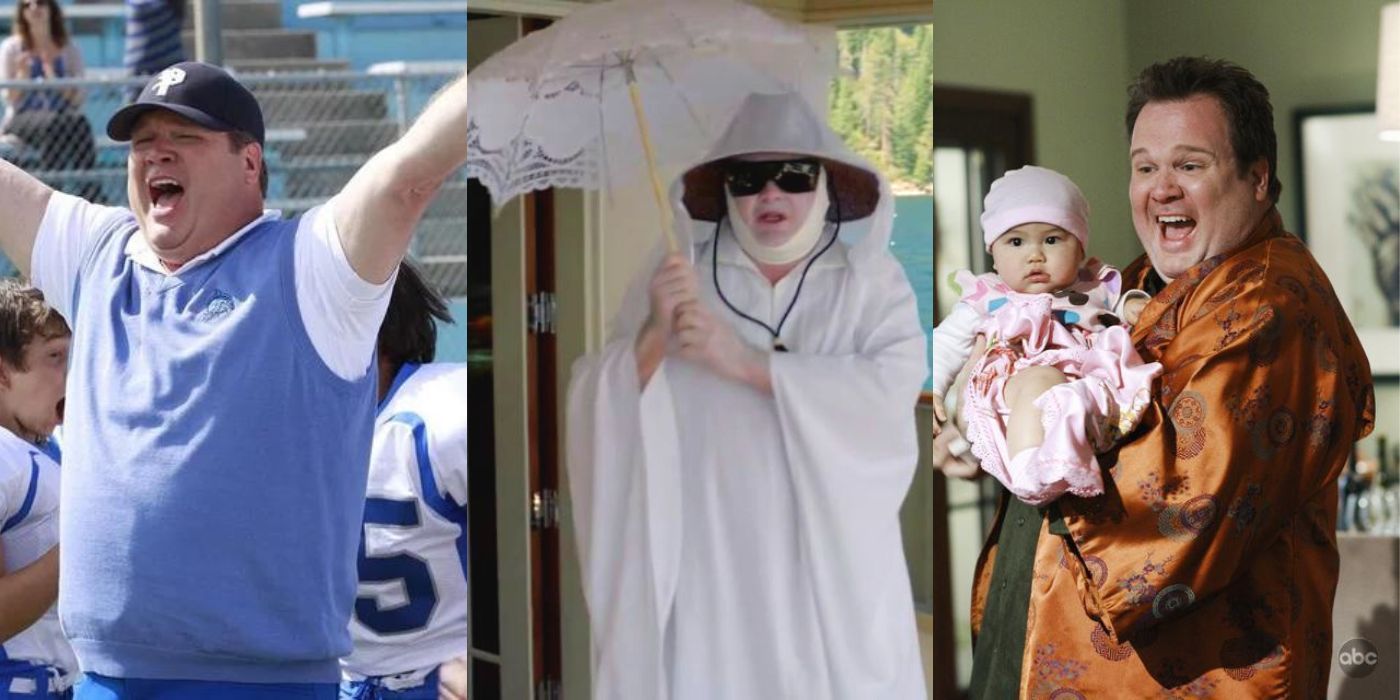
If you’ve spent any time on a sofa since 2009, you know the scream. It’s high-pitched, wildly dramatic, and usually followed by a flurry of hand gestures. It belongs to Cameron Tucker, the flamboyant, farm-bred, football-coaching heart of Modern Family. But looking back from 2026, the conversation around Cam has shifted. He’s no longer just the "funny gay guy" from that one ABC show. He’s become a case study in how we view television characters, stereotypes, and the fine line between "lovable" and "toxic."
Honestly, it’s a lot to unpack.
When Cameron from Modern Family first burst onto the screen, carrying baby Lily into the living room to the "Circle of Life" from The Lion King, he was a revelation. People loved him. Eric Stonestreet, the actor who played him, walked away with two Emmys for the role. But as the seasons went on, fans started noticing things. The charm started to feel a bit like manipulation. The drama started to feel like gaslighting. Yet, we still love him. Why?
The Man, The Myth, The Fizbo
Cam wasn't just a character; he was a collection of contradictions that shouldn't have worked. He was a starting offensive lineman at the University of Illinois who also happened to be a classically trained clown named Fizbo. He grew up on a pig farm in Missouri but could identify a vintage fountain pen from across a room.
This mix was intentional.
Eric Stonestreet actually modeled Cameron from Modern Family after his own mother. He took her nurturing, slightly over-the-top nature and blended it with his own real-life history. Fun fact: Fizbo was a real clown Stonestreet created when he was 11 years old. Those weren't just props; those were his actual childhood dreams playing out on a multi-million dollar set.
But there’s a weird tension in how Cam was written. In the early seasons, he was the emotional anchor. He balanced out Mitchell’s uptight, legalistic personality. He was the "ideas man." However, by Season 11, some viewers felt he had become a caricature.
What People Get Wrong About the "Stereotype"
You’ll often hear people complain that Cam was a "stereotypical" gay man. Flamboyant? Yes. Emotional? Extremely. But that’s a bit of a lazy take.
If you look closer, Cam was actually breaking stereotypes while leaning into others. At the time, seeing a gay man who was also a high school football coach—and a good one—wasn't exactly common on network TV. He wasn't "masculine" or "feminine" in the way we usually categorize people. He was just... Cam.
The real controversy wasn't his flamboyance. It was his behavior.
The "Toxic Cam" Debate: Is He Actually the Villain?
If you scroll through Reddit or fan forums lately, there’s a massive "Cam is Toxic" movement. It’s kind of wild to see the 180-degree turn. People point to the episode where he secretly signs Lily up for clown school, or the constant ways he manipulates Mitchell into getting his way.
There’s a term for this in TV writing: Flanderization.
It’s what happens when a character’s quirky traits get exaggerated so much that they become their entire personality. In the first few seasons, Cam was manipulative, sure, but it came from a place of deep insecurity and a desire to be liked. By the end of the series, that manipulation felt more like a weapon.
- The Lily Problem: Fans often joke that Cam and Mitchell "forgot" they had a daughter half the time. As Lily got older, Cam’s competitive nature often came at her expense.
- The Gaslighting: There were plenty of episodes where Cam would fake an injury or a crisis just to avoid being the "bad guy" in a fight.
But here’s the thing: it’s a sitcom.
Sitcom characters need flaws to create conflict. If Cam and Mitchell were a perfectly healthy, communicative couple, the show would have been boring. We wouldn't have the "Farm Strong" monologues or the "Snobbery" battles. Cam was the engine that drove the comedy because he refused to be reasonable.
Eric Stonestreet: The "Openly Straight" Actor
One of the most fascinating things about Cameron from Modern Family is the man behind the silk camisole. Eric Stonestreet is straight. He’s famously described himself as "openly straight."
Back in 2009, this wasn't as big of a deal. Today? It’s a huge talking point.
Jesse Tyler Ferguson, who played Mitchell and is gay in real life, has always defended Stonestreet. He’s joked that Eric is "gay-for-pay," but more importantly, he’s praised the work Eric put in. Stonestreet was constantly checking in with Jesse, asking, "Is this too much? Am I offending anyone?"
He took the responsibility seriously. He even famously refused to take a photo with a Republican senator who held anti-gay views, showing that even if he wasn't part of the community, he was a fierce ally.
The Move to Missouri: A Full Circle Moment
The series finale saw Cam and Mitchell moving back to Missouri so Cam could take his dream job as a college football coach. It was a polarizing ending. Some felt Mitchell sacrificed too much. Others felt it was the only way Cam could truly be happy.
It felt right, though.
Cam never really left the farm. He carried that Missouri dirt with him to California, and you could see it in how he raised Lily. He wanted her to be "Farm Strong," even if she was more interested in being a sarcastic teenager.
Why Cam Still Matters in 2026
We’re living in an era where TV is much more careful. Characters are often "sanitized" to avoid offending anyone. Cam was the opposite of sanitized. He was messy, loud, selfish, and incredibly loving.
He showed that a gay couple could be just as dysfunctional, hilarious, and "normal" as any other family. They fought about stupid things. They lied to each other about expensive purchases. They were humans first, and a "statement" second.
What you should do next:
If you're planning a rewatch, don't just look for the laughs. Pay attention to the "Coach Tucker" episodes in the middle seasons. You’ll see a much more nuanced version of the character that often gets lost in the "drama queen" highlights. Also, check out Eric Stonestreet’s interviews from the early 2010s—it’s wild to see how much of his own personality he injected into a character that seems so different from him on the surface.