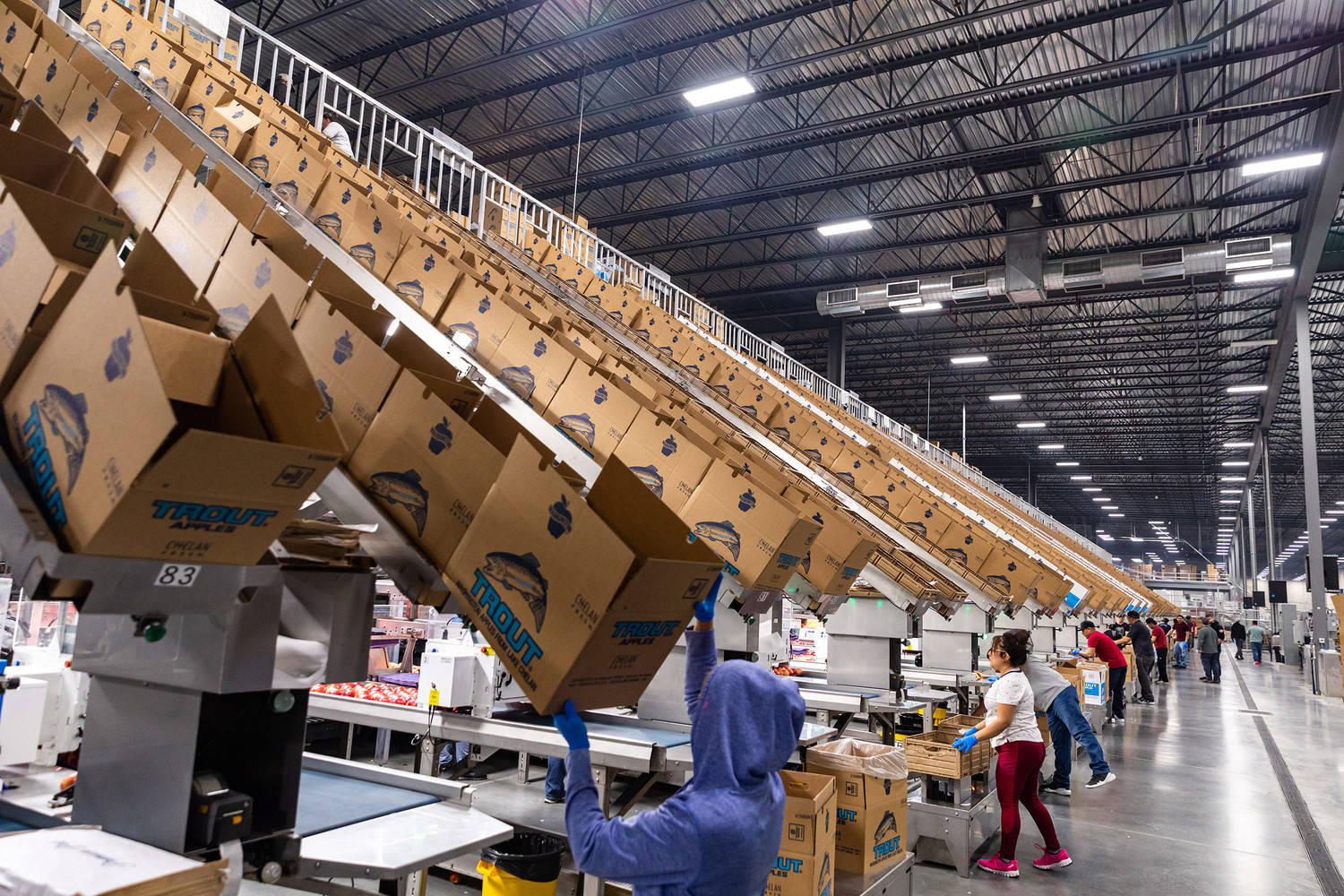
Fruit doesn't just happen. You see a crisp Honeycrisp in a bin at the grocery store and think about orchards or maybe a rainy day in Washington state, but the reality is much more industrial. Most of the magic—and the heavy lifting—actually happens at places like the Borton Fruit packing center. It’s a massive, high-tech hub in Yakima that basically dictates how fruit gets from a tree to your lunchbox without turning into mush along the way.
The Borton family has been doing this since 1912. That's over a century of figuring out how to handle apples, pears, and cherries. But the modern packing center isn't some dusty barn with wooden crates. It is a sprawling, automated marvel that looks more like a Tesla factory than a farm.
The Massive Scale of the Yakima Operation
Yakima is the heart of apple country. If you've ever driven through Central Washington, you know the vibe: endless rows of trellised trees and giant warehouse complexes. The Borton Fruit packing center stands out because of its sheer footprint. We are talking about hundreds of thousands of square feet dedicated to receiving, washing, sorting, and chilling fruit.
Efficiency is the only way they survive. Margin in the fruit business is razor-thin. If a packing line goes down for two hours during peak harvest, it’s a disaster. To prevent that, Borton has leaned heavily into proprietary technology and massive cold storage facilities. Their "Skyline" facility is often cited as a benchmark in the industry for how to integrate CA (Controlled Atmosphere) storage directly with packing lines.
Controlled Atmosphere is basically a way to put apples to sleep. By dropping the oxygen levels and hiking up the CO2, they can keep an apple picked in October tasting fresh in June. It's kinda wild when you think about it. You're eating a "fresh" apple that’s been technically dormant for eight months.
How the Borton Fruit Packing Center Actually Works
When a truck rolls in from the orchard, those bins aren't just dumped onto a belt. That would bruise the fruit. Instead, they use water flumes. The bins are submerged, and the apples float out gently. It’s like a water park for fruit.
The sorting process is where things get really sci-fi.
Borton utilizes advanced imaging technology. Every single piece of fruit is photographed dozens of times as it spins down the line. Computers analyze these images in milliseconds to detect internal browning, surface bruises, or slight variations in color. If an apple is 2% too yellow for a "Premium" grade, a puff of air knocks it onto a different belt.
- Internal Defect Sorting: Sensors can actually "see" inside the fruit using near-infrared light to check for watercore or browning.
- Size and Weight: Every apple is weighed to ensure bags meet exact specifications.
- Traceability: This is a big one. Because of food safety regs, Borton can usually track a specific bag of apples back to the exact block of trees it came from.
Honestly, the level of precision is stressful to watch. You have thousands of apples flying past every minute, and the system is making individual decisions on every single one. If the Borton Fruit packing center didn't have this tech, they'd need ten times the staff and would still have a higher error rate.
Why the 2017 Expansion Changed the Game
A few years back, Borton Fruit made a massive bet. They consolidated a lot of their older, scattered operations into a single, centralized powerhouse in Yakima. This wasn't just about more space; it was about the "Skyline" project.
They built one of the largest single-line packing facilities in the world. Why does that matter? Because it reduces the "touches." Every time a human or a machine touches an apple, there's a chance to damage it. By streamlining the flow from the cold storage room directly to the packing table, they cut down on transit time and bruising.
They also went all-in on automation for palletizing. In the old days, you’d have folks breaking their backs lifting 40-pound boxes of apples all day. Now, robotic arms stack those boxes with mathematical perfection. It’s faster, safer, and—let's be real—cheaper in the long run.
Facing the Reality of Labor and Climate
It isn't all shiny robots and perfect fruit, though. The industry is under immense pressure. Labor is getting harder to find and more expensive. This is exactly why the Borton Fruit packing center is so automated. They had to automate to stay competitive with imports from places like Chile or New Zealand.
Then there's the weather. Heat domes in the Pacific Northwest have become a genuine threat. If the fruit gets too hot on the tree, it doesn't store well. The packing center has to react to this by adjusting their cooling protocols. They have to "pre-size" fruit more aggressively to see what will actually survive a six-month stint in cold storage.
Sustainability is No Longer Optional
People care about where their food comes from now. Borton has had to adapt by looking at water usage and solar energy. Packing centers use an incredible amount of water for those flumes I mentioned. Modern systems at Borton now include sophisticated filtration to recycle that water rather than just dumping it.
Packaging is the next big hurdle. Everyone wants to move away from plastic film and bags, but apples need protection. You'll see more compostable options and cardboard-based designs coming out of the Borton facility as retailers like Costco or Walmart push for "greener" footprints. It's a constant balancing act between being eco-friendly and making sure the fruit doesn't arrive as a bag of dents.
What Most People Get Wrong About Fruit Packing
There’s a misconception that packing houses are just "middlemen" taking a cut. In reality, they are the quality gatekeepers. Without the Borton Fruit packing center, the farmer has no way to get their crop to a global market. The packing house takes on the massive capital risk of the machinery and the storage.
Another myth is that "warehouse" apples are low quality. Actually, the most technologically advanced storage often preserves nutrients better than an apple sitting on a counter for a week. The science of slowing down the respiration of the fruit is what allows the US to have a year-round apple supply.
Actionable Insights for the Industry and Consumers
If you’re looking at the fruit business from a commercial or even a curious consumer perspective, there are a few things to keep in mind regarding how these centers operate.
- Watch the Variety Shifts: Borton and others are moving away from Red Delicious (finally) and pouring resources into "club varieties" like Cosmic Crisp or Rockit. These apples are literally bred to be "packing house friendly"—meaning they have tougher skins and better storage potential.
- Infrastructure is King: The success of the Borton Fruit packing center proves that centralization works. Small, fragmented packing sheds are struggling to keep up with the tech requirements of big-box retailers.
- Check the Pack Date: If you look at the fine print on a bag of apples, you can often find a pack date. This tells you how long that fruit sat in the packing center after leaving the storage room. Fresher is always better, but thanks to CA storage, "old" isn't the death sentence it used to be.
- Invest in Robotics: For those in the ag-tech space, Borton is a prime example of where the money is going. Any tech that reduces human "touches" or improves internal defect sorting is seeing massive adoption.
The Borton Fruit packing center represents the peak of modern agriculture. It’s a place where 100-year-old farming traditions collide with 21st-century robotics. It’s complex, it’s noisy, and it’s the only reason you can buy a crisp apple in the middle of a blizzard.
To see the real-world impact, next time you're in the produce aisle, look for the Borton label. You're not just looking at fruit; you're looking at the output of one of the most sophisticated logistics operations in the Pacific Northwest.