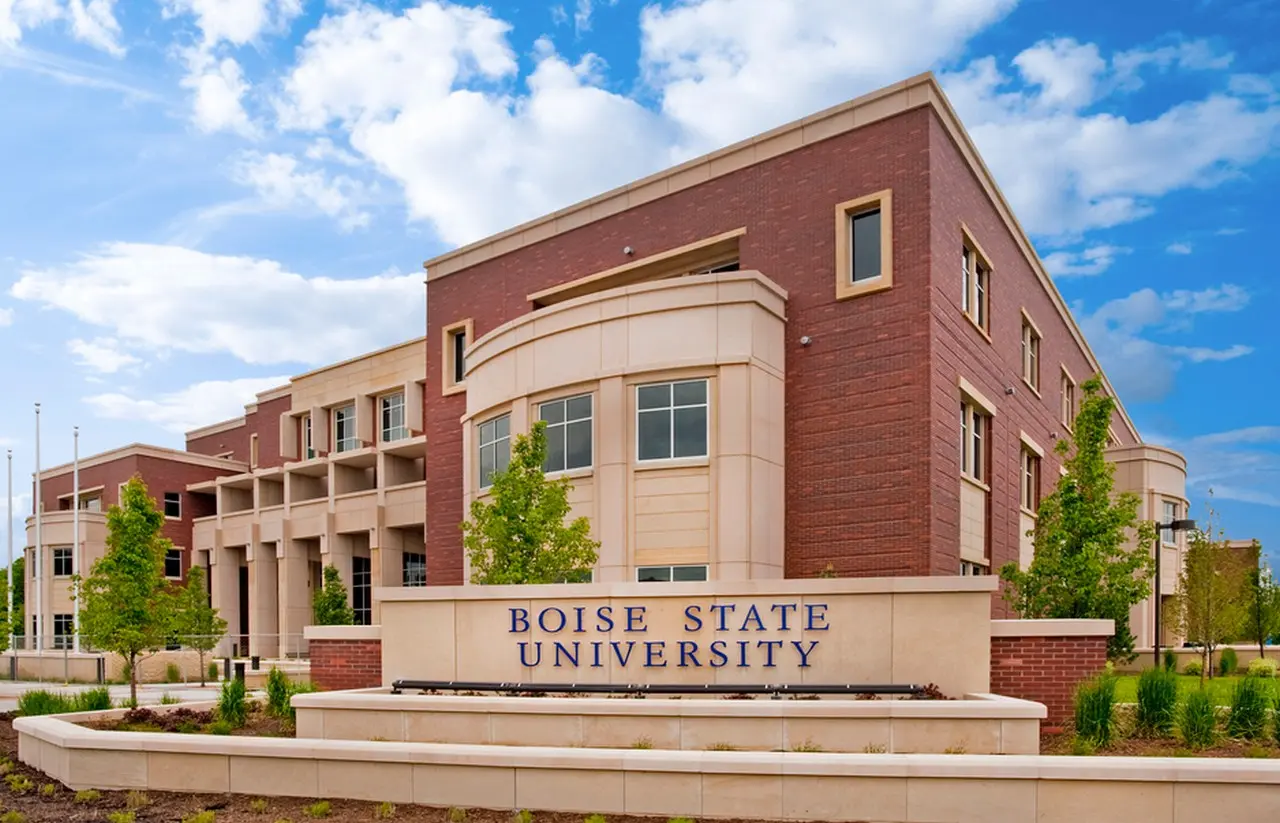
So, you’re looking at Boise State. Maybe it's the blue turf, or maybe it's just that Boise is basically the "it" city of the Northwest right now. But then you hit the "Financials" tab and your brain starts to melt. I get it. College pricing has become this weird, layered onion where the more you peel, the more you want to cry.
Honestly, the "sticker price" you see on most websites is a lie. Well, not a lie, but it’s definitely not the whole story. Between Idaho residency, the WUE program, and those sneaky "professional fees" that certain majors tack on, your actual bill could look wildly different from your roommate’s. Let's break down what Boise State tuition cost actually looks like for the 2025-2026 academic year without the corporate fluff.
The Raw Numbers: Idaho Residents vs. Everyone Else
If you’re from Idaho, you’ve got it pretty good. The state subsidizes your education, which keeps the base price relatively low compared to the national average. For the 2025-2026 year, a full-time Idaho resident (taking 11-16 credits) is looking at about $4,682 per semester. Double that for the full year, and you’re at $9,364.
Now, if you’re coming from out of state—say, Illinois or Texas—the number jumps significantly. Non-residents are looking at $14,239 per semester, or $28,478 for the year.
That’s a massive gap. It’s basically the "out-of-state tax." But wait—don’t panic yet. Most people from the West don't actually pay that full $28k.
The WUE Loophole (The "Woo-ee")
If you live in a Western state like California, Oregon, Washington, or Arizona, you need to know about the Western Undergraduate Exchange (WUE). It’s a reciprocity agreement. Basically, Boise State agrees to charge you no more than 150% of the resident tuition.
For 2025-2026, WUE students pay about $6,270 per semester (estimated), which brings the yearly total to roughly $12,540.
Compare that:
- Non-resident: $28,478
- WUE: $12,540
- Resident: $9,364
You're saving over $15,000 a year just by living in the right zip code. But here’s the kicker: WUE isn't automatic for everyone. You usually need a minimum GPA (often around a 3.5 for most majors, though Nursing is higher at 3.9) and you have to apply by the deadline. If you miss that window, you’re stuck with the $28k bill. Don't be that person.
The "Invisible" Costs: Fees and Major-Specific Add-ons
Here is where it gets annoying. Tuition is just the base. Boise State, like most universities, has a "Professional Fee" system. If you’re in the College of Business and Economics (COBE), for example, you’ll pay an extra $40 per credit for upper-division classes.
Nursing students, engineers, and even some arts programs have similar "labs" or "clinical" fees.
Then there’s the "mandatory" stuff:
- New Student Curriculum Fee: $230 (one-time)
- Bronco Card Fee: $38
- Technology/Library Fees: Roughly $85 per semester
It feels like being nickeled and dimed, but it adds up to a few hundred bucks you didn't see coming.
Living on the Blue: Housing and Food
Boise isn't as cheap as it was five years ago. Housing is the biggest variable in your Boise State tuition cost calculation.
If you’re a freshman, you’re likely living on campus. A double room in a place like Chaffee Hall is around $5,000 per year, while a single in the Honors College/Sawtooth Hall can climb over $10,650.
Then there's the meal plan. You’re looking at about $5,700 per year for a standard plan.
Total "Sticker" Cost of Attendance (Resident)
- Tuition/Fees: $9,364
- Housing/Food: $15,512 (average)
- Books/Supplies: $800
- Total: ~$25,676
Total "Sticker" Cost of Attendance (Non-Resident)
- Tuition/Fees: $28,478
- Housing/Food: $15,512
- Books/Supplies: $800
- Total: ~$44,790
Why the "Net Price" is the Only Number That Matters
Almost nobody pays the sticker price. Seriously. Between federal Pell Grants, Idaho Opportunity Scholarships, and Boise State’s own merit awards (like the Presidential or Dean’s scholarships), most students see a huge chunk taken off that total.
For example, the Presidential Scholarship for Idaho residents takes $3,000 off per year. If you’re a non-resident and don’t get WUE, the Summit Scholarship can still knock $10,000 off that scary $28k tuition.
When you look at the "Net Price"—which is what students actually pay after aid—the average for Boise State is closer to $19,000 per year (including living expenses). That’s a lot more manageable than $45k.
Graduate School is a Different Beast
If you’re coming for a Master’s or PhD, throw the undergraduate numbers out the window. Graduate resident tuition is roughly $11,186 per year, and non-resident is $30,300.
Wait, it gets more specific. Programs like the Professional MBA have their own pricing structures. For the PMBA, you're looking at roughly $525 per credit if you're a resident. If you’re doing a fully online program, you might actually save money because many online degrees use an "alternative fee" structure that ignores residency—everyone pays the same rate, usually around $395 per credit.
How to Not Go Broke
Look, college is an investment, but you don't want a "Blue Turf" sized hole in your bank account for the next twenty years. Here is the move:
- Submit the FAFSA early. Even if you think your parents make too much money. Do it anyway.
- Apply by the February 15th priority deadline. This is when the big scholarships (and WUE) are handed out. If you apply in May, the "pot of money" is usually empty.
- Consider the "2+2" track. Do your first two years at the College of Western Idaho (CWI) just down the road. Their tuition is a fraction of Boise State's, and the credits transfer perfectly. You still graduate with a Boise State degree, but you saved $10k on the basics.
- Watch the "Credit Plateau." Boise State charges the same tuition for 11 credits as they do for 16. If you take 12 credits, you’re paying more per "knowledge unit" than if you take 16. If you can handle the workload, take the extra class. It’s essentially free.
What to Do Next
Don't just stare at these numbers.
First, go to the Boise State Net Price Calculator. It takes about 10 minutes and uses your actual financial info to give you a real estimate, not a generic one.
Second, check your residency status. If you moved to Idaho recently, there are very specific rules about how long you have to be here before you count as a resident (usually 12 months for reasons other than education).
Finally, if you’re a non-resident, look at the WUE requirements today. If your GPA is on the bubble, that one extra point could be worth $15,000 a year. That's a pretty good hourly rate for studying.