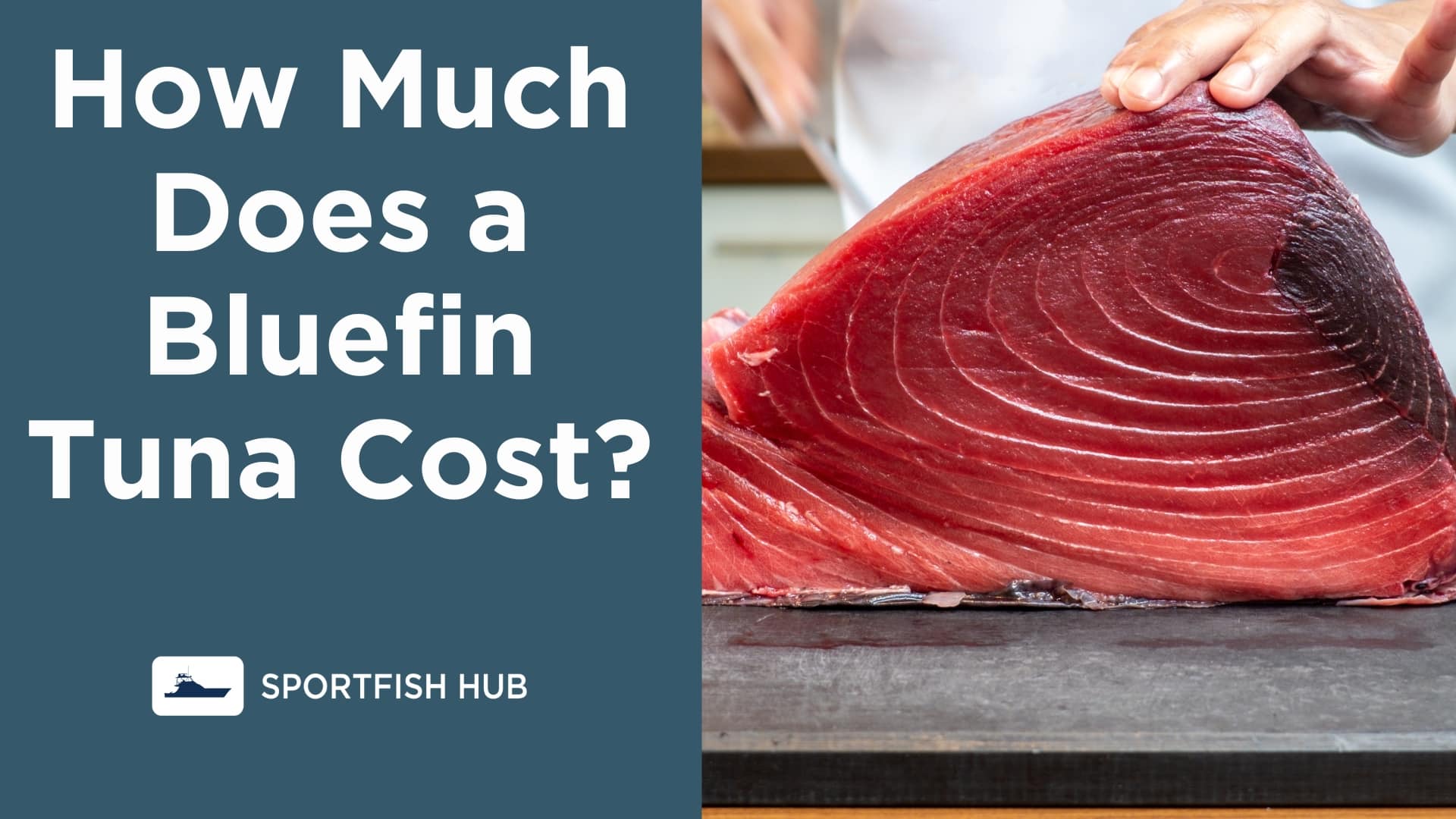
You've probably seen the headlines. Every January, a massive fish sells for the price of a luxury penthouse in Manhattan. On January 5, 2026, it happened again: a 535-pound Pacific bluefin tuna fetched a staggering $3.2 million (510 million yen) at Tokyo’s Toyosu fish market.
That is roughly $6,000 per pound.
But here is the thing—you can also walk into a high-end grocery store in Los Angeles or London and find bluefin for $40 a pound. Honestly, the gap between those two numbers is enough to give anyone whiplash. So, what's the deal? How much does a bluefin tuna cost, really?
The answer depends entirely on whether you are talking about a marketing "flex" at a Japanese auction, a Tuesday night sushi craving, or a wholesale shipment from the Mediterranean.
The $3 Million Marketing Stunt
Let’s be real about that $3.2 million fish. Kiyoshi Kimura, often called the "Tuna King," didn't buy that fish because it was literally 100 times tastier than the fish sold the day before.
He bought it for the "New Year's Luck."
In Japan, the first auction of the year is a massive cultural event. It’s a mix of superstition and aggressive PR. Winning the top fish is considered a harbinger of good fortune for the business year. More importantly, it puts Kimura’s restaurant chain, Sushi Zanmai, on every major news network across the globe.
Think about it: $3 million for a global advertising campaign is actually a bargain.
But when the cameras stop flashing, the price of bluefin tuna settles into a much more "normal" (though still expensive) range. In the same auction where the record was broken, other high-quality tuna were selling for a fraction of that price.
What You’ll Actually Pay: Per Pound Breakdown
If you aren't a billionaire restaurant mogul, you’re looking at retail or wholesale prices.
Wholesale prices for fresh Atlantic or Pacific bluefin typically hover between $20 and $60 per pound. If the fish is coming from a farm in the Mediterranean (where they catch wild tuna and "fatten" them up in pens), the price might be on the lower end. If it’s wild-caught off the coast of Oma in Japan—the "gold standard" of tuna—the wholesale price can easily spike to $150 or more.
Here is a quick look at how the price shifts depending on the cut:
- Akami: This is the lean, red meat. It’s the cheapest part of the bluefin, but still pricier than your average yellowfin. Expect to pay $30–$50 per pound at retail.
- Chutoro: The medium-fatty belly. It’s the sweet spot for many sushi lovers. Prices jump here to $60–$100 per pound.
- Otoro: This is the "Wagyu of the sea." It’s the fattiest part of the belly, almost white with marbling. You’re looking at $100 to $200 per pound, sometimes more if it’s from a particularly prized catch.
Why Is Bluefin Tuna Cost So High?
Basically, it’s a perfect storm of biology and logistics.
Bluefin aren't like other fish. They are warm-blooded, incredibly fast, and can grow to over 1,000 pounds. This high metabolism creates a unique muscle structure and fat content that no other fish can replicate.
Then there’s the scarcity. For years, we overfished these giants to the brink. While populations are recovering thanks to strict international quotas, the supply is still tightly controlled.
You also have to factor in the "cold chain." A bluefin caught in the North Atlantic on Monday needs to be on a plate in Tokyo or New York by Wednesday. That means specialized handling, flash-chilling (not freezing, usually), and expensive air freight.
The "Oma" Factor
Location matters. A fish caught off the coast of Massachusetts is great. A fish caught off the coast of Oma, Japan, is a legend. The waters there are cold and the currents are brutal, which forces the tuna to build up incredible fat reserves. This "Oma Bluefin" is what the top chefs at Michelin-starred restaurants fight over.
How to Buy Without Getting Ripped Off
If you're looking to buy bluefin for a home sushi night, don't just look at the price tag.
First, check the color. It should be vibrant—not dull or brownish. Brown usually means oxidation, which happens when the fish has been sitting too long or wasn't chilled correctly.
Second, ask about the "grade." While there isn't a universal "sushi grade" law, reputable fishmongers use the term to mean the fish was handled specifically to be eaten raw.
Finally, check the source. Sustainably caught bluefin—like those tagged by the ICCAT (International Commission for the Conservation of Atlantic Tunas)—often costs a bit more, but it’s the only way to ensure we’ll still have these fish in twenty years.
Practical Insights for the Consumer
If you want the bluefin experience without the $200-a-pound price tag, look for "Akami" cuts from reputable online seafood wholesalers. They often ship overnight in specialized dry-ice packaging.
Avoid buying "Bluefin" that looks suspiciously cheap (under $20/lb). Often, this is actually "Bigeye" or "Yellowfin" being mislabeled. While those are great fish, they lack the buttery, melt-in-your-mouth fat of a true bluefin.
The reality is that bluefin tuna is a luxury. Whether it's a $3 million marketing flex or a $100 splurge at a local sushi bar, you're paying for one of the most complex flavors in the natural world. Just make sure you're getting what you pay for by checking the fat marbling and asking your fishmonger for the origin.