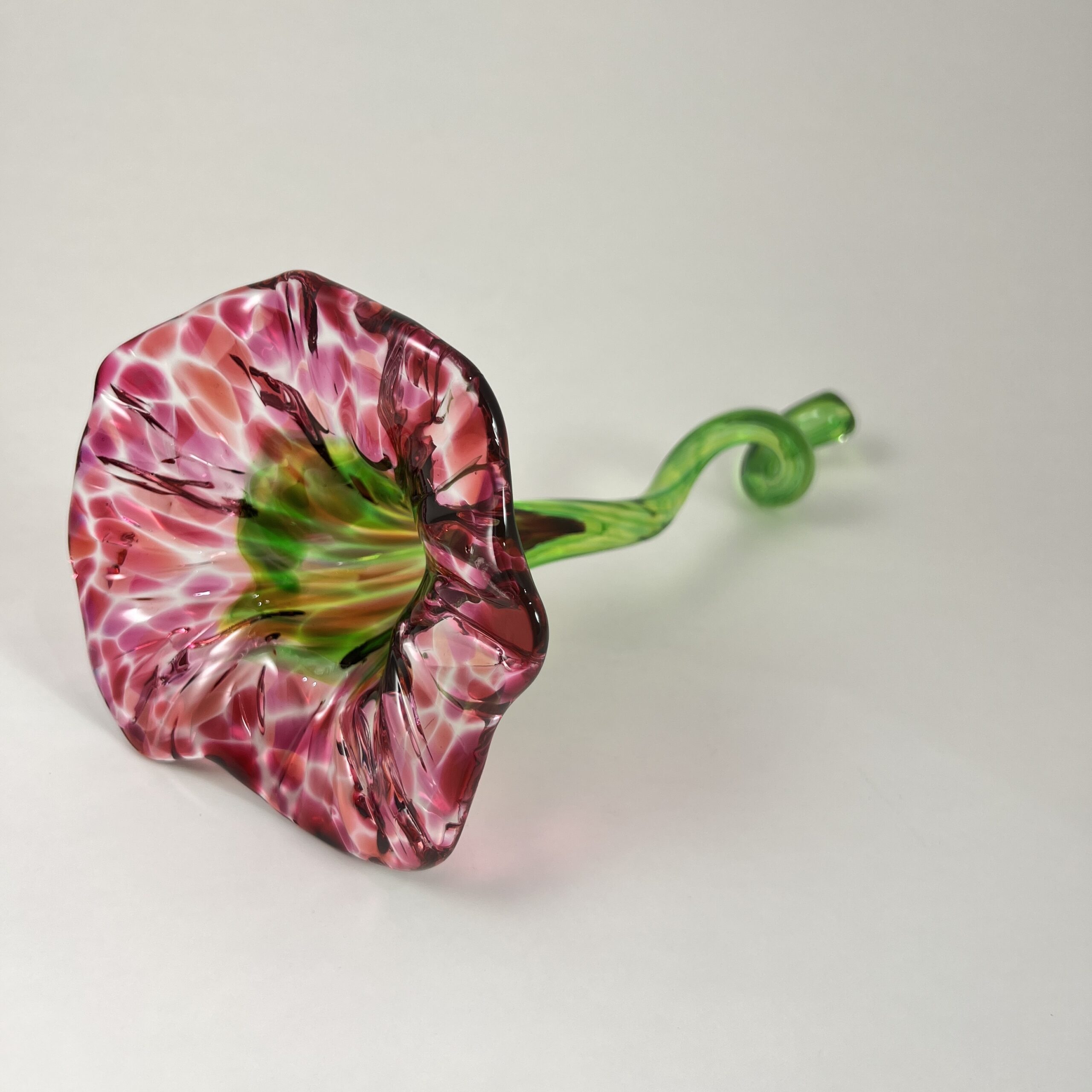
Glass is weird. It’s a liquid that acts like a solid, a transparent rock that melts at temperatures that would incinerate a human hand in seconds. For decades, this alchemy was tucked away in sweaty, soot-stained studios in places like Murano or Seattle. Then Netflix dropped Blown Away, the glass blowing tv show that basically turned a niche, dangerous craft into a bingeable spectacle. If you haven't seen it, imagine Great British Bake Off but with 2,000-degree furnaces and the constant, looming threat of everything shattering into a thousand sharp pieces.
It’s intense.
Honestly, the show shouldn't work as well as it does. Most "craft" television feels forced or overly polished. But there is something visceral about watching an artist like Deborah Czeresko or Elliot Walker wrestle with a molten glob of silica. You’re watching them fight physics. The stakes aren't just "oh no, my cake is dry." It's "oh no, my ten-thousand-dollar sculpture just succumbed to thermal shock and exploded."
The Reality of the Hot Shop
Most people think glass blowing is just blowing through a tube like you're inflating a balloon. It’s not. The glass blowing tv show does a decent job of showing the "glory holes"—the furnaces used to reheat the pieces—and the "glory" isn't exactly what it sounds like. It’s grueling. The artists are constantly sweating. Their skin is perpetually flushed. They have to move with a specific, rhythmic grace because if the glass stops spinning for even five seconds, gravity takes over and the whole thing flops onto the floor like a sad pancake.
The show, produced by Marblemedia and filmed in a massive warehouse in Hamilton, Ontario, isn't just a set. It’s a custom-built facility, arguably one of the largest hot shops in North America. They had to bring in massive HVAC systems just to keep the contestants from fainting. When you see someone like Alexander Rosenberg or Janusz Poźniak looking exhausted, that isn’t reality TV editing. That’s genuine heat exhaustion.
Why This Format Hits Different
What makes Blown Away stand out from the endless sea of competition shows is the sheer finality of the medium. In a painting show, you can paint over a mistake. In a woodworking show, you can sand it down. In glass, if the temperature drops too fast, the internal stress causes the piece to "check" or crack.
There's no fixing that.
You've spent four hours on a complex Venetian cane technique and then—tink. That tiny sound is the sound of failure. The heartbreak is real. It’s one of the few shows where the viewers actually learn the terminology because you have to understand what a "punty" is or why "annealing" matters to understand why someone just burst into tears.
The judges, usually led by Katherine Gray from California State University, San Bernardino, don't hold back either. Gray is a legend in the glass world. She knows that at this level, there’s no excuse for a messy "moof" (the foot of a glass vessel). The guest judges often include heavy hitters from the Corning Museum of Glass, which is basically the Vatican of the glass world.
The Czeresko Factor and the Evolution of the Craft
We have to talk about Season 1 winner Deborah Czeresko. She was a polarizing figure for some, but for the glass community, she was a revelation. She used the glass blowing tv show to make pointed, feminist statements using a medium that has been historically dominated by men—the "glass bros," as they're sometimes called. Her "Meat Deli" installation wasn't just technically proficient; it was weird. It was bold. It proved that glass isn't just for pretty vases or grandma's paperweights.
It’s fine art.
Since that first season, the show has evolved. We’ve seen Blown Away: Christmas and several more seasons that pushed the technical boundaries. We saw artists using 3D-printed components, incorporating metal, and playing with the optics of solid glass. The "Incalmo" technique—joining two open glass shapes while they’re both molten—became a household term for people who previously didn't know glass could be joined at all.
Is the Drama Real?
Kinda. In the sense that the clock is real. The heat is real. The "North All-Stars" or whatever theme they're running is just flavor text. The real antagonist of the show is the "Annealer." That’s the oven where the glass cools down slowly over 14 hours. The artists put their finished work in the annealer at the end of the day, and they don't know if it survived until the next morning.
Imagine finishing a high-stakes project, going to sleep, and waking up to find it turned into a pile of shards because of a microscopic air bubble. That is a level of psychological torture most reality stars don't have to deal with.
Why the Glass Blowing TV Show Matters for the Industry
Before this show, glass blowing was dying out in some areas. It’s expensive. You need natural gas, specialized tools, and a lot of space. By bringing the "Hot Shop" into the living room, Netflix basically saved a dozen small studios.
Enrollment in glass programs spiked.
Public glass blowing demonstrations—"blow-a-pumps"—saw record attendance. People realized that the "hand-blown" tag on a vase at a gallery actually meant something. It meant someone risked third-degree burns and spent a decade learning how to move their hands in perfect synchronicity with a spinning rod.
Understanding the Technical Terms
If you're going to watch the show (or if you're a fan already), you should probably know what they're actually yelling about.
- The Glory Hole: No, it’s not what you think. It’s the furnace used to reheat the glass while the artist is working on it.
- The Marver: The flat steel table used to shape and cool the surface of the glass.
- Blocks: Fruitwood ladles (usually cherry) soaked in water that allow the artist to "cradle" the molten glass.
- The Gaffer: The lead glassblower in charge. On the show, everyone is their own gaffer, which is actually much harder than working with a professional "team" or "bench."
The Future of Glass on Screen
As we move into 2026, the appetite for high-stakes craftsmanship hasn't slowed down. There are rumors of more international spin-offs. The success of the glass blowing tv show has opened doors for other material-based competitions, but none quite capture the "danger" element as well as glass.
There's a specific tension in watching something transparent take shape. It’s almost ghost-like. When an artist like Chris Taylor or Nao Yamamoto creates something that looks like fabric or liquid water out of a material that is essentially melted sand, it feels like magic.
Actionable Steps for New Fans
If you've been bitten by the glass bug after watching the show, don't just sit on your couch.
- Visit a Local Hot Shop: Most major cities have a glass studio. Many offer "experience" classes where you can blow a simple ornament or paperweight. It will give you a profound respect for how hard the contestants on the show are working.
- Check out the Corning Museum of Glass (CMoG) YouTube channel: If the show's 20-minute edits feel too fast, CMoG streams hours of live, unedited glass blowing from the world’s best artists. It’s meditative and fascinating.
- Support the Artists: Follow the contestants on Instagram. People like Katherine Gray, Elliot Walker, and Alexander Rosenberg are constantly posting behind-the-scenes looks at their real-world commissions, which are often even more complex than what they make on TV.
- Look for the "Blown Away" Exhibition: CMoG often hosts a display featuring the winning pieces from the show. Seeing them in person is a completely different experience; the scale and the way they play with light rarely translate perfectly to a camera lens.
The show isn't just about winning a prize package. It’s a document of a 2,000-year-old tradition refusing to fade away. It’s loud, it’s hot, and it’s occasionally very, very fragile.
Just like us.
Anyway, if you're looking for something that combines high-end art with the stress of a ticking time bomb, you really can't do better than a few episodes of people playing with fire. It's the most honest competition on television because the medium itself is the ultimate judge. Glass doesn't care about your backstory or your personality; it only cares if you're fast enough to keep it from hitting the floor.
***