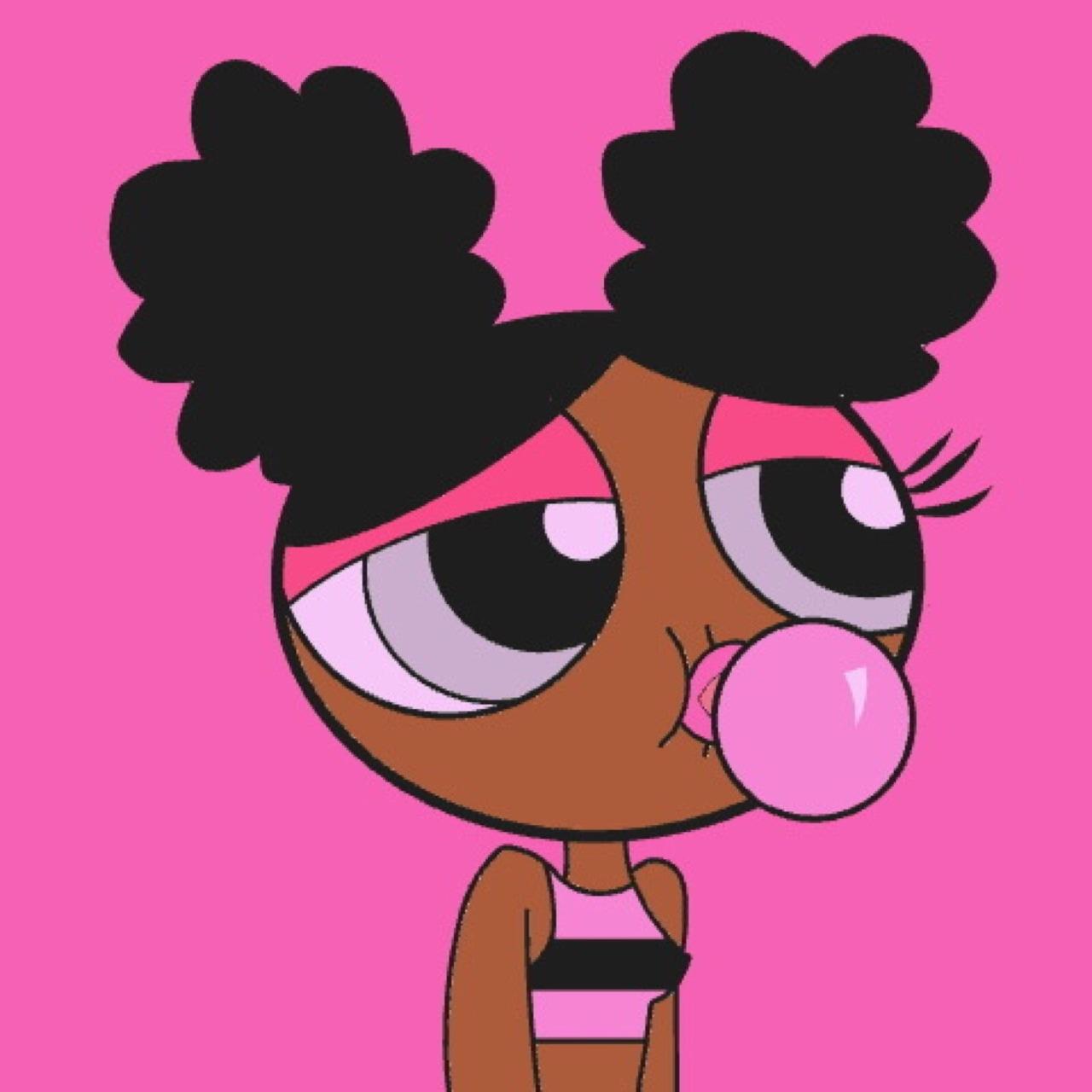
Growing up, we all knew the recipe. Sugar. Spice. Everything nice. Throw in some Chemical X, and you’ve got the perfect little girls. But for a really long time, that perfection felt a bit... homogenous. If you were a kid of color watching Cartoon Network in the early 2000s, you probably loved Blossom, Bubbles, and Buttercup, but you also probably noticed nobody in Townsville really looked like you. Then 2017 rolled around, and the "The Powerpuff Girls" reboot did something that honestly broke the internet for a week: they introduced Bliss.
Blestina Francesca Francia Mariam Alicia Cuprum—yeah, she has a lot of names—became the official black Powerpuff Girl, and the reaction was an absolute rollercoaster.
Some people loved her. Others? Not so much. But to understand why Bliss matters, you have to look past the "Power of Four" marketing stunts and see what she actually represented for the legacy of the show and the fans who felt left out of the original 1998 run.
The Secret History of the Fourth Sister
A lot of casual fans think Bliss was just a random addition to boost ratings. That’s partially true—TV is a business, after all—but her backstory is actually kind of tragic and weirdly deep for a kids' show.
Professor Utonium wasn't always the "perfect" scientist we see in the original series. Long before he hit the jackpot with the trio we know, he was a bit of a mess. He was actually trying to create the perfect little girl years earlier, but instead of Chemical X, he used Chemical W.
Chemical W was volatile.
Bliss was the result. She was older, taller, had bright neon-blue hair, and most importantly, she was a black girl with powers that dwarfed her younger sisters. But there was a catch. Because of the "W" in her veins, her emotions were tied directly to her powers. If she got too excited, too angry, or too sad, things literally started blowing up. After an accidental explosion leveled the Professor's house, Bliss felt so much guilt that she exiled herself to Bird Island.
She spent years alone. Just a kid, thinking she was a monster because she couldn't control the way she felt.
Representation or Tokenism? Let's Get Real
When the news first dropped that there would be a black Powerpuff Girl, the skepticism was loud. You’ve seen it before. A classic franchise adds a diverse character, and the internet screams "forced diversity." But for black girls who had been drawing themselves as Powerpuffs in their sketchbooks for decades, Bliss was a moment of "finally."
The design choices were intentional. She had hips. She had a different silhouette. She wasn't just a palette-swapped version of Blossom. Toya Delazy, the South African singer who voiced Bliss in many regions, talked about how significant it was to have a character that didn't just fit the "standard" mold.
However, we have to talk about the "Angry Black Girl" trope.
Some critics argued that making the only black character the one who "can't control her emotions" and "blows things up" was a bit tone-deaf. It’s a valid point. If you’re going to introduce the first black Powerpuff Girl, maybe don't make her the only one who is constantly labeled as "unstable." It’s a nuanced conversation because, on one hand, it gave her a more complex internal struggle than the other girls. On the other hand, it leaned into some pretty tired stereotypes.
Why Bliss Wasn't the "First" (The Bunny Factor)
If you're a die-hard fan, you’re probably screaming at your screen right now about Bunny.
In the 1991 episode "Sister Smeared," the girls tried to make their own sister. It went... poorly. Bunny was purple, she was physically larger, and she was "unconventional." She ended up sacrificing herself to save her sisters, and it’s arguably one of the saddest episodes in the history of animation.
A lot of fans felt Bliss was a "replacement" for Bunny. But that’s not really a fair comparison. Bunny was a one-off character meant to teach a lesson about perfection and sacrifice. Bliss was designed to be a permanent part of the lore. She was a teenager. She had a past. She had a relationship with Mojo Jojo (who was actually her best friend when she was a baby).
Bliss isn't Bunny 2.0. She's a reflection of how the world changed between 1998 and 2017.
The Cultural Impact and the "Power of Four"
The "Power of Four" five-part special was a massive event. It wasn't just about adding a new character; it was about expanding the universe. We saw Bliss struggle to fit in with a family that had already found their rhythm. That’s a very human feeling. Anyone who has ever been the "new kid" or the "long-lost relative" knows that awkwardness.
The fact that she was the black Powerpuff Girl also opened up the show to a global audience in a new way. Different actresses voiced her in different countries—Toya Delazy in Africa, Wendy Ayche (Wengie) in Australia, and Olivia Olson in the US. This wasn't just a local update; it was a global branding shift.
Breaking Down the Visuals
Bliss's aesthetic was a huge departure from the classic PPG style.
- The Hair: Bright electric blue. It stood out against the primary colors of the other girls.
- The Skin Tone: A beautiful, deep brown that finally gave representation to a massive portion of the fanbase.
- The Height: Making her a teenager was a smart move. It allowed her to act as a mentor/big sister figure, which changed the dynamic of the house.
What Happened to Bliss?
After the big event, Bliss didn't stick around as a series regular. This is where a lot of fans felt let down. It felt like she was brought in for a massive PR push and then sidelined. She pops up in the comics and some of the later episodes, but she never really became "the fourth girl" in the way many hoped.
She's currently off in space, protecting the cosmos. It’s a cool job, sure, but it felt a bit like the writers didn't know how to balance four main characters instead of three.
The Live-Action "Powerpuff" That Never Was
We can't talk about the black Powerpuff Girl without mentioning the ill-fated CW live-action pilot. In that version, titled Powerpuff, they actually cast Chloe Bennet, Dove Cameron, and Yana Perrault.
Wait.
In that version, they didn't even use Bliss as the fourth girl—they cast a black actress, Yana Perrault, to play Buttercup. This was a different approach to diversity. Instead of adding a new character, they reimagined the original trio. The pilot famously leaked, was roasted by the internet, and eventually scrapped. But it showed that the demand for a more inclusive Townsville wasn't going away.
Final Thoughts on the Legacy of Bliss
Bliss remains a polarizing figure in the fandom. To some, she's a symbol of progress and a long-overdue addition to a beloved world. To others, she's a sign that the reboot tried too hard to be "modern" and lost the simple charm of the original.
But here’s the thing: representation matters.
Even if her story was a bit clunky at times, the image of a powerful, flying, purple-clad black Powerpuff Girl meant the world to a generation of kids. She proved that the "perfect" recipe can always be tweaked, and that "Everything Nice" includes everyone.
How to Explore the Bliss Lore Yourself
If you want to see if the hype was real, here is how you should actually dive in:
- Watch "The Power of Four": Don't just watch clips on YouTube. Watch the whole five-part special. It gives you the full context of her relationship with the Professor.
- Read the IDW Comics: The comics often handle Bliss with a bit more nuance than the show. They explore her cosmic powers and her struggle to balance her human emotions with her god-like abilities.
- Check out the International Dubs: It’s actually really cool to hear how different voice actresses brought Bliss to life. Toya Delazy's performance, in particular, has a lot of soul.
- Look for Fan Art: Honestly, the fan community has done more to develop Bliss than the show ever did. The "redesigns" and "future versions" of Bliss online show just how much she resonated with artists of color.
Bliss might be off in space right now, but her impact on the ground is still very real. She changed the "Powerpuff" DNA forever, and honestly? It was about time.
Next Steps to Dive Deeper:
- Analyze the Origins: Compare the "Chemical W" origin story of Bliss with the "Chemical X" story of the original girls to see how the Professor's character evolved.
- Explore the Voice Talent: Look up Toya Delazy’s music and interviews. She’s a powerhouse performer who brought a lot of South African "flavour" to the character that often gets overlooked in US-centric discussions.
- Join the Community: Check out Reddit or Discord communities dedicated to the 2017 reboot to see the ongoing debates about where Bliss should appear next in the franchise.