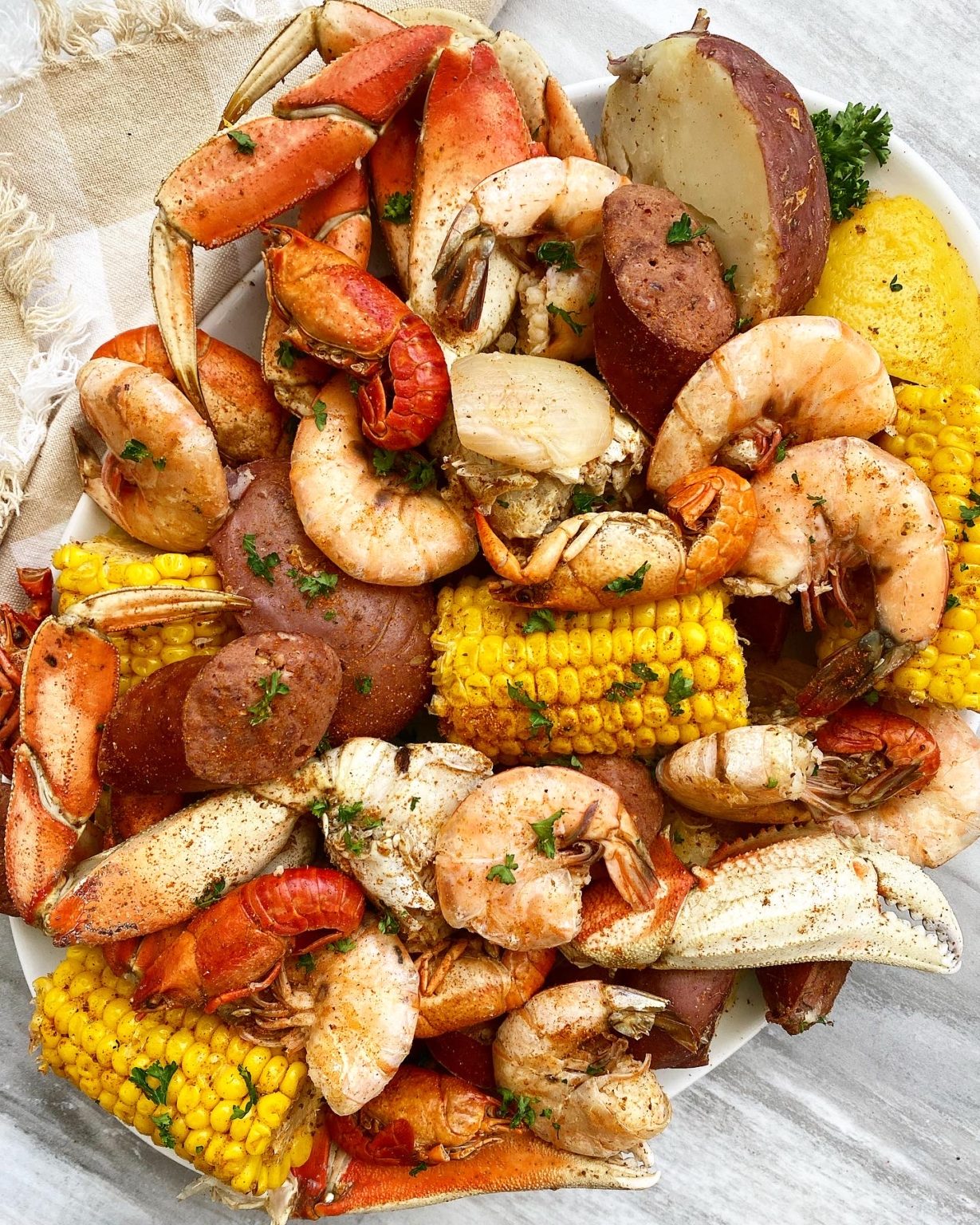
If you’ve ever walked into a backyard in Houston, Atlanta, or the Lowcountry and seen a literal table covered in newspaper and steaming piles of red-tinted shellfish, you know exactly what’s up. It’s loud. It’s messy. It’s the black people seafood boil. Honestly, calling it just a "meal" feels like a massive understatement. It’s a vibe, a cultural touchstone, and a very specific way of communal eating that has roots stretching back centuries.
You see the steam rising. You smell that heavy, sinus-clearing hit of Old Bay, Zatarain’s, or a custom "smackalicious" garlic butter sauce. People aren't using forks. They’re using their hands, cracking open clusters of snow crab legs and sucking the juice out of crawfish heads. It's beautiful.
But where did this actually come from? It wasn’t just a TikTok trend that exploded during the pandemic, though the "mukbang" era certainly pushed it into the global spotlight. This way of eating is deeply tied to geography, labor, and the ingenuity of Black communities in the American South.
The Gullah Geechee Connection and Lowcountry Roots
To really understand the black people seafood boil, you have to look at the Gullah Geechee people of the Sea Islands. These are descendants of enslaved West Africans who maintained a huge amount of their linguistic and cultural heritage due to their relative isolation. They were masters of the tide.
They used what was available. Blue crabs from the creeks. Oysters. Shrimp.
They didn't have fancy kitchen setups. They had big pots. They had open fires. They had the "one-pot" cooking method that is prevalent across West Africa—think Jollof rice or various stews. When you take that West African culinary DNA and drop it into the marshlands of South Carolina and Georgia, you get the Frogmore Stew. It's also called Beaufort Stew. It’s the ancestor of the modern boil.
It’s basically a dump. You throw in the corn. You throw in the potatoes. You throw in the smoked sausage—specifically beef or pork sausage that holds its snap. Then the shrimp goes in last because you don't want it turning into rubber. No plates needed. Just dump it on a table covered in brown paper or old newspapers. It was, and still is, a way to feed forty people without needing forty sets of silverware.
Why the "Juice" and the Butter Changed Everything
For a long time, the traditional coastal boil was relatively "dry." You’d boil everything in seasoned water, dump it, and maybe have some melted butter on the side. But things shifted. If you look at the black people seafood boil today, it’s often swimming in a literal lake of sauce.
This is where the Louisiana influence hits.
The Creole and Cajun influence brought the "boil" to a new level of spice. We’re talking cayenne, liquid boil concentrates, and lemons. But the modern "seafood boil" culture—the kind you see on Instagram—is often characterized by a heavy, garlic-infused butter sauce.
Have you heard of "The Whole Shebang" or "BlovesLife" sauce? These aren't just condiments. They are the main event. This evolution moved the boil from a seasonal outdoor event to a year-round indoor feast. The sauce is where the personality lives. Some families swear by adding brown sugar for a sweet-heat kick, while others load it with so much citrus it makes your eyes water.
The Sociology of the Plastic Glove
It's funny. You go to a dedicated seafood boil restaurant now and they hand you a bib and plastic gloves. Some people think it’s a bit much. Others won't eat without them.
The gloves represent a shift. The black people seafood boil has moved into the realm of "luxury-casual." Crab legs aren't cheap. In 2026, the price of snow crab and king crab has stayed high, making a full-spread boil a legitimate investment.
But the gloves also speak to the "all-in" nature of the meal. You are going to get messy. There is no way to eat a crawfish with dignity. You have to get in there. This creates a specific social dynamic. You can’t really be on your phone if your hands are covered in cajun butter. You have to actually talk to the people across from you. It forces a level of presence that we’ve basically lost in most other parts of modern life.
Regional Variations: Not All Boils Are Created Equal
If you tell someone from New Orleans that you're putting broccoli in your boil, they might actually ask you to leave. But in other parts of the country, the "veggie" additions are standard.
- The Florida Style: Often features "garlic crabs." It's less about the boiling water and more about the heavy garlic butter sauté after the boil.
- The Lowcountry/Carolina Style: Heavy on the "trinity" of corn, potato, and sausage. Shrimp is the star here, not necessarily the crab.
- The Gulf Style: Crawfish is king. It’s about the soak. You don't just boil them; you let them sit in the seasoned water for 20 minutes so they absorb every drop of heat.
There’s also the "Viet-Cajun" fusion. While not strictly a "Black" tradition in origin, the Black community in cities like Houston has heavily embraced this style. It adds lemongrass, ginger, and even more garlic to the mix. It’s a beautiful example of how food cultures in the South don't just sit still—they bleed into each other and get better.
The Myth of the "Salty" Boil
One thing people get wrong is thinking that more salt equals more flavor. A professional-grade black people seafood boil is about aromatics.
If you just dump a tub of salt in the pot, the potatoes will be inedible. You need onions. Whole heads of garlic sliced in half. Celery. Lemons. Bay leaves. Oranges—don't knock it until you try it. The acidity cuts through the heaviness of the shellfish.
A lot of the "at-home" boils you see online are actually over-seasoned on the outside but bland on the inside. The real skill is getting the flavor into the meat of the crab leg through the shell. That requires a specific timing of the "soak" versus the "boil."
Economic and Social Impact
Beyond the kitchen, the seafood boil has become a massive business engine. We’ve seen a localized "Boil Economy" emerge.
Think about the small businesses. People selling pre-mixed "boil bags" on Instagram. Home cooks who do "Friday Night Boils" and sell out in thirty minutes via CashApp. It’s a low-barrier-to-entry food business that relies on word-of-mouth and high-quality visuals.
It’s also a centerpiece for celebration. Graduation? Seafood boil. Birthday? Seafood boil. Sunday afternoon because the weather is nice? Put the pot on. It’s a communal act of resilience and joy. Even when times are tough, coming together to share an expensive luxury like crab—even if everyone only gets a few clusters—is a way of saying "we are doing okay."
Health Considerations (The Real Talk)
Look, we have to be honest. A seafood boil can be a sodium bomb.
If you have high blood pressure or heart concerns, the traditional boil is a minefield. The butter, the salt, the smoked sausages—it adds up fast.
But you can pivot. Many people are moving toward "low-sodium" versions using more fresh herbs, vinegar, and citrus for flavor instead of just dumping in the pre-mixed seasoning salts. Using turkey sausage instead of pork or beef is another common swap. The seafood itself—shrimp, crab, crawfish—is actually a great source of lean protein. It’s the "extras" that get you.
How to Do It Right: A Practical Framework
If you’re planning on hosting or attending one, there are some unspoken rules. These aren't just "tips," they're the culture.
- The Newspaper is Non-Negotiable: Or at least some kind of heavy-duty butcher paper. It absorbs the grease. If you use plates, you’ve missed the point.
- The Order Matters: Potatoes go in first. They take forever. Then the corn. Then the sausage. Seafood is always the last few minutes.
- The "Purge": If you’re doing crawfish, you have to purge them in clean water first. If you don't, you're eating mud. Literally.
- The Dip: Even if the seafood is seasoned, have a dipping station. Garlic butter, cocktail sauce, and maybe some extra seasoning for the "dip and lick" method.
Actionable Steps for Your Next Boil
Don't just wing it. If you want to honor the tradition and actually enjoy the food, follow these moves:
Source Fresh or Flash-Frozen Only
Don't buy "fresh" shrimp that’s been sitting on ice for four days. Unless you live on the coast, "flash-frozen" is actually fresher because it was frozen on the boat. For crab, look for "scored" claws if you want to make it easier for guests to get the meat out.
Master the Soak
The secret isn't more heat; it's the soak. Once the heat is off, let the seafood sit in the water for at least 10–15 minutes. This is when the shells "breathe" and pull the seasoned liquid inside. This is how you get juicy meat instead of dry meat that sticks to the shell.
Control the Heat
If you’re using a propane burner outdoors, keep a close eye on the flame. A rolling boil is great for potatoes, but a gentle simmer is better for delicate shrimp. Overcooked shrimp are a tragedy.
Plan for the Cleanup
Get a dedicated heavy-duty trash bag. This stuff smells. If you leave those shells in your kitchen trash overnight, your house will smell like a pier by 7:00 AM. Double-bag it and take it straight to the outside bin.
The Beverage Pairing
You need something cold and crisp. High-sugar sodas or heavy beers can be too much with the salt. Think lemonades, sparkling waters, or a very light lager.
The black people seafood boil isn't going anywhere. It’s evolving, sure—with new spices and new ways to share it—but the heart of it remains the same. It’s about the hands-on connection to the food and the person sitting next to you. It's about taking the bounty of the water and making it accessible, flavorful, and loud.
Next time you see that table spread out, don't worry about the mess. Just grab a cracker, find a spot, and get to work.