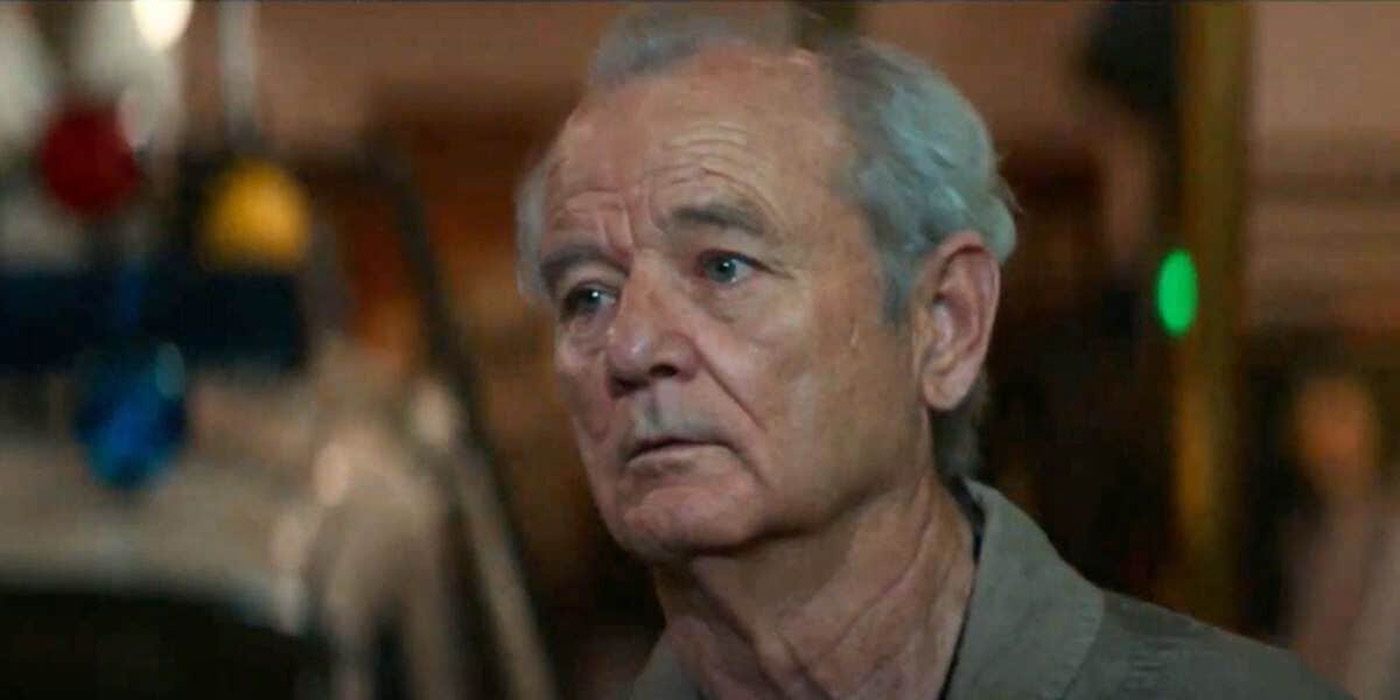
It is one of those weird glitches in the Hollywood matrix. You have two of the biggest comedy engines of the 20th century, both coming up through the same gritty 1970s improv scene, both becoming massive global box office draws, yet Bill Murray and Robin Williams never actually shared a movie poster.
Honestly, it feels wrong. Like a missed connection at the highest level of show business.
Think about it. We’ve seen Murray with Dan Aykroyd. We’ve seen Williams with Billy Crystal and Nathan Lane. But the overlap between the "Tasmanian Devil" of stand-up and the "Zen Master of Sarcasm" is almost non-existent in the filmography archives. If you dig deep enough, you find these tiny, shimmering moments where their orbits almost collided—a charity baseball game, a chance meeting at a trendy restaurant before they were famous, or a "what if" casting call from Steven Spielberg.
But a real, 90-minute collaboration? Never happened.
The Night a Young Bill Murray Met Robin Williams
Back in the late 70s, before Ghostbusters or Mork & Mindy were even ideas, the comedy world was tiny. Laraine Newman, one of the original Saturday Night Live cast members, once brought her new friend Bill Murray to a comedy club to see a guy she’d heard was a "human tornado."
That guy was Robin Williams.
According to Hollywood lore—and a few interviews with those who were there—the two met at a restaurant called Joe Allen, a hub for the comedy elite. Williams was already doing three shows a night in different clubs, fueled by a manic energy that Murray, even then, watched with a sort of detached fascination. They were polite. They were aware of each other. But even in that first meeting, the vibe was different.
Murray was the guy who would lean against a wall and dismantle you with five words. Williams was the guy who would climb the wall, turn into a goat, and then do an impression of the wall itself.
Spielberg’s Lost Three Amigos
The closest we ever got to seeing them together on the big screen was in the early 1980s. Steven Spielberg originally had a vision for a movie called Three Amigos. His dream cast? Bill Murray, Steve Martin, and Robin Williams. Can you even imagine that?
Ultimately, Spielberg went off to make E.T., and when the project finally got off the ground under director John Landis, only Steve Martin remained from the original trio. Murray and Williams went their separate ways, chasing different types of stardom. While Robin was becoming the "genie in the bottle" for a generation of kids, Bill was becoming the patron saint of indie cinema and late-night party crashing.
Bill Murray and Robin Williams: Two Different Brands of Genius
The reason they never worked together might actually be simpler than some big Hollywood feud. Basically, their energies were kind of... incompatible?
Comedy relies on "the squeeze." You need a straight man and a wild card. The problem with a Murray-Williams pairing is that they both occupy a space that demands the audience's full attention, but in opposite ways.
- Robin’s Energy: It was external. He was a giver. He would exhaust himself to make sure every single person in the room was laughing. It was generous, but it was loud.
- Bill’s Energy: It’s internal. He’s the guy who doesn't care if you're laughing as long as he thinks the joke is funny. He plays the "reluctant hero" better than anyone in history.
If you put them in a room, who holds the floor? Williams would naturally fill every cubic inch of oxygen with riffs. Murray, known for being prickly and protective of his space, would likely have just... left. Or stood in the corner looking bored.
The Comparison Most People Get Wrong
People often lump them together because they were "The Funny Guys," but their dramatic turns showed how different they really were. Robin Williams won an Oscar for Good Will Hunting by being vulnerable and grounded. He had this deep, soulful sadness that he let the camera see.
Bill Murray, on the other hand, found his dramatic peak in Lost in Translation by doing almost nothing. He used his face like a landscape. He didn't need to cry to show you he was lonely; he just had to look at a glass of Suntory whiskey.
What Really Happened with the "Competition"?
There’s always talk about whether these guys liked each other. In the comedy food chain, they were definitely rivals for certain scripts. In a 2024 retrospective, it was noted that Williams himself once felt "unnerved" by how high up the list guys like Eddie Murphy and Bill Murray were when it came to getting the first look at a script.
Robin was a guy who worried about his place in the world. He wanted to be loved. Murray? He famously doesn't even have an agent. You have to call a 1-800 number and leave a message on an answering machine if you want him for a movie.
They did cross paths at a 1980s MLB color commentary event along with Billy Crystal. You can find the footage of it online. It’s chaotic. Williams is doing bits about the players, and Murray is sitting there in a bucket hat, throwing out dry one-liners. They were like two different instruments playing in two different keys. It was fun, but it wasn't a symphony.
The Tragedy of the "Almost"
It’s a shame we never got a "Grumpy Old Men" style pairing with these two. By the 2010s, both had mellowed. Williams was exploring darker, more cerebral roles, and Murray had become the king of the Wes Anderson universe.
When Robin passed away in 2014, the world lost that potential forever. It’s one of the great "what ifs" of cinema history.
How to Appreciate Their Legacy Today
If you’re looking to see how their styles influenced each other without ever meeting, there’s a specific way to watch their work.
- Watch "The Fisher King" then "Groundhog Day": These two films, released just a few years apart, show the peak of their 90s powers. One is a frantic, beautiful mess of a performance from Williams; the other is a clinical, perfect study of cynicism from Murray.
- Look for the "Late Night" appearances: Their interviews with David Letterman or Johnny Carson tell you everything you need to know. Robin would sweat through his shirt in ten minutes. Bill would barely move his hands.
- Check out the 1980s MLB commentary: If you want the only real taste of them "working" together, search for the clips of them in the broadcast booth. It’s the closest thing to a collaborative "sketch" we have.
Basically, they were two sides of the same coin. One represented the manic joy of being alive; the other represented the hilarious absurdity of it. We might not have a movie with both their names on the marquee, but the history of comedy is built on the foundation they both laid, separately but simultaneously.
Next time you’re scrolling through a streaming service, don’t look for them in the same film. Look for how they changed the "rules" of what a leading man could be. One taught us it was okay to be too much; the other taught us it was okay to be just enough.
To see the real contrast in their careers, track down the original 1980s footage of the MLB color commentary. It's the only time you'll see their two distinct styles clash and harmonize in real-time, offering a rare glimpse into what a full-length collaboration might have actually felt like.