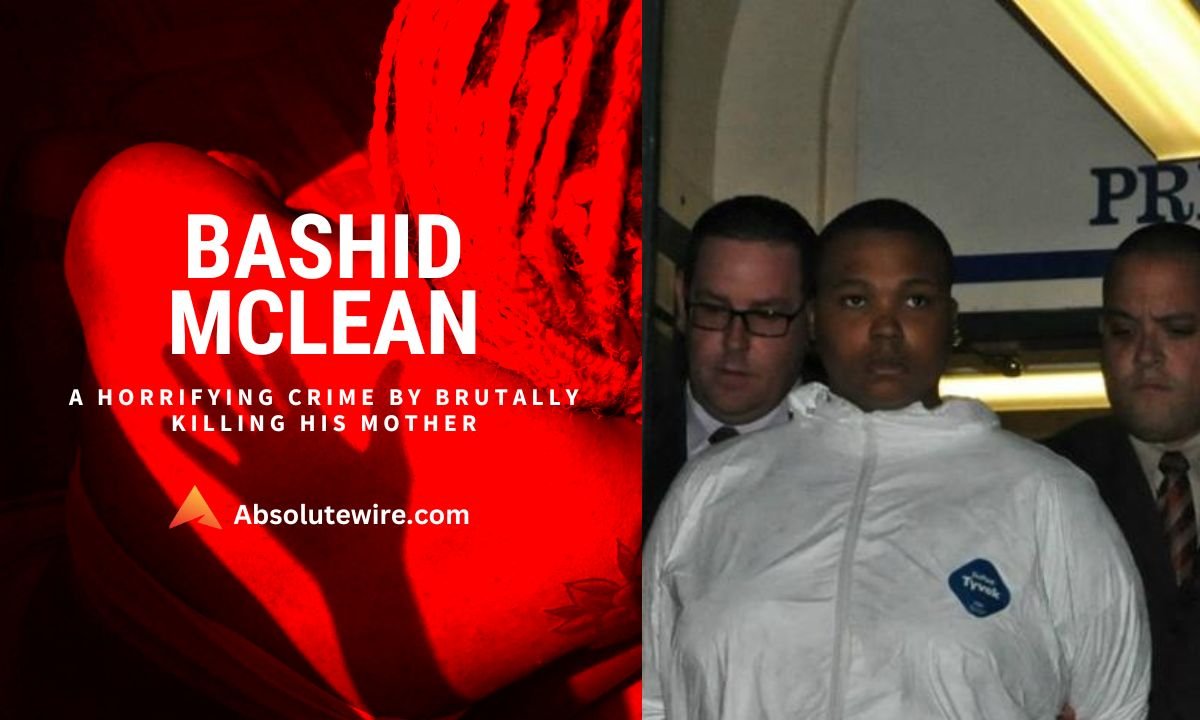
Some crimes stick in the collective memory like a bad dream you can't quite shake. For New York City, that nightmare began on a cold February morning in 2013. It wasn't just the violence. It was the digital footprint of the act. People still search for the bashid mclean uncensored photo because it represents a bizarre, chilling intersection of mental illness and the "selfie" era.
Honestly, the story is far more complex than just a gruesome image. It’s a tragedy about a broken family, a failed mental health system, and a crime that felt almost too cinematic to be real.
The Night Everything Changed in the Bronx
February 25, 2013. In a Morrisania apartment, 23-year-old Bashid McLean killed his mother, 45-year-old Tanya Byrd. She was a home health aide, described by friends as generous and upbeat. But inside that home, things were far from upbeat. Family members later testified that Bashid harbored deep-seated resentment toward his mother. He felt she had abandoned him to foster care years earlier. He was also jealous of the attention she gave his younger, 10-year-old brother.
Basically, it was a pressure cooker of resentment.
The killing itself was brutal. McLean stabbed his mother in the neck. But it’s what happened next that turned a local homicide into a national scandal. McLean didn't just flee. He went to a hardware store with an acquaintance, William Harris, and bought a power saw. They used it to dismember Byrd’s body.
Then came the photo.
McLean used his cell phone to snap a "selfie" in a bathroom mirror. In the image, he’s smirking. Under his arm, he’s clutching his mother’s severed head like a trophy. It is the definition of "chilling."
Why the Bashid McLean Uncensored Photo Still Trends
You’ve probably seen the censored versions. Major news outlets like the New York Daily News and the New York Post ran the image but with a heavy black circle covering the most graphic parts. This sparked a massive debate about photojournalism ethics. Is it news, or is it just gore?
The NYPD was furious. They launched an internal investigation to find out which officer leaked the photo from McLean’s phone to the press. They never officially released it. But in the age of the internet, once something leaks, it lives forever.
The hunt for the bashid mclean uncensored photo continues today largely because of human curiosity. We want to see the face of "monstrosity." We want to see if the smirk is real. But seeing it doesn't really explain why it happened.
The Psychiatric Breakdown
When McLean first appeared in court, he wasn't wearing a suit. He was wearing a garbage bag. His lawyer explained that Bashid had been urinating on himself and had no other clean clothes. He was clearly unwell.
During the trial, his defense team argued he was suffering from a psychotic episode. They claimed he heard voices. They said he was off his medication. However, the prosecution painted a different picture: a calculated, cold-blooded killer who knew exactly what he was doing.
The jury agreed with the prosecution.
The Trial and the Final Sentence
The trial lasted about a month in late 2016. It was a brutal experience for the family. Tanya Byrd’s sister, Cassandra McLean-Smith, had to face her nephew in court. Bashid actually apologized during his sentencing, saying what he did was "uncalled for."
Judge Jeanette Rodriguez-Morick didn't go easy on him.
- Murder in the Second Degree: 25 years to life.
- Unlawful Dissection: 1 1/3 to 4 years.
- Consecutive Sentencing: The judge ordered these to be served one after the other.
As of early 2026, Bashid McLean remains behind bars. He hasn't been a model prisoner, either. Shortly after his conviction, he was indicted for stabbing a correction officer at Rikers Island with a makeshift weapon. He’s essentially proven that his capacity for violence didn't end with the death of his mother.
Navigating the Digital Aftermath
If you are looking for the bashid mclean uncensored photo, you should know that many sites claiming to host it are actually hubs for malware. Scammers use "shock" keywords to lure people into clicking links that compromise their devices.
Beyond the technical risks, there’s the human element. Tanya Byrd’s family is still alive. Her younger son, who was 10 at the time, is now a young man. The persistence of this photo online is a recurring trauma for them.
Actionable Insights and Next Steps
- Prioritize Safety: If you find yourself following "gore" links or searching for uncensored crime scene photos, be extremely wary of the websites you visit. Most are not secure.
- Support Mental Health Advocacy: Cases like this often highlight the gaps in the mental health system. Supporting organizations like NAMI (National Alliance on Mental Illness) can help provide resources for families dealing with severe psychiatric issues before they escalate.
- Verify Sources: When reading about old cases, look for official court transcripts or reputable news archives from the time of the event (2013 and 2016) to avoid the "creepypasta" versions of the story that often exaggerate the facts.
- Respect the Victim's Legacy: Instead of focusing on the photo, remember Tanya Byrd as her friends did—a woman who worked hard as a home health aide and loved her family, despite the tragedy that took her life.
The case of Bashid McLean is a stark reminder that the digital world never forgets, but it also rarely tells the whole truth. The photo is just a frame; the tragedy is the entire movie.