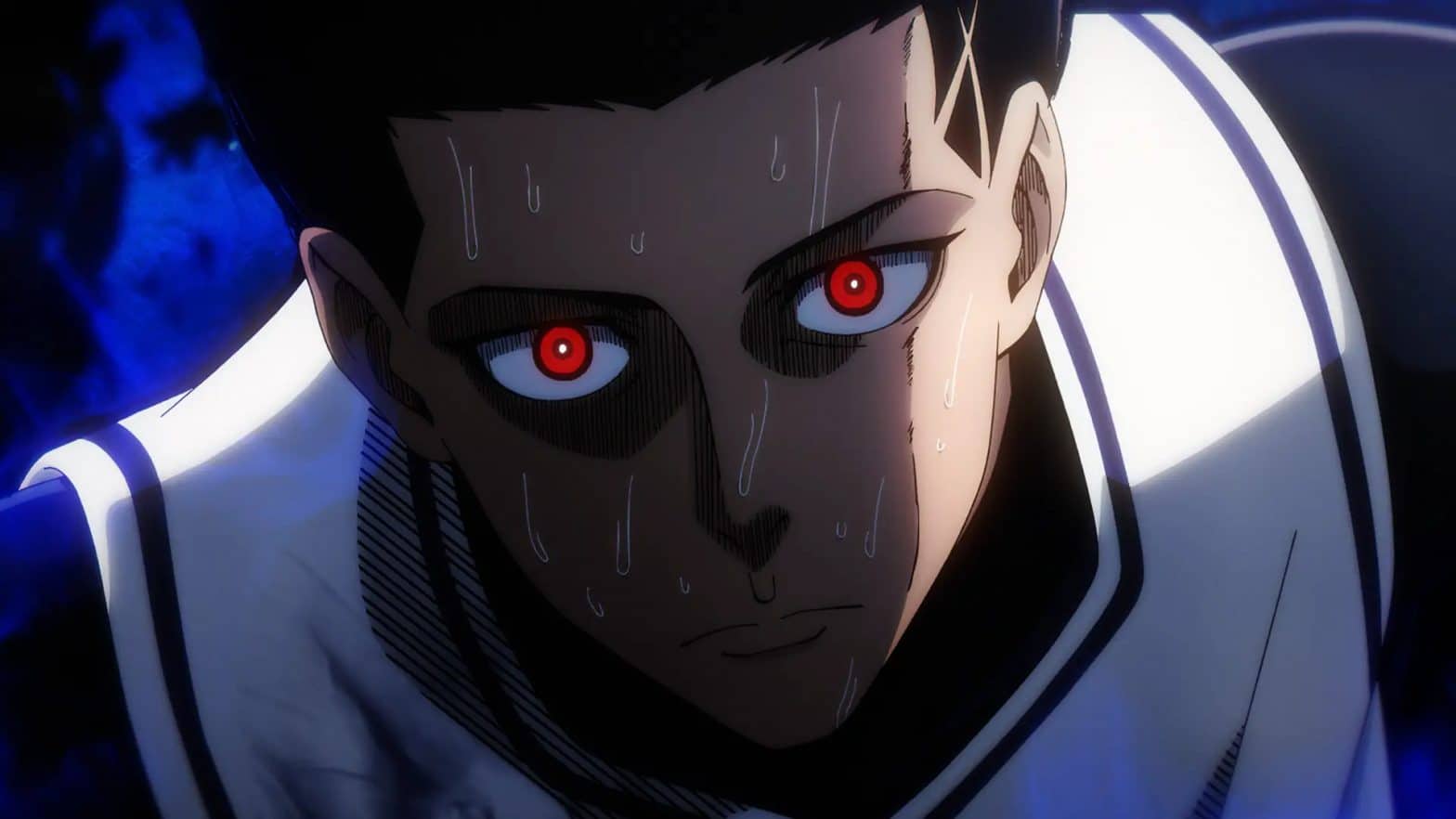
Shoei Barou is a monster. If you've been following the Neo Egoist League arc, you already know that the "King" isn't interested in playing by anyone else's rules, but his latest evolution—the Predator Eye in Blue Lock—is something else entirely. It's not just another power-up. Honestly, it’s a complete philosophical shift in how a striker views the goalkeeper. While most players in the series are obsessed with "Meta-Vision" and seeing the whole field, Barou went the opposite direction. He narrowed his focus. He became a hunter.
Most fans get confused between Meta-Vision and the Predator Eye. They aren't the same. Meta-Vision is about the macro; it’s about knowing where every player is on the pitch to find the most efficient path to a goal. Predator Eye is the micro. It is the cold, calculated gaze of a lion waiting for the exact millisecond a gazelle trips. In the context of Muneyuki Kaneshiro’s writing, this ability represents the ultimate egoism of a finisher who doesn't care about the build-up—only the kill.
What is Predator Eye exactly?
Basically, the Predator Eye in Blue Lock allows a striker to wait for the goalkeeper’s moment of vulnerability. In real-world football terms, think of it as "tunnel vision" used as a weapon. Barou stops looking at the defenders. He stops looking at his teammates. His entire world shrinks down to the space between him and the keeper. He specifically waits for the keeper to be "blinded" by other players or for their weight to shift in the wrong direction.
It’s a direct counter to the traditional "Flow" state we saw earlier in the series. Usually, players want to see more. Barou realized that to score against world-class talent like Marc Snuffy or the Ubers' defensive system, he had to see less but see it more intensely. When he uses it, his pupils constrict, looking like a literal predator. It’s terrifying.
The mechanics are fascinating because they rely on the concept of "blindsides." In the match against Bastard München, Barou showcased this by holding the ball until the exact moment Gagamaru’s vision was obstructed by a defender. That’s the key. You aren't aiming for the corner of the net; you’re aiming for the moment the goalie can’t react.
The Barou vs. Isagi Contrast
Isagi Yoichi is the protagonist, sure, but his Meta-Vision makes him a "God" of the field. He sees everything. He’s a playmaker who can finish. Barou? Barou is a "King" who demands the world revolve around his shot.
- Meta-Vision = Perspective of a Creator.
- Predator Eye = Perspective of a Destroyer.
You’ve probably noticed that Isagi struggles to stop Barou once the Predator Eye is active. Why? Because you can't predict someone who is reacting to a heartbeat. If Meta-Vision is about predicting the future, the Predator Eye in Blue Lock is about dominating the present second. It's purely reactive and incredibly hard to scout.
The Real-World Science of Gaze Behavior
This isn't just "manga magic." There is actual sports science behind this. Experts in kinesiology often talk about "Quiet Eye" periods. This is the final fixation a top-tier athlete has on a target before they perform a motor task. Think of a basketball player looking at the rim before a free throw.
Barou’s version is an aggressive, inverted form of this. Instead of focusing on his own mechanics, he fixates on the "noise" around the keeper. He uses the chaos of the box to his advantage. It’s a psychological game. If a keeper thinks the shot is coming, they tense up. Barou waits for that tension to break. He waits for the "relax" phase. Then, boom. Goal.
Kaneshiro-sensei clearly did his homework on how elite strikers like Filippo Inzaghi or even Erling Haaland operate. They aren't always the most "skilled" in terms of dribbling, but they have an uncanny ability to find the ball in the one spot the keeper can't reach. That's the essence of the Predator Eye.
Why the Ubers Arc Changed Barou
Before the Neo Egoist League, Barou was a solo act. He was "the villain." But under Marc Snuffy’s tutelage at Italy’s Ubers, he learned to integrate his ego into a system. This is where the Predator Eye in Blue Lock truly flourished.
Snuffy didn't try to change Barou. He just gave him better tools. He taught him that even a king needs a throne, and the Ubers' defensive formation is that throne. By having a team that feeds him the ball in high-pressure situations, Barou can afford to spend his mental energy on the Predator Eye. He doesn't have to worry about the midfield. He just has to worry about the kill.
It’s sort of a paradox. Barou became more of a team player just so he could be a more effective individualist. It’s brilliant writing. It shows that "Ego" doesn't mean "playing alone"—it means being the most important part of the machine.
Technical Breakdown: How to Trigger the Predator Eye
If you’re a Blue Lock fan trying to understand the "stats" behind this, it’s not just about talent. It requires specific physical and mental attributes. You can't just "turn it on" unless you have the following:
- Abnormal Leg Strength: You have to be able to fire a shot instantly without a wind-up. If you telegraph the move, the "eye" is useless.
- Massive Peripheral Awareness: Ironically, to have such narrow focus, you first need to know where everyone is so you can use them as visual shields.
- Psychological Ruthlessness: You have to be okay with holding the ball and looking "stale" until the opening appears. Most players panic and shoot too early.
The "Hidden" Weakness
Is there a downside? Honestly, yeah. The Predator Eye in Blue Lock is incredibly taxing on the brain. Just like Meta-Vision causes Isagi to overheat and occasionally collapse, Barou’s focused vision leaves him vulnerable to being dispossessed from behind. Because he is so focused on the goalkeeper, he can lose track of "ghost" defenders—players who move into his blind spot while he’s hunting.
This is exactly how Kaiser and Isagi have managed to disrupt him. They exploit the very narrowness that makes the Predator Eye so deadly. It’s a high-risk, high-reward gamble.
How the Predator Eye Affects the Blue Lock Rankings
Since Barou mastered this, his stock has skyrocketed. In the latest chapters, his bid (salary) in the Neo Egoist League reflects his status as a world-class finisher. Teams aren't looking for "decent" players anymore; they want specialists.
The Predator Eye makes Barou the ultimate specialist. He’s the guy you give the ball to when the defense is parked. He’s the guy who can score when there are ten people in the box. That kind of value is why he’s consistently at the top of the Blue Lock rankings, rivaling even Rin Itoshi.
While Rin uses a "beautiful" style of destruction and Isagi uses "rationality," Barou uses "stealth and power." It’s a three-way tug of war for the title of the world's best striker. The inclusion of the Predator Eye in Blue Lock ensures that Barou isn't just a "power" character—he's a "tactical" one too.
Actionable Takeaways for Fans and Analysis
If you're analyzing Blue Lock chapters or even playing football yourself, understanding the "Predator Eye" mindset changes how you view the game. It’s about the "When" more than the "Where."
- Watch the Goalkeeper's Feet: The next time you watch a match, don't look at the ball. Look at the goalie. Notice when they shift their weight. That is the moment Barou strikes.
- Identify Visual Obstructions: In the manga, pay attention to the "ink" and shading. Kaneshiro uses specific visual cues to show when Barou is "hiding" his shot behind a defender's body.
- Track the Fatigue: Notice how Barou’s usage of the Predator Eye decreases toward the end of a match. It’s a finishing move, not a constant state.
To truly master the logic of the Predator Eye in Blue Lock, one must stop thinking about the goal as a physical space and start thinking of it as a window of time. The window opens for a fraction of a second when the goalkeeper is distracted, blinded, or off-balance. Barou doesn't shoot at the goal; he shoots at the window.
Study the specific panels in Chapter 216 and 228 of the manga. These chapters provide the most visceral look at how the vision works in real-time. Look for the constriction of the pupils and the "X-ray" style view of the defenders. This is where the art and the narrative peak. Barou isn't just playing football; he's practicing the art of the clinical kill. If you want to understand the future of Blue Lock, you have to understand that as the defenders get better, the strikers have to get "quieter." That is the legacy of the Predator Eye.