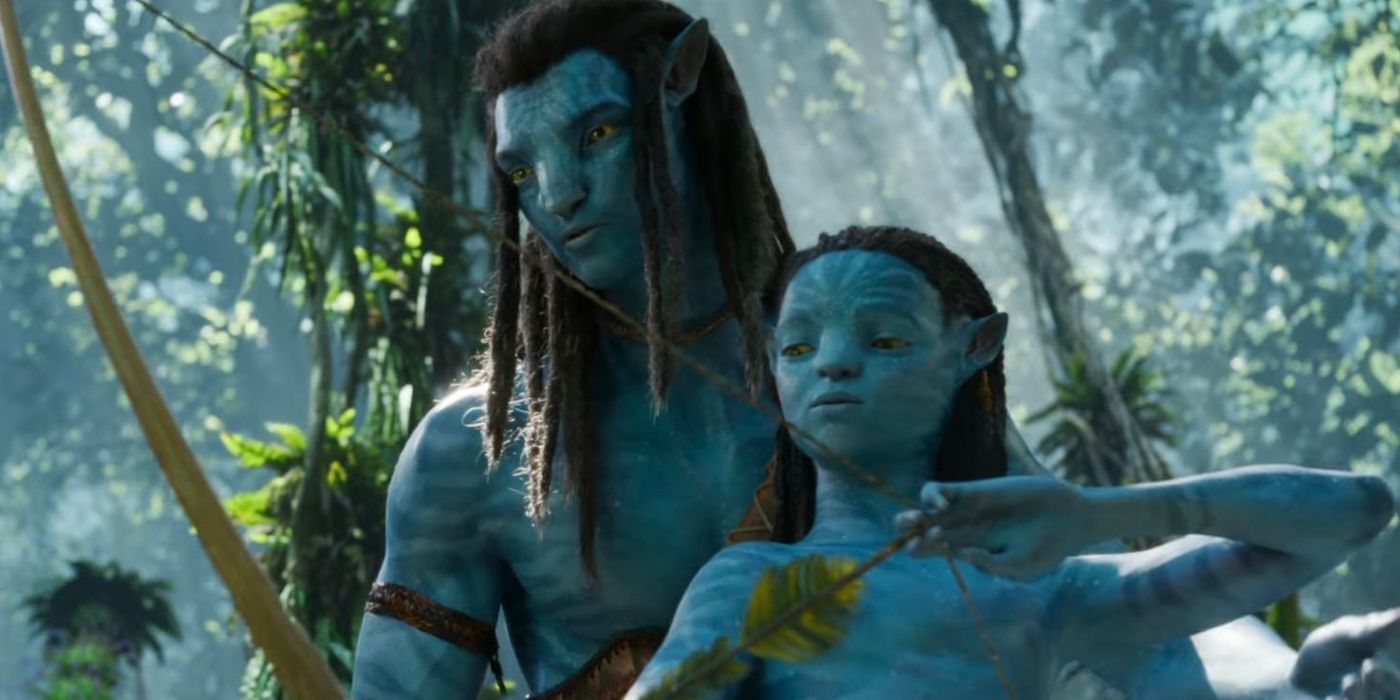
Thirteen years. That is how long James Cameron made us wait. When the first Avatar The Way of Water trailer finally dropped, it wasn't just a movie promo; it was a cultural litmus test. People had spent a decade joking that nobody remembered the characters' names from the first film. Then, the teaser hit 148.6 million views in its first 24 hours. Honestly, the industry stopped laughing pretty quickly after that. It turns out that the "no cultural impact" argument was mostly just internet noise.
The footage didn't rely on snappy dialogue or a complex plot breakdown. It was a vibe. A very blue, very wet vibe.
The Visual Language of the Avatar The Way of Water Trailer
Most trailers today are frantic. They use that "BWAHM" Inception noise and cut every half-second to keep your dopamine spiked. Cameron took a different route. The Avatar The Way of Water trailer was almost meditative. It focused on the physics of water—how light refracts through the surface of the Pandoran ocean and how the skin of the Metkayina clan differs from the forest-dwelling Omaticaya we knew.
You saw the glisten. That’s the high frame rate (HFR) tech peeking through, even in a compressed YouTube encode. The trailer introduced us to the Ilu, those plesiosaur-like creatures, and showed Jake Sully and Neytiri’s kids. It signaled a shift from a war movie to a family saga. "This family is our fortress." That line was the emotional anchor. It told us exactly what the stakes were without spoiling a single major action set piece.
Why the CGI looked "different" this time
If you felt like the textures were almost too real, you weren't imagining it. Weta FX developed entirely new water simulation software for this. In the first movie, they cheated the water a bit. In the Avatar The Way of Water trailer, the water is a character. Every splash, every ripple on a Na'vi's skin, was calculated based on actual fluid dynamics.
It’s easy to dismiss CGI as "just computers," but this was performance capture filmed underwater. The actors—including Sigourney Weaver playing a teenager and Kate Winslet holding her breath for seven minutes—were actually submerged. You can see the physical resistance of the water in their movements. It isn't "floaty" like the digital backgrounds in a standard superhero flick. It has weight.
What the Trailer Got Right (And What it Hid)
The brilliance of that first teaser was its restraint. We saw the RDA was back. We saw they had a massive new city-base called Bridgehead. But we didn't see the Tulkun. Not really. The trailer hinted at the massive whale-like creatures but saved the emotional core of Payakan for the actual theater experience.
It also subtly reintroduced Colonel Miles Quaritch. If you weren't paying attention to the blue guy in the camouflage pants holding a skull, you might have missed that Stephen Lang was back, just in an avatar body this time. It was a "blink and you'll miss it" moment that fueled weeks of fan theories.
- The score by Simon Franglen echoed James Horner’s original motifs while feeling more oceanic.
- The transition from the floating mountains to the reefs showed the sheer scale of the world-building.
- It proved that Pandora wasn't just a jungle; it was a planet.
Breaking Down the "No Cultural Impact" Myth
Before the Avatar The Way of Water trailer launched, the prevailing narrative was that Avatar was a fluke. A 3D gimmick. Then the trailer numbers came out. It beat the viewership of almost every Marvel teaser released that year. Why? Because Cameron understands "The Big Screen" better than almost anyone alive.
The trailer wasn't trying to tell you a story. It was promising an experience. It was an invitation to go back to a place that looked better than the world outside our windows. People didn't need to remember the name of the "Unobtainium" to remember how Pandora felt.
The HFR Controversy
Some people hated the way the trailer looked on their monitors. "It looks like a video game," they said. That’s the 48 frames per second (fps) effect. It removes motion blur. While it can look jarring on a 60Hz phone screen, it was designed specifically for 3D projection to prevent headaches and eye strain. The trailer was a Trojan horse for this technology, prepping audiences for a visual style that would eventually lead the film to over $2.3 billion at the box office.
Moving Beyond the Teaser
If you go back and watch the Avatar The Way of Water trailer now, after seeing the three-hour epic, it’s fascinating to see what was left on the cutting room floor or tweaked. Some of the lighting in the reef scenes was actually improved for the final theatrical release. The skin tones were deepened. The bioluminescence was refined.
It serves as a masterclass in marketing. In an era where trailers often give away the third-act twist, Cameron and Disney kept their cards close to their chest. They sold a feeling. They sold the "Way of Water."
How to watch it properly today
If you’re revisiting the footage, don't just watch it on a standard social media feed. Find a 4K HDR version. Turn off the "motion smoothing" on your TV. Look at the way the light hits the Ikran wings. That level of detail is why this franchise continues to defy the "fatigue" that is currently killing other cinematic universes.
To truly understand why the film succeeded, you have to look at the trailer as a technical manifesto. It wasn't just saying "we're back." It was saying "we've spent a billion dollars making sure this looks better than anything you've ever seen." And they were right.
Actionable Steps for Avatar Fans
- Check the Bitrate: If you're watching the trailer or the film on streaming, ensure your setup supports Dolby Vision. The "Way of Water" relies heavily on color depth that standard 1080p lacks.
- Compare Trailers: Watch the first teaser alongside the final "Official Trailer." Notice how the first one focuses on environment, while the second focuses on the conflict between the Na'vi and the "Sky People."
- Monitor the Tech: Keep an eye on the upcoming Avatar: Fire and Ash news. The marketing cycle will likely follow the same slow-burn, visual-first strategy used here.