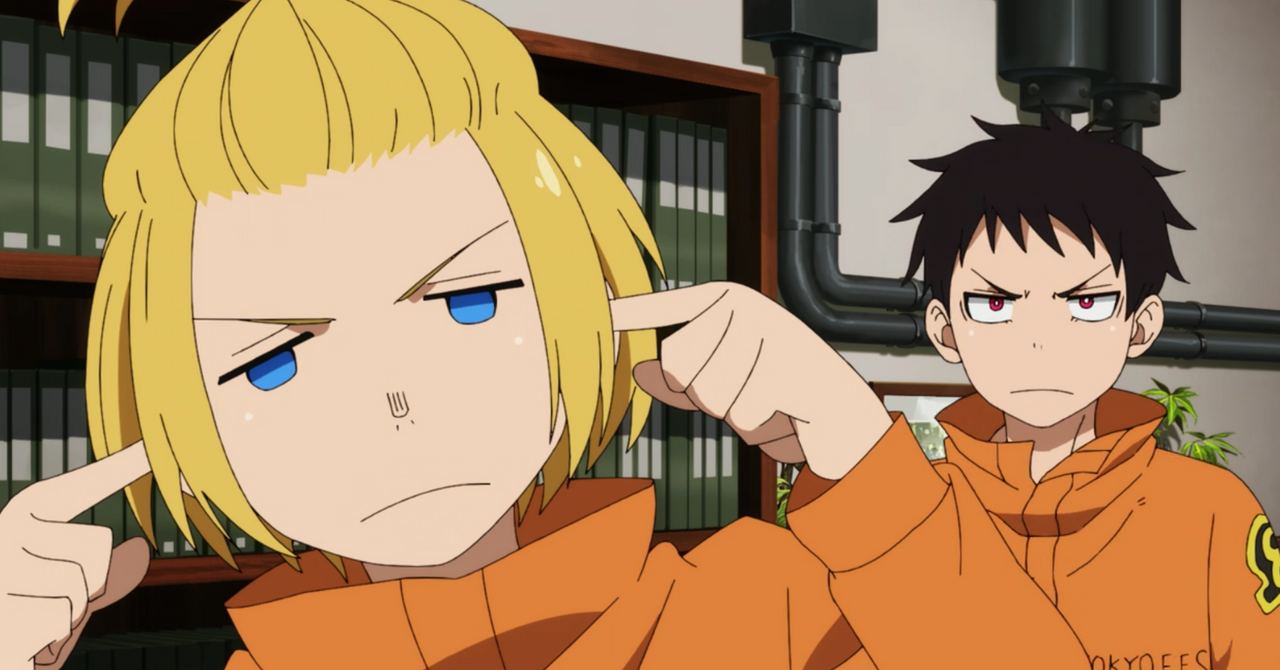
For years, fans argued about it in Reddit threads and Discord servers. It felt like a reach. People pointed at the moon in Fire Force and said, "Hey, that looks like the creepy grinning moon from Soul Eater." Others rolled their eyes. It was just an Easter egg, they said. A signature style. Every artist has their quirks, right? But then the Fire Force manga actually ended, and the internet basically melted.
The short answer? Yes. Are Soul Eater and Fire Force connected is no longer a theory; it’s established canon.
It isn't just a shared universe in the way Marvel does it. It's much weirder. Atsushi Ohkubo basically pulled a "prequel" move that nobody saw coming until the final chapters of Fire Force (Enen no Shouboutai) slapped us in the face with the truth. We aren't looking at two separate stories that happen to share a creator. We are looking at the literal birth of one world from the ashes of another.
How the Fire Force Finale Changed Everything
Let’s talk about Shinra Kusakabe.
By the end of the series, Shinra becomes a god. Literally. He gains the power of Shinrabanshō-man. At this point, the world is a mess of despair, Adolla, and spontaneous combustion. Shinra decides the current world sucks. It's too easy for people to die, and the influence of "despair" is too strong. So, he recreates reality.
He creates a world where life is less fragile. He creates a world where "Death" is a person you can actually talk to—someone who manages the cycle of life so humans don't just spontaneously burst into flames because they’re depressed.
If you’ve seen Soul Eater, you know exactly who that is. Lord Death.
Shinra literally births the concept of the Shinigami to oversee this new world. In the final chapters, we see a younger, slightly different Lord Death. We see the world transform from the "realistic" (well, anime-realistic) style of Fire Force into the jagged, whimsical, and spooky aesthetic of Soul Eater. It’s a literal origin story. Fire Force is the prequel.
The Clues We All Missed (Or Ignored)
Honestly, Ohkubo was trolling us the whole time.
The most obvious clue was always the moon. In Soul Eater, the moon is a character. It bleeds. It laughs. It has a literal face. In the early stages of Fire Force, the moon looks normal. But as the "Great Cataclysm" nears and Adolla begins to merge with reality, the moon starts to change. It develops that iconic, wide-toothed grin.
Then there’s Excalibur.
Everyone’s favorite annoying, singing sword makes a cameo in Fire Force. At first, it seemed like a fun nod to Ohkubo’s previous work. A gag. But in the context of the ending, we realize that Arthur Boyle’s obsession with knights and his "Excalibur" were the blueprints for the actual legendary weapon (and personality) we see in the DWMA later on.
It’s also worth looking at the concept of souls. Fire Force spends a lot of time talking about the "soul" and the "breath of life." In Soul Eater, the soul is a physical, tangible thing you can see, eat, and hunt. The transition happens because Shinra changed the physical laws of the universe. He made the soul visible. He made it part of the "game mechanics" of reality to prevent the kind of mass extinction events that plagued the Fire Force era.
Adolla and the Madness
One of the biggest links between the two is the concept of Madness. In Soul Eater, Madness is the primary antagonist. It’s the thing that turns people into Kishin. It’s an infectious insanity that spreads through the world.
In Fire Force, this is represented by Adolla.
Adolla is a realm of human thought and ideation. It’s fueled by the collective despair and fear of humanity. When Shinra remakes the world, he doesn't just delete Adolla. He repurposes it. The "Madness" that plagues characters like Soul Evans and Maka Albarn is the lingering residue of the Adolla Burst.
It's pretty brilliant when you think about it. Ohkubo took a standard shonen trope—the "will of the people"—and turned it into a cosmic horror element that connects two entirely different genres. Fire Force is a sci-fi mystery about firefighters; Soul Eater is an urban fantasy about a school for weapons. And yet, they are two sides of the same coin.
Why This Connection Actually Matters
Most "shared universes" feel cheap. They feel like a marketing ploy to get you to buy more merch. But are Soul Eater and Fire Force connected in a way that actually improves both stories?
I’d argue yes.
Knowing that the world of Soul Eater was intentionally built to be "less scary" than the world of Fire Force adds a layer of irony to the series. Soul Eater is famously dark and creepy, but compared to the constant threat of burning to death while you're eating breakfast, it's actually an upgrade. Shinra succeeded. He created a world where kids could go to school and fight monsters instead of a world where everyone was destined to become a monster.
It also clarifies the nature of the characters. Fans have pointed out that Maki Oze from Fire Force looks a lot like a potential ancestor to the Nakatsukasa clan (Tsubaki’s family). While not explicitly confirmed by DNA tests, the visual cues and the way powers are passed down through "soul resonance" suggest that the lineages we see in Soul Eater started with the survivors of the Great Cataclysm.
What About the "World of Soul Eater" Chapter?
If you need the "smoking gun," look no further than the final chapter of Fire Force, titled "The World of Soul Eater."
Ohkubo didn't leave any room for debate. He featured Maka, Soul, Death the Kid, and Black Star in the final pages. He literally shows them as the "new generation" inhabiting the world Shinra built. It’s a hand-off.
Interestingly, this makes the timeline a bit wonky. If Fire Force is the past, then the technology of the Soul Eater world represents a massive regression. But that makes sense. The world was destroyed. Civilization had to restart from scratch under the watchful eye of a benevolent God of Death. The "steampunk" vibe of Soul Eater isn't just a style choice—it's the result of a post-apocalyptic rebirth.
Common Misconceptions
- Is it a cycle? Some people think Soul Eater leads back to Fire Force. There’s no evidence for this. It’s a linear progression.
- Do I need to watch one to understand the other? Not really. Both stand alone perfectly. But the emotional payoff of the Fire Force ending is 10x stronger if you’ve seen Soul Eater.
- Are the 8 Pillars the same as the Great Old Ones? There’s a lot of overlap here. The "Great Old Ones" in Soul Eater (like the Kishin or Eibon) represent fundamental concepts like Fear or Knowledge. These mirror the "Pillars" who represented the collective human psyche in Fire Force.
The Creative Legacy of Atsushi Ohkubo
Ohkubo has stated that Fire Force was his final manga. If that holds true, this connection is his "Magnum Opus" moment. He tied his entire career together into one cohesive mythos.
Most authors struggle to finish one series satisfyingly. Ohkubo finished one, then went back and gave his first major hit a brand-new origin story that actually made sense. It’s a flex.
If you’re a fan who only watched the Fire Force anime, you’re in for a shock. The anime (as of now) hasn't reached these revelations yet. David Production has a hell of a job ahead of them to animate that final transition. When they do, expect the "connected universe" conversations to explode all over again.
Final Verdict on the Connection
We spent years guessing. We looked for patterns in the flames and the stars. In the end, the creator just handed us the keys to the kingdom.
Fire Force is the chaotic, fiery birth of the world.
Soul Eater is the stabilized, soul-centric aftermath.
If you want to experience the full story, the path is clear. You start with the fire, and you end with the soul.
Next Steps for Fans:
- Read the last 5 chapters of the Fire Force manga: Even if you're an anime-only fan, the art shift in these chapters is legendary and worth seeing with your own eyes.
- Rewatch the Soul Eater "Excalibur" episodes: They go from being annoying filler to being weirdly significant pieces of world-building.
- Look for the "Sun" in both series: Just like the moon, the sun in Fire Force eventually takes on that bizarre, laughing face that haunts the sky in Soul Eater.
- Check out "B.I.C" (Before Ice Age): Some theorists are already trying to link Ohkubo's earlier work B.I.C into this timeline, though that's much more speculative than the Fire Force connection.
The "Ohkubo-verse" is real, it’s weird, and it’s finally complete.