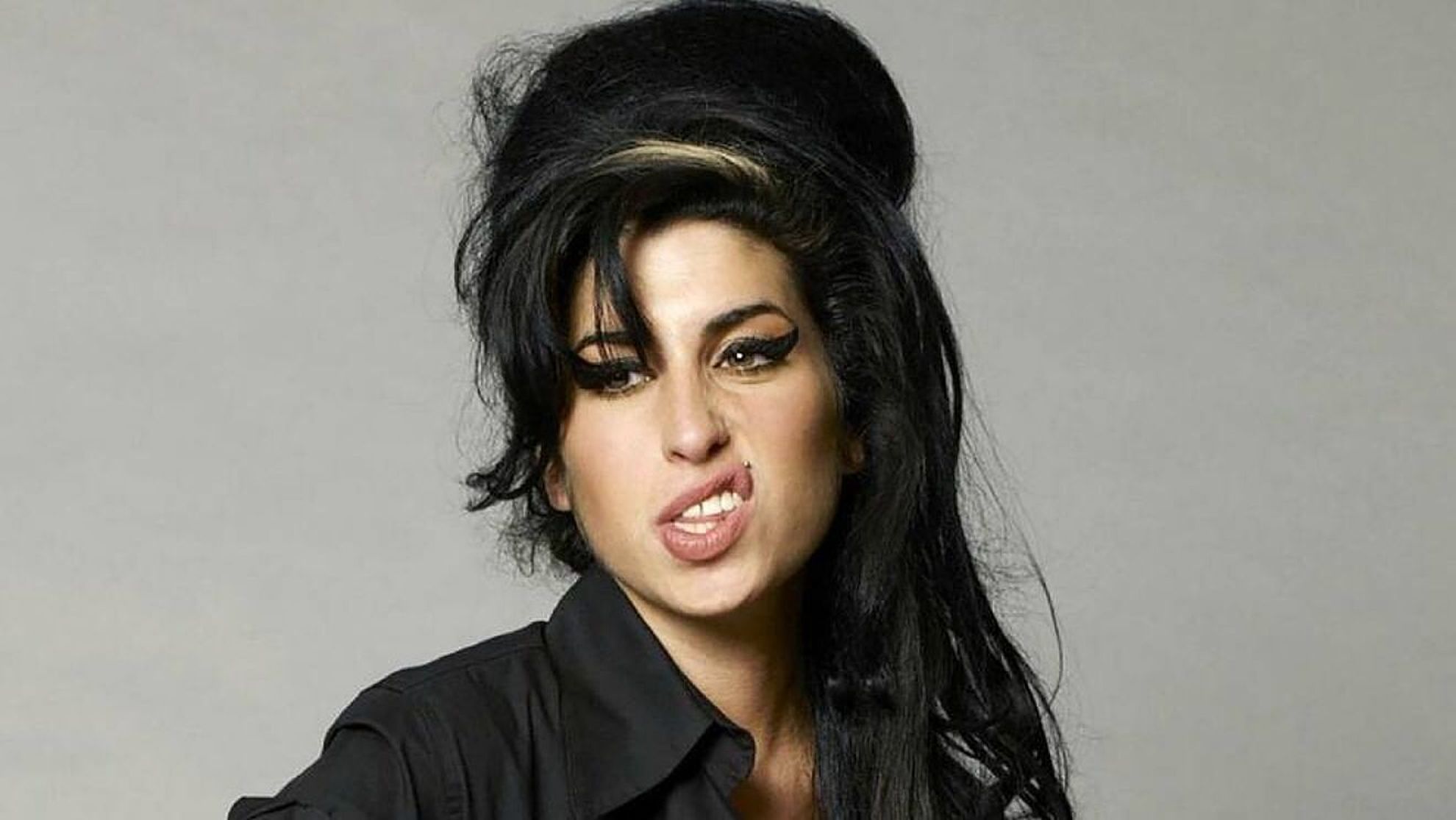
Honestly, if you saw Amy Winehouse walking down a Camden street in 2003, you might not have blinked. Before the towering beehive became a structural feat of engineering and the eyeliner grew into those heavy, Cleopatra wings, Amy was just a girl with a guitar and a mess of natural curls. Seeing Amy Winehouse without makeup feels like looking at a completely different person. It’s a shock to the system because we became so addicted to the "character" she built.
But that "character" was a mask.
Underneath the thick Rimmel liquid liner and the M.A.C. Cherry lip pencil was a face that was strikingly soft. Her skin had a glow in the early days that the tabloids eventually tried their best to scrub away with grainy, long-lens paparazzi shots. People often search for these "no-makeup" photos looking for a "gotcha" moment, but what they usually find is just... Amy. A young woman from North London who looked more like a jazz-age ghost than a pop star.
The Raw Face Behind the Beehive
We’re used to the armor. The hair—inspired by 1960s girl groups like The Ronettes—was basically a security blanket. Her hairdresser, Alex Foden, once joked about how much hairspray it took to keep that thing upright. When the hair came down and the eyeliner was washed off, the vulnerability was almost too much to look at.
In rare, early photos taken by Karen Robinson for The Observer around 2003, Amy is often pictured at home. No lashes. No heavy contour. Just her natural, hooded eyes and a few freckles. She looked younger. She looked like someone’s sister.
Why the "Mask" Became Necessary
As her fame exploded with Back to Black, the makeup got heavier. It wasn’t just a style choice; it was a barrier. Experts in celebrity psychology often point out that "disorderly" fame—the kind Amy endured—often leads artists to create a visual uniform. If she had the wings and the hair on, she was "Amy Winehouse." Without them? She was just a girl struggling with bulimia and the weight of the world.
- The Eyeliner: It grew thicker as her personal life got more chaotic. It was like she was trying to hide the exhaustion in her eyes.
- The Hair: It reached heights that defied gravity, a literal wall of hair between her and the cameras.
- The Tattoos: These were her permanent "makeup," a way to claim her body when the press was constantly critiquing her weight and skin.
The Toll of the Tabloids
It's pretty gross how the media treated her. When she was photographed without makeup later in her life, the images weren't celebrated for their "natural beauty." Instead, they were used as "proof" of her decline. Tabloids would zoom in on skin breakouts or the physical toll of her battle with addiction and bulimia.
Janis Winehouse, Amy's mom, talked in the documentary Reclaiming Amy about how the public saw a caricature. They didn't see the girl who loved Sudoku and cooking meatballs. They saw the "hot mess." When you look at her bare face in footage from her time in St. Lucia, you see a glimpse of what could have been. She looks healthy there. Her skin is clear, her eyes are bright, and she isn’t hiding behind a half-inch of black ink.
What We Get Wrong About Her "Look"
Most people think Amy’s look was a calculated "retro" brand. It wasn't. It was an evolution. If you look at her Frank era, she was wearing hoop earrings and simple jeans. The transition to the 60s pin-up style happened because she felt more comfortable in a "costume."
There’s a specific power in the Amy Winehouse without makeup images that circulate on Pinterest or fan forums. They remind us that she wasn't a cartoon. She was a person with a "dual diagnosis"—dealing with both mental health struggles and substance use. The makeup was a way to feel "done," even when she felt like she was falling apart inside.
The Reality of Her Skin and Health
It’s important to be real here: the physical changes Amy went through weren't just about "natural aging." Bulimia is brutal on the body. It thins the hair and affects the skin's elasticity. When she was seen without the beehive, you could see how thin her natural hair had become, which is why she relied so heavily on extensions and "pieces" to maintain the silhouette.
How to Appreciate the Real Amy
If you want to actually "see" her, stop looking at the paparazzi photos from 2008. Go back to the Frank sessions. Watch the footage of her in the studio with Mark Ronson where she’s just wearing a Fred Perry polo and a messy ponytail.
- Focus on the eyes, not the liner. Her eyes were incredibly expressive and soulful.
- Look for the smile. In the no-makeup photos where she’s laughing with friends, she looks radiant.
- Respect the privacy. A lot of those "raw" photos were taken during her lowest moments.
Actionable Insights for Fans
If you're inspired by Amy’s look but want to keep it healthy, focus on the "spirit" of her style rather than the "mask." Use a good primer to protect your skin before going heavy on the liner. Take "skin breaks" where you go totally bare, something Amy rarely felt she could do in public. Most importantly, remember that her beauty came from her talent and her wit, not the height of her hair.
She was a rare gem. A beautiful woman who didn't need the ink to be iconic, even if the ink is what we remember.
To truly honor her legacy, we have to look past the "Amy Winehouse" brand and remember the woman who just wanted to sing jazz in a small club. If you're interested in her actual beauty routine, you can look up the specific M.A.C. shades she used, but maybe also take a moment to appreciate the girl in the 2003 portraits—the one who was still just Amy.
Next Step: Take a look at the Amy documentary (2015) by Asif Kapadia. It features a ton of home movie footage where she’s completely natural, giving you a much more authentic look at her life than any tabloid ever did.