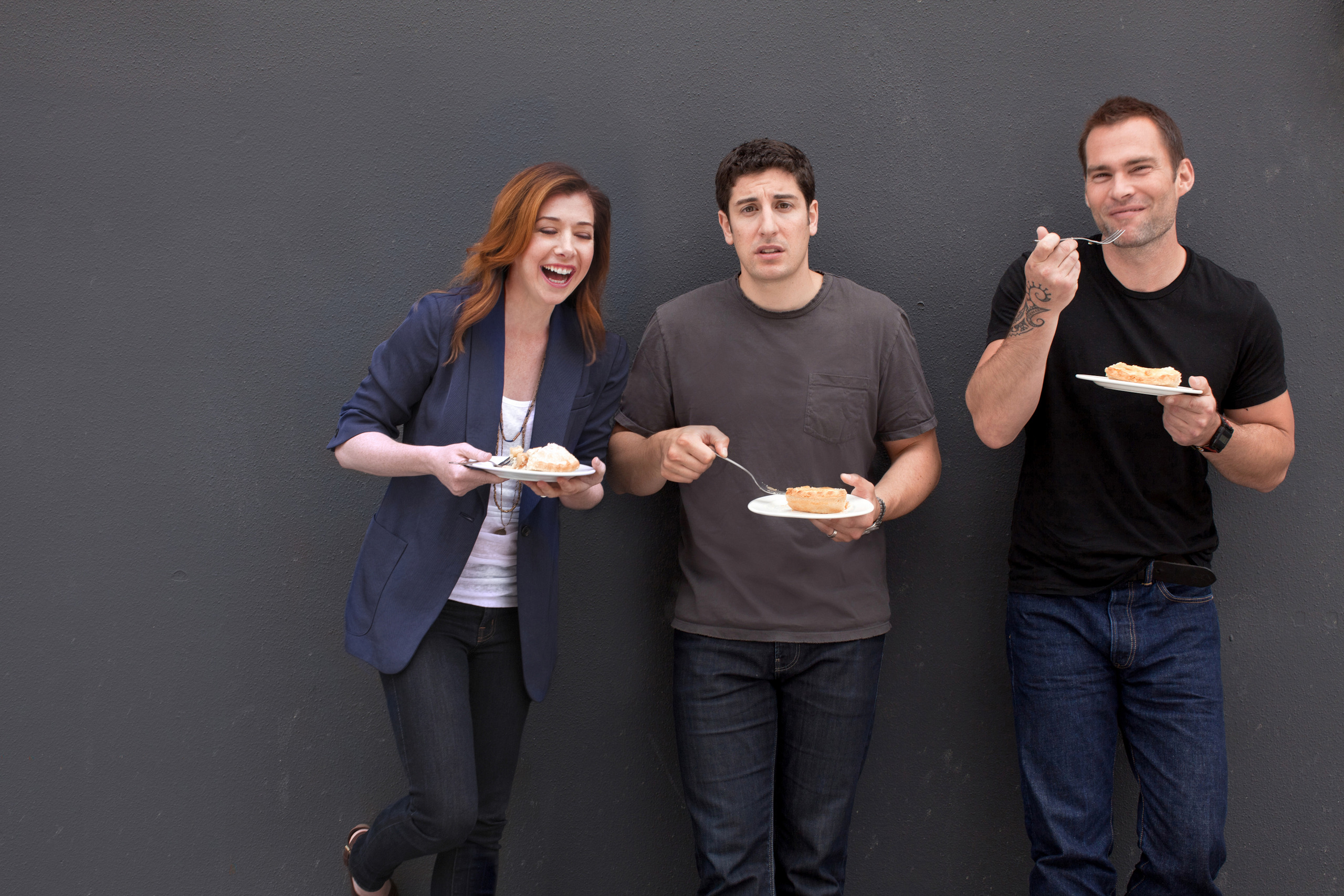
If you grew up in the late nineties or early 2000s, you probably remember the yellow-bordered DVD cases that dominated every Blockbuster shelf. American Pie didn't just change the teen comedy genre; it basically invented a new aesthetic for "raunch." But honestly, for a lot of us, the actual movie was only half the draw. The real gold was buried in the special features. The American Pie outtakes became legendary, almost functioning as a standalone short film that fans quoted just as often as the scripted lines.
It was a specific era.
Directors Paul and Chris Weitz captured something lightning-in-a-bottle with that first cast. Jason Biggs, Alyson Hannigan, Seann William Scott, and Eddie Kaye Thomas had this frantic, desperate chemistry that felt real because, well, they were mostly unknown kids at the time. When you watch the outtakes today, you aren't just seeing missed lines. You’re seeing the birth of a comedic language that defined a decade.
The Stifler Effect and Unscripted Chaos
Let’s talk about Seann William Scott for a second. Before he was Steve Stifler, he was a guy working at Home Depot. His energy in the American Pie outtakes is completely unhinged. You can see the rest of the cast—especially Jason Biggs—visibly struggling to keep a straight face whenever Scott goes off-script. Most of the "Stifler-isms" that made it into the final cut started as improvisational riffs during rehearsals or blown takes.
There’s this famous sequence in the outtakes where the guys are sitting around talking about their "pact." It’s supposed to be a serious, albeit hormonal, moment. But in the raw footage, the actors keep breaking because someone’s stomach growled or because Thomas Ian Nicholas couldn't stop laughing at Eddie Kaye Thomas’s deadpan delivery. This wasn't just "messing up." It was a collaborative sharpening of the comedy.
Comedy is about rhythm. When you watch the bloopers from the first three films—American Pie, American 2, and American Wedding—you see how much of the humor was found in the "dead air" between lines. Eugene Levy, playing Jim’s Dad, is the absolute king of this.
Levy is a veteran of SCTV and Christopher Guest's mockumentaries. He doesn't just "miss" a line; he explores the awkwardness of the character until the director is forced to yell cut because the cameraman is shaking the lens from laughing. His interactions with Jason Biggs are masterclasses in cringe. In the outtakes, you see Levy stretching out those painful father-son talks for minutes at a time, throwing out bizarre advice that never made the theatrical cut but definitely influenced the sequels.
Why We Obsessed Over the Outtakes
Why did we care so much?
Simple. The "Unrated" DVD boom.
In the early 2000s, Universal Pictures realized they could sell ten times as many discs if they promised "The Version You Couldn't See in Theaters." This marketing strategy turned the American Pie outtakes into a primary selling point. People weren't just buying the movie; they were buying the behind-the-scenes chaos. It made the audience feel like they were part of the friend group.
- It felt authentic.
- The mistakes were often funnier than the written jokes.
- It broke the "fourth wall" of the polished Hollywood teen flick.
There’s a specific bit of footage from American Pie 2 involving the "superglue" scene. If you think the scene in the movie is stressful, the outtakes are a mess of practical effects gone wrong and Jason Biggs literally covered in various sticky substances while trying to maintain his dignity. It’s physical comedy in its purest, most accidental form.
The Evolution of the Blooper Reel
As the franchise moved into the American Pie Presents spin-offs—the "Direct-to-DVD" era—the outtakes shifted. They became more staged. You can tell when an outtake is real and when it’s "produced" for the DVD extras. The original trilogy felt like a group of friends accidentally making a hit. The later ones felt like a brand trying to replicate that "oops" energy.
Still, even in movies like Band Camp or Beta House, the outtakes served a purpose. They humanized a genre that was often criticized for being too crude or shallow. You see the actors freezing in the cold during lake scenes or accidentally knocking over expensive equipment. It’s a reminder that filmmaking, especially low-brow comedy, is a grueling, repetitive, and often ridiculous job.
Comparing the Eras
In the 1999 original, the mistakes were mostly about technical hurdles. Think about the "warm apple pie" scene. Jason Biggs had to perform that with a room full of crew members watching. The outtakes show the sheer absurdity of the setup. By the time American Reunion came around in 2012, the outtakes felt nostalgic. You were watching middle-aged actors laugh at the fact that they were still doing "dick jokes" fifteen years later.
There is a genuine sweetness in the American Reunion bloopers. You see Alyson Hannigan and Jason Biggs slipping back into their "Jim and Michelle" shorthand instantly. It’s a testament to the casting. You can’t fake that kind of rapport.
The Technical Side of the "Mistake"
Most people don't realize that "outtakes" are curated. For every one minute of funny bloopers you see on a Blu-ray, there are ten hours of boring mistakes—lighting rigs failing, planes flying over a period piece, or someone simply forgetting to turn on a microphone.
The American Pie outtakes were edited with a specific comedic beat. They used "slatstick" sound effects and quick cuts. This style influenced how YouTube "fail" videos would later be edited. It was a precursor to the "content" culture we live in now, where the "making of" is just as valuable as the product itself.
Honestly, the way Jennifer Coolidge (Stifler's Mom) breaks character is a gift to humanity. She has this way of squinting her eyes and just stopping mid-sentence that sends everyone into a tailspin. In the outtakes for the first film, her scenes with Eddie Kaye Thomas (Finch) are surprisingly technical. They had to nail a very specific "noir" parody tone, and seeing them break that tension by cracking up makes the final performance even more impressive.
The Legacy of the Pie Bloopers
What’s the takeaway here?
The American Pie franchise succeeded because it didn't take itself seriously. The outtakes proved it. In an era where movies are often over-polished and micro-managed by studios, those messy, grainy, loud blooper reels remind us that movies are made by people.
If you're looking to revisit the series, don't just skip to the scenes everyone knows. Go into the "Bonus Features." Watch the cast lose their minds during the prom sequences. Watch the sheer number of times the "Sherminator" (Chris Owen) had to restart his monologues because he was being too intense.
How to Find the Best Footage
If you want the full experience, look for the "Cakes & Ale" or "Unrated" editions of the original trilogy.
- Find the American Pie (1999) Collector's Edition. The "Classic Outtakes" segment is about 10 minutes of pure gold.
- Check out the American Wedding bloopers—specifically the ones involving the "shaving" scene. It’s probably the most chaotic the set ever got.
- Look for the "10 Years Later" retrospective interviews where the cast talks about which "mistakes" actually ended up in the final movie (there are more than you think).
The reality of the American Pie outtakes is that they weren't just filler. They were the heart of the franchise. They showed a group of actors who genuinely liked each other, navigating the weirdest scripts of their lives.
To get the most out of your next rewatch, pay attention to the background actors in the "party" scenes. Often, if you look closely at the theatrical cut, you can see people in the back of the frame starting to smile or cover their mouths. They're about to break. Those are the moments right before the director yelled "cut" and the footage moved into the outtake reel.
Digging through the archives of these films is a lesson in comedic timing. It’s about the "beat" after the joke. Sometimes, the silence after a failed line is funnier than the punchline itself. That’s the secret sauce of the American Pie legacy. It’s messy, it’s loud, and it’s unapologetically human.
Next time you’re scrolling through a streaming service and see these titles, don’t just watch the movie. Find the raw footage. It’s the closest we’ll ever get to being in that basement in Michigan with the gang.
Actionable Insights for Fans:
- Track the Improv: Watch the scenes with Eugene Levy and then watch his outtakes. You’ll realize that about 30% of his dialogue in the finished films was likely unscripted.
- Compare Versions: If you have the original DVD and a modern 4K stream, check the "Special Features." Often, newer streaming versions omit the original blooper reels due to licensing or "cleaner" UI designs.
- Analyze the "Break": Study which actors "break" character first. Usually, it's Seann William Scott, which is ironic considering how focused Stifler is supposed to be.