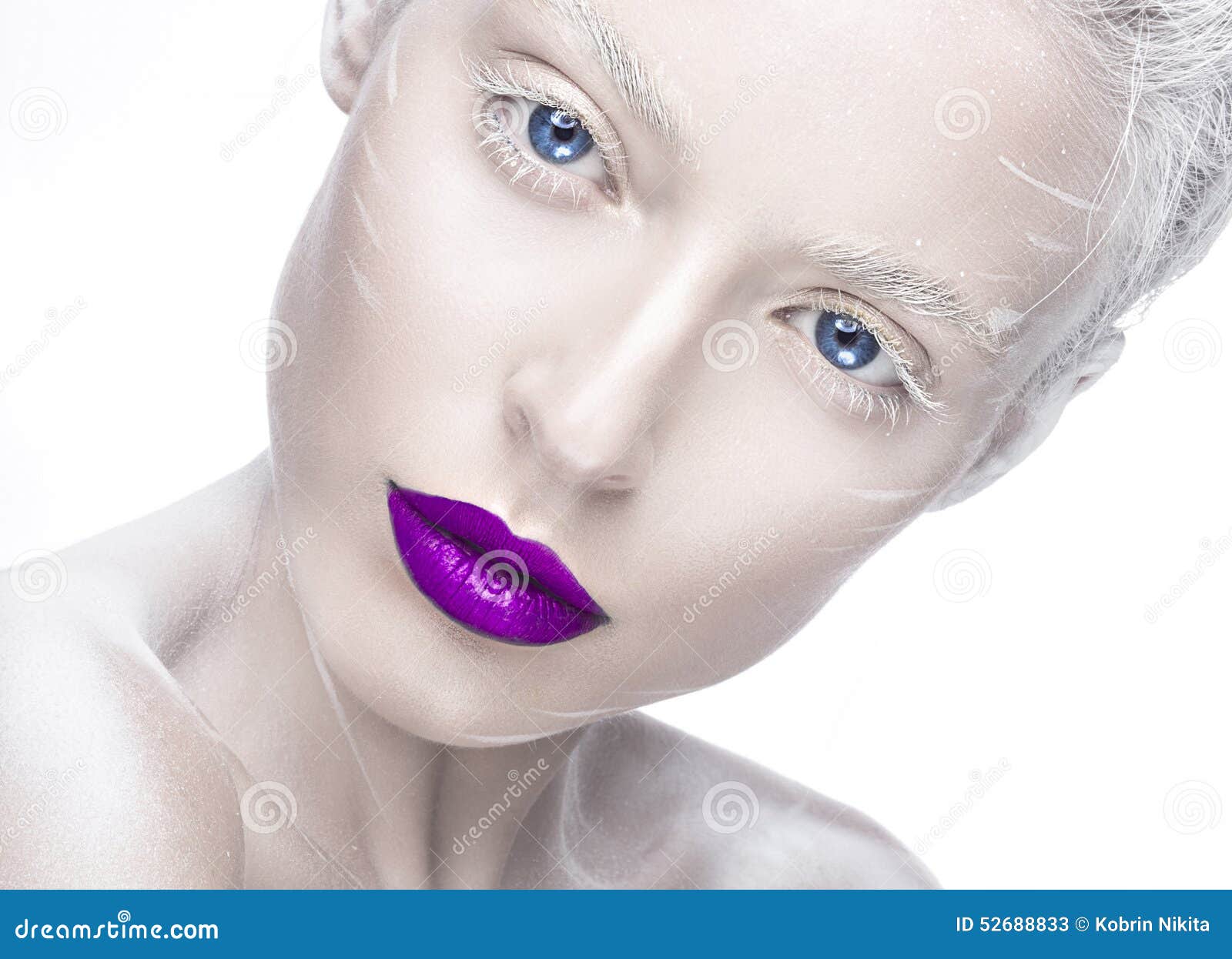
You've probably seen the photos. Deep, violet eyes framed by snow-white lashes. They look otherworldly. Stunning. Honestly, they look like something straight out of a high-fantasy novel or a Marvel movie. But when it comes to albino people with purple eyes, the reality is a lot more nuanced—and a lot more interesting—than a viral Instagram post might lead you to believe.
There is a huge misconception that "purple" is a standard eye color for people with albinism. It isn't. Not exactly. To understand why some people appear to have violet eyes, we have to look at the physics of light and the biology of melanin. It’s not about having purple pigment. Humans don't actually produce purple pigment.
The Science of Seeing Violet
Albinism is a group of genetic conditions that result in little to no production of the pigment melanin. This lack of pigment doesn't just affect skin and hair; it fundamentally changes how the eye handles light. In a person with typical pigmentation, the iris is opaque. It blocks light. But in someone with Oculocutaneous Albinism (OCA), the iris can be translucent.
When light hits a translucent, pale blue iris and reflects off the blood vessels at the back of the eye, the colors mix. Think back to primary school art class. Red plus blue equals purple. That’s basically what’s happening here. The "purple" you see is an optical illusion caused by the red of the retina peeking through the blue of the iris. It’s a phenomenon often dependent on the lighting in the room. In a dim room, the eyes might just look pale blue or grey. Under a camera flash or bright fluorescent lights? That’s when the violet hue pops.
Dr. Richard King, a renowned genetics researcher who spent decades studying albinism at the University of Minnesota, often noted that while "true" purple eyes are technically a myth in terms of pigment, the visual effect is very real for some individuals with specific types of OCA.
Alexandria’s Genesis: The Internet’s Favorite Fake Legend
We have to talk about Alexandria’s Genesis. If you spend five minutes googling albino people with purple eyes, you will stumble upon this story. It’s a "disorder" that supposedly grants people purple eyes, shimmering skin, and a lifespan of 150 years.
It’s fake. Total fiction.
The myth originated in FanFiction circles in the late 90s and has since spread like wildfire. There is no such medical condition. People with albinism face real, daily challenges—especially regarding vision—and attributing "superpowers" or mythical origins to them can actually be quite harmful. It "others" them. It turns a medical reality into a sideshow.
Why Vision Matters More Than Color
While the internet obsesses over the aesthetics of violet eyes, the people living with albinism are usually more concerned with how those eyes actually work.
Albinism almost always comes with significant vision impairment. This isn't just about needing glasses. The lack of melanin affects the development of the retina and the path of the optic nerve from the eye to the brain. Most people with albinism have:
- Photophobia: Extreme sensitivity to light. Imagine walking outside on a sunny day and feeling like someone is holding a flashlight directly against your pupils. That’s why you’ll see many people with albinism wearing dark wrap-around sunglasses even on overcast days.
- Nystagmus: Involuntary, rapid movement of the eyes. They might shift side-to-side or up-and-down. The brain adapts to this, so the person doesn't see the world "shaking," but it makes focusing on fine detail incredibly difficult.
- Strabismus: Eyes that don't track together properly.
These aren't just minor inconveniences. For many, this means being "legally blind," even if they have some functional vision.
Real Diversity in Albinism
Not everyone with albinism looks the same. It’s a spectrum. There are several types of Oculocutaneous Albinism (OCA1 through OCA8), and the amount of pigment a person has depends on which gene is mutated.
In OCA1A, there is a total absence of melanin. These are the individuals most likely to exhibit that striking violet or reddish-blue eye color. In other types, like OCA2 (which is more common in people of African descent), the person might have creamy skin and hazel or even light brown eyes.
The color of the eyes can even change as a person ages. Some infants born with very pale eyes might develop a bit more pigment as they grow, shifting from a violet-blue to a more standard grey or green. Biology is messy. It doesn't follow a strict script.
Navigating the World with Albinism
Living as an albino person with "unusual" eyes brings a weird mix of unwanted attention. In some cultures, particularly in parts of East Africa, people with albinism face extreme persecution based on superstitions. In the West, it's often a different kind of burden: the "fetishization" of their appearance.
Being stared at in the grocery store isn't fun. Having strangers ask if you’re wearing "costume contacts" gets old fast.
The National Organization for Albinism and Hypopigmentation (NOAH) provides a lot of resources on this. They emphasize that while the physical traits are unique, the person behind the eyes is just... a person. They aren't a "medical marvel" or a "mythical creature." They’re trying to get through their day, probably while dealing with a fair amount of glare.
The Lighting Effect
If you ever see a professional photograph of albino people with purple eyes, remember that lighting is the "secret sauce."
Photographers often use specific angles to maximize the light reflecting off the back of the retina. It’s the same reason your dog’s eyes glow green or yellow in photos. In a person with albinism, the lack of an opaque iris means that "glow" mixes with the natural blue of the eye. Without that specific lighting, those same eyes might look like a very watery, translucent blue.
It’s biology disguised as magic.
Practical Steps for Support and Understanding
If you or someone you know has been diagnosed with albinism, or if you're just trying to be a better ally, focus on the functional side of things rather than the aesthetic.
- Prioritize Eye Care: Regular visits to a low-vision specialist are non-negotiable. Traditional optometrists might not have the tools needed to manage nystagmus or retinal hypoplasia.
- Control the Environment: Use hats with brims and high-quality UV-blocking sunglasses. Inside, use task lighting rather than harsh overhead lights to reduce glare.
- Accessibility Tools: High-contrast screens, screen readers, and large-print materials make a world of difference.
- Educate Gently: When people ask about eye color, it's a chance to explain the science of melanin rather than letting myths like Alexandria’s Genesis persist.
The reality of albinism is far more complex than a single eye color. It is a life defined by adaptation, resilience, and a very specific way of seeing the world—literally and figuratively. Understanding the science behind the "purple" helps strip away the mystery and replaces it with actual respect for the lived experience of those with the condition.
Next Steps for Deeper Understanding
- Consult a Low Vision Specialist: If you're experiencing photophobia or tracking issues, a general eye exam isn't enough. Seek out a specialist who understands the neurological components of albinism.
- Connect with NOAH: Visit the National Organization for Albinism and Hypopigmentation to find community groups and accurate medical literature that moves beyond internet myths.
- Audit Your Lighting: For those with light sensitivity, swap out cool-toned LED bulbs for warmer, diffused lighting to reduce ocular strain.
- Practice Sun Safety: Use SPF 50+ and UV-rated clothing, as the same lack of melanin that affects eye color makes the skin exceptionally vulnerable to damage.