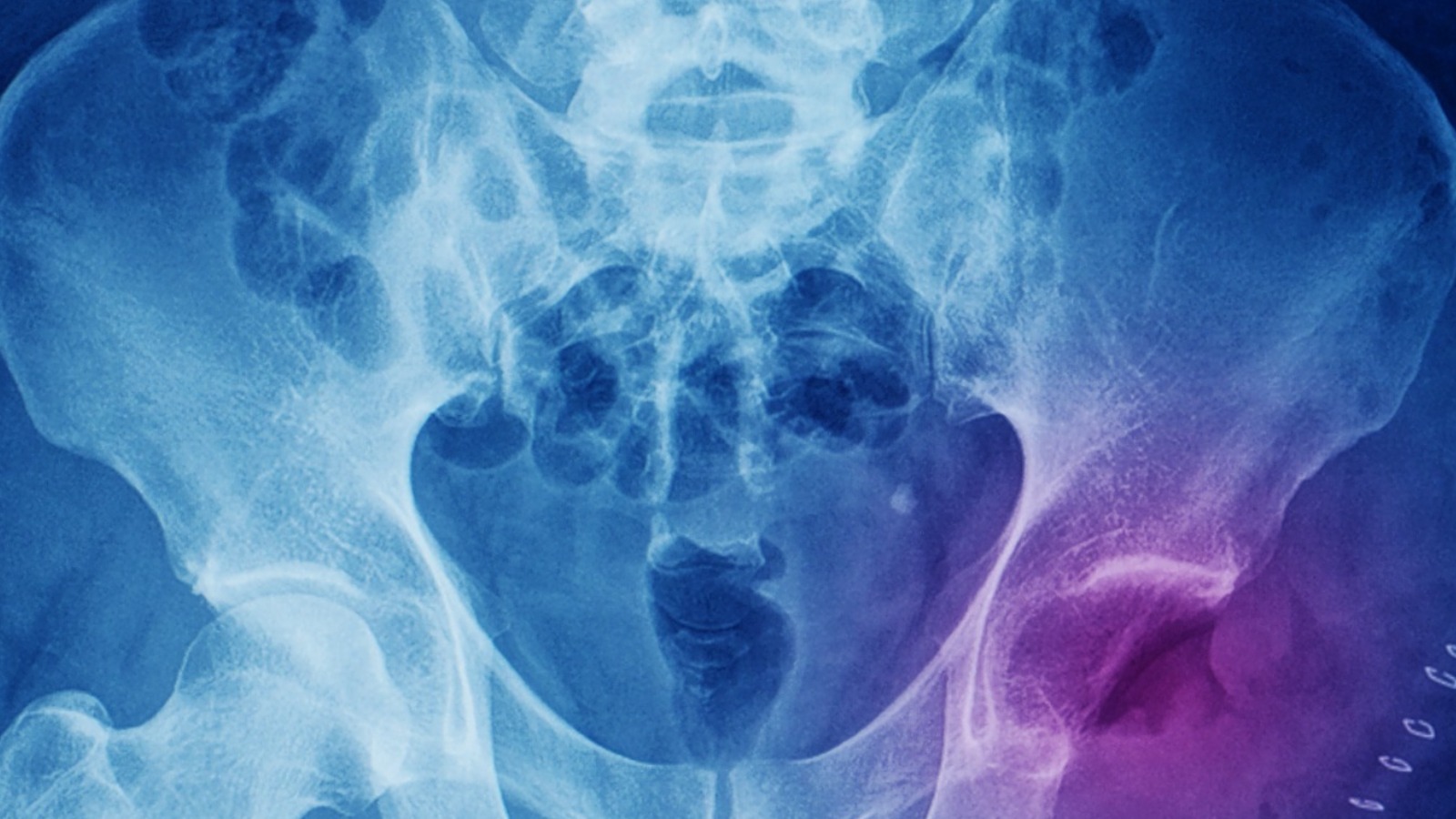
If you’ve spent any amount of time in the dark corners of true crime history, you’ve probably stumbled across a grainy, black-and-white medical image. It looks like a typical pelvic scan at first. Then you see them. Thin, metallic slivers—dozens of them—buried deep within the soft tissue.
That image is the Albert Fish x ray, and it remains one of the most stomach-turning pieces of evidence ever presented in an American courtroom.
Honestly, it’s the kind of thing that stays with you. We often talk about "monsters" in a metaphorical sense when discussing serial killers, but Fish was something else entirely. He wasn't just a predator; he was a man who found a twisted, religious ecstasy in his own physical agony. The x-ray wasn't just a diagnostic tool; it was a map of a broken mind.
What the Albert Fish X-ray Actually Shows
In March 1935, during the trial for the murder of Grace Budd, the defense introduced a series of x-rays. They weren't looking for broken bones. They were looking for needles.
The most famous scan focuses on his pelvic region, specifically the area between his scrotum and his anus. When the film was developed, the doctors and the jury saw roughly 29 needles (some accounts say 27, others 30, but the official trial count settled around 29) embedded in his flesh.
These weren't accidental. Fish had spent years—decades, really—methodically pushing sewing needles and pins into his own body.
Why did he do it?
Fish suffered from a severe form of piquerism. Usually, this involves a killer finding sexual gratification from stabbing others. But Fish turned that impulse inward. He would sit in his room, often reading the Bible or thinking about "divine sacrifices," and slowly slide the needles into himself until they were completely submerged.
Because he never removed them, they migrated.
The human body is weirdly fluid on the inside. Over years, those needles didn't just stay in the skin; they worked their way into the muscle and settled near his pelvic bones. By the time he was arrested in 1934, they had been there so long that some were starting to corrode or cause internal scarring, yet he claimed he barely felt them anymore.
The Trial and the "Insanity" Argument
When the Albert Fish x ray was held up in court, his lawyer, James Dempsey, thought it was his "get out of jail free" card.
How could a sane man do this to himself?
The defense called in Fredric Wertham, a renowned psychiatrist. Wertham argued that the needles were physical proof of "psychopathic personality" and religious mania. He described Fish's behavior as a bizarre form of self-atonement. Fish believed he was like the biblical Abraham, and his victims (and his own body) were the sacrifices.
But the prosecution had a different take.
They brought in their own experts who argued that just because someone has "perverted" tastes or a high pain tolerance doesn't mean they don't know the difference between right and wrong. To the jury, the x-ray was definitely gross, but it didn't excuse the fact that Fish had meticulously planned the kidnapping and murder of children.
Basically, the court decided he was a "sane" masochist.
Technical Details: The 1935 Imaging Technology
You have to remember that x-ray technology in the mid-30s wasn't what it is today. They were using primitive plates and long exposure times. The fact that the needles show up so clearly—stark white against the grey of his bones—speaks to how many there were and how densely they were packed.
The Medical Reality of 29 Needles
- Location: Mostly the perineum and pelvic floor.
- Migration: Needles found in the x-ray were often far from where he originally "inserted" them.
- Infection: Surprisingly, Fish rarely suffered from sepsis. He was essentially a walking medical anomaly.
There's a persistent rumor that the needles actually caused a short circuit during his execution in the electric chair. People love a good "ironic ending" story. However, most historical records suggest the execution went off without any "extra" sparks. The lead executioner, Robert Elliott, noted that Fish went to his death quite calmly, even allegedly helping the guards adjust the electrodes.
Why the Albert Fish X-ray Still Matters Today
We see a lot of "shock" content online, but the Albert Fish x ray is different because it's a primary source. It's an unedited look at the physical manifestation of a mental illness that defied the categorization of the time.
It also marked a shift in how we use forensic evidence. Before this, physical evidence was usually about the crime scene—blood, fingerprints, shells. This was physical evidence of the killer's internal state.
What most people get wrong
A lot of folks think Fish was just a "crazy old man" who lost it. But if you look at the letters he sent (especially the infamous one to Grace Budd's mother) and the discipline required to self-embed 29 needles, you see a man with terrifyingly high levels of self-control. He wasn't out of control; he was in total control of a very dark world he built for himself.
Actionable Insights for True Crime Researchers
If you're looking into the Fish case for a paper, a podcast, or just out of a morbid curiosity, keep these three things in mind to stay factually grounded:
- Check the Trial Transcripts: Much of what we know about the x-rays comes from the testimony of Dr. Wertham. His book The Show of Violence is a primary source for the medical details, but keep in mind he was the defense's star witness.
- Verify the Count: You'll see "100 needles" mentioned on some clickbait sites. The actual number confirmed by 1935 radiography was 29.
- Contextualize the Religion: Fish wasn't just "evil." He was a religious fanatic. Understanding his obsession with the "purification of the flesh" through pain explains why the needles were there. To him, they were holy.
The x-ray remains the most visceral reminder that sometimes the most frightening things aren't what a killer does to others, but what they are capable of doing to themselves. It’s a snapshot of a level of psychosis that most of us can’t even begin to wrap our heads around.
Check the New York State Archives or the digital collections of the NY Daily News if you want to see the high-resolution archival versions of these plates. They provide a much clearer (and more disturbing) look than the compressed versions floating around social media.