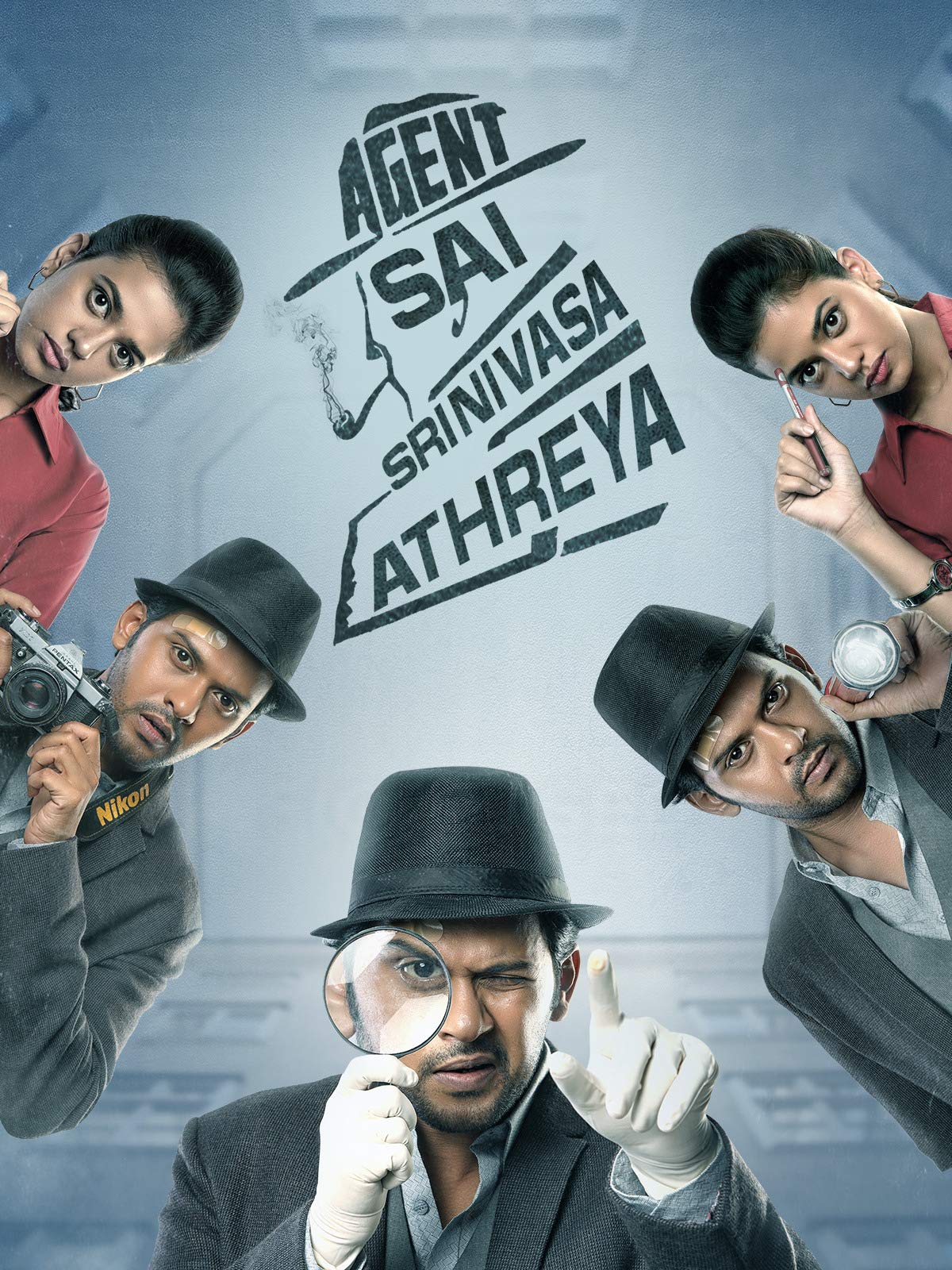
Small films usually disappear. They flicker for a weekend, maybe get a decent streaming deal, and then fade into the digital abyss of "Recommended for You" lists that nobody actually clicks. But Agent Sai Srinivasa Athreya (2019) didn’t do that. Honestly, it’s kinda weird how a movie about a detective in Nellore wearing a trench coat in 40-degree Celsius heat became such a cult phenomenon.
It wasn't just the humor. It wasn't just Naveen Polishetty’s frantic, brilliant energy. It was the fact that the movie actually respected the audience's intelligence.
The Mystery of the Agent Sai Srinivasa Athreya Hype
Most Indian detective movies fall into two traps. They either try to be Sherlock Holmes clones with high-tech gadgets that don't exist in real life, or they turn into "masala" action flicks where the hero beats up twenty guys before solving a basic riddle. Agent Sai Srinivasa Athreya took a third path.
It stayed grounded.
The protagonist, Sai Srinivasa Athreya, runs a detective agency out of a tiny office in a vegetable market. He’s brilliant, sure, but he’s also broke. He spends his time solving petty cases—mostly involving cheating spouses or small-time thefts—until he stumbles upon a series of unidentified bodies near railway tracks. This is where the movie shifts from a lighthearted comedy into a dark, sprawling conspiracy.
You've probably seen thrillers where the twist feels unearned. Like the director just pulled a rabbit out of a hat because they ran out of ideas. Here, the breadcrumbs are laid out from the very first frame. Director Swaroop RSJ and Naveen Polishetty (who also co-wrote the screenplay) clearly spent a lot of time researching actual crimes. They didn't just invent a boogeyman. They looked at the dark underbelly of religious scams and the disposal of unclaimed bodies in India.
It's grim. It's realistic. And it’s surprisingly heartbreaking.
Naveen Polishetty and the Art of the "Fast Talker"
Naveen Polishetty is the engine. Without him, the movie probably would have been a standard procedural. He has this specific way of talking—a mile a minute—that makes you feel like his brain is three steps ahead of his mouth.
He plays Athreya not as a superhero, but as a guy who is obsessed with the process of deduction. He watches The Silence of the Lambs. He quotes Sherlock. He thinks he’s in a noir film, but the reality of Nellore keeps hitting him in the face. It’s a brilliant subversion of the "genius detective" trope. He makes mistakes. He gets scared. He gets beaten up.
Basically, he’s human.
The chemistry between Athreya and his assistant, Sneha (played by Shruti Sharma), provides the necessary grounding. She isn't there as a love interest—thankfully, the movie skips the unnecessary romantic subplots—but as the voice of reason. She’s the one who reminds him that they have bills to pay while he’s busy trying to find a "signature" on a crime scene that might just be a coffee stain.
Why the Plot Actually Holds Up Under Scrutiny
Let's talk about the central mystery without spoiling the whole thing. The core of the story involves "unclaimed bodies." In a country as vast as India, thousands of people go missing or die without identification every year. The film explores what happens to these bodies and who stands to profit from their disappearance.
It’s a massive logistical nightmare that the film turns into a tight, claustrophobic thriller.
The brilliance of the screenplay lies in how it connects seemingly unrelated dots. A random arrest in a small town. A father looking for his daughter. A superstitious belief about a specific railway track. It all converges.
Unlike many big-budget films that rely on "deus ex machina" (like a random hacker who can get into any database in five seconds), Athreya has to do the legwork. He goes to libraries. He talks to morgue workers. He digs through physical files. This "analog" detective work makes the eventual payoff much more satisfying. You feel like you solved it with him.
Technical Prowess on a Shoestring Budget
The cinematography by Sunny Kurapati is moody without being "fake deep." The lighting in the night scenes actually looks like moonlight and street lamps, not a massive studio rig. Mark K. Robin’s background score is another standout feature. It’s quirky when Athreya is being a goofball, but it transitions into something genuinely unsettling when the stakes rise.
Budget constraints often force filmmakers to be more creative. In Agent Sai Srinivasa Athreya, you can see that creativity in the locations. They used the dusty, crowded streets of Nellore to create a sense of chaos. It’s not a polished version of India. It’s the real deal.
Addressing the Common Criticisms
No movie is perfect. Some people argue the second half gets a bit heavy on the exposition. And yeah, there’s a sequence where the villain explains their plan that feels a little traditional.
But honestly? It works.
The complexity of the scam being pulled is so intricate that a little bit of "telling" instead of "showing" is forgivable. If they hadn't explained it, half the audience would have been left scratching their heads. The film manages to balance a social message about blind faith and systemic corruption without becoming a "preachy" PSA. That’s a hard tightrope to walk.
The Impact on Tollywood
Before this movie, the "detective thriller" genre in Telugu cinema was mostly dead or relegated to B-movies. Agent Sai Srinivasa Athreya proved that there is a massive audience for "concept-driven" films. It paved the way for more experimental storytelling in the industry. It showed that you don't need a massive star or five item songs to make a hit.
You just need a good script.
Actionable Insights for Thriller Fans
If you're planning to watch—or re-watch—this gem, here’s how to get the most out of it:
- Watch the background. The filmmakers hid several clues in the background of early scenes. Pay attention to the newspaper clippings in Athreya's office.
- Don't skip the beginning. The intro might seem like just a series of jokes, but it establishes Athreya's character flaws which become crucial in the climax.
- Look for the subtext. The movie deals heavily with the clash between science/logic and superstition. Every time Athreya uses logic to debunk a "miracle," the film is making a point about modern Indian society.
- Check out Naveen Polishetty’s other work. If you like his energy here, his performance in Chhichhore and Jathi Ratnalu shows his incredible range, though Agent remains his most nuanced work.
- Explore the "Nellore" connection. The city isn't just a backdrop; the local culture and geography play a role in how the mystery unfolds.
The real legacy of Agent Sai Srinivasa Athreya isn't just that it’s a good movie. It’s that it reminded us why we love mysteries in the first place. It’s the thrill of the hunt, the satisfaction of the "Aha!" moment, and the reminder that sometimes, the greatest dangers are hiding in plain sight, disguised as tradition or convenience.
It’s a masterclass in independent filmmaking. Whether you're a hardcore cinephile or just someone looking for a solid Friday night movie, this one is non-negotiable.
Watch it on a big screen if you can. Keep your phone away. Focus on the details.
You might just spot the clues before Athreya does.