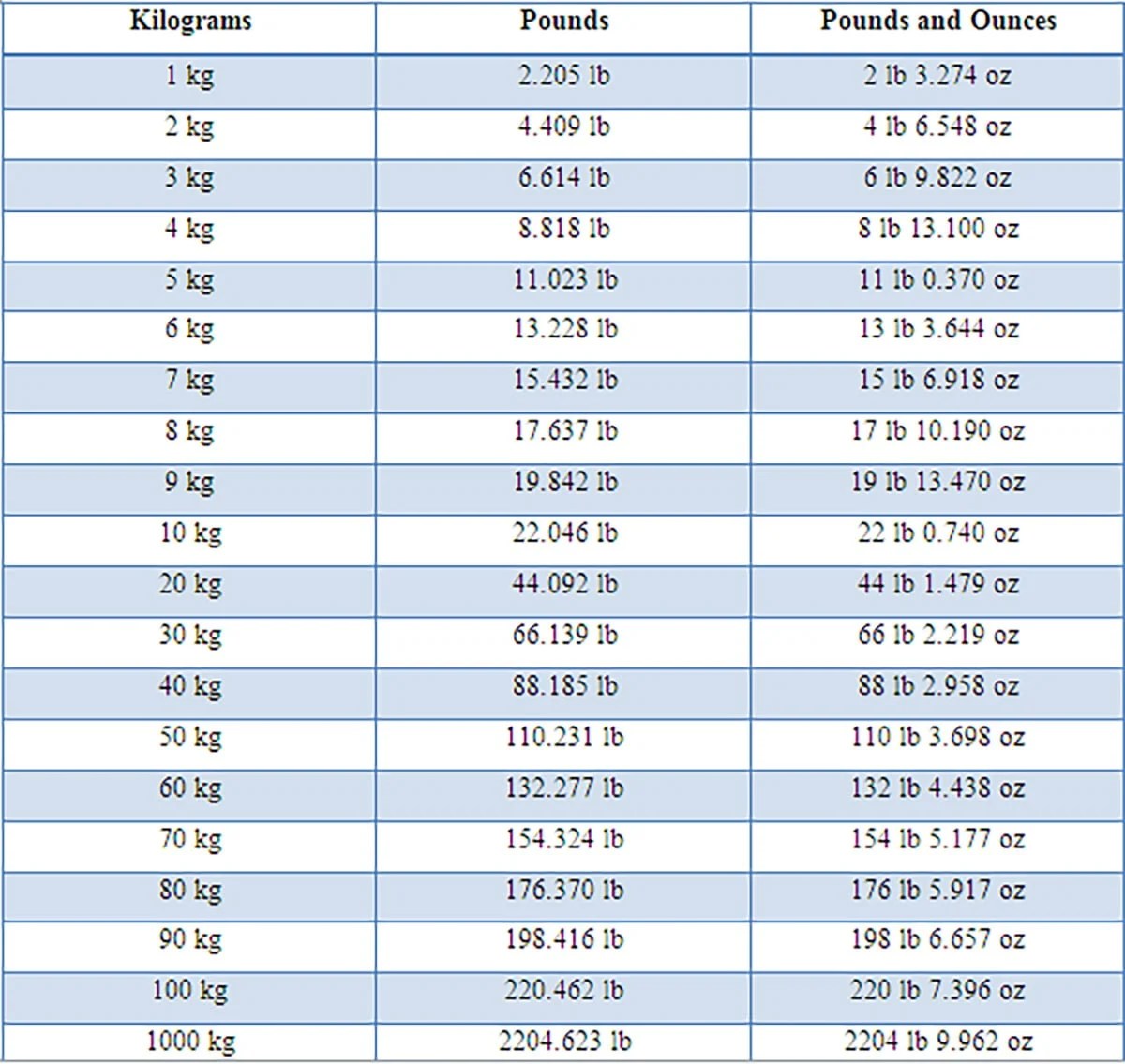
So, you’re staring at a scale or a spec sheet and seeing "82 kg" pop up. It sounds like just another number, right? But honestly, numbers are kind of meaningless until you give them some context. If you're used to the imperial system, 82 kg is basically 180.78 pounds. That’s the "big" answer. But the real answer—how much it feels like or what it means for your body—is a lot more nuanced than a quick math conversion.
Weight is weird. 180 pounds can look like a lean, 6'3" athlete or a stockier 5'7" frame. It's the weight of about 20 gallons of water. It's roughly the weight of a giant panda cub when it’s starting to get actually big. Understanding how much is 82 kg requires looking at more than just the readout on a digital screen. It’s about volume, density, and how that mass interacts with the world around it.
The Math: Converting 82 kg to Pounds and Stone
Let’s get the technical stuff out of the way first. You multiply the kilograms by 2.20462.
$$82 \times 2.20462 = 180.77884$$
If you’re in the UK or Ireland, you’re probably thinking in stone. In that case, 82 kg is approximately 12 stone and 13 pounds. You're just a hair's breadth away from hitting that 13-stone mark. For most people, this is a very "middle of the road" weight. It’s not exceptionally heavy, but it’s certainly not light. It’s a solid, substantial amount of mass.
Quick reference points
To give you a vibe for what we're talking about:
- A standard checked suitcase at the airport is usually capped at 23 kg. So, 82 kg is nearly four full suitcases. Imagine trying to carry four of those through Heathrow or JFK.
- It’s about the weight of an average adult male in many European countries.
- If you're into fitness, it's roughly the weight of two 20 kg Olympic barbells plus two 20 kg plates, plus a tiny bit of change.
What 82 kg Looks Like on a Human Body
This is where things get tricky. You can’t just say "82 kg is heavy" or "82 kg is thin." Height changes everything.
If you are 190 cm (6'3"), weighing 82 kg puts you on the leaner side. Your Body Mass Index (BMI) would be around 22.7, which is comfortably in the "healthy" range. You’d probably look like a distance runner or a basketball point guard. But, if you’re 165 cm (5'5"), that same 82 kg puts your BMI at 30.1. That’s technically the threshold for obesity.
But BMI is a bit of a liar. It doesn't know the difference between a beer belly and a bicep. Muscle is much denser than fat. 1 kg of muscle takes up way less space than 1 kg of fat. This is why two people can both weigh exactly 82 kg but look completely different. One might wear a size Small t-shirt because they are purely lean mass, while the other wears an XL.
The "Ideal" Weight Myth
A lot of people obsess over hitting a specific number. They see 82 kg and panic, or they see it and celebrate. But experts like those at the Mayo Clinic emphasize that waist circumference and body fat percentage are way better indicators of health than the raw number on the scale. If you're 82 kg but you can run a 5k and your blood pressure is golden, the number is just data. It’s not a verdict.
82 kg in the Natural and Mechanical World
Sometimes it helps to step away from human bodies and look at objects. What else weighs exactly 82 kg?
It’s about the weight of a Beer Keg (Full). A standard US half-barrel keg weighs about 72.5 kg, so add a few heavy six-packs on top and you’ve got 82 kg. If you’ve ever had to help a friend move a keg into a backyard party, you know that 82 kg is "two-person lift" territory for most folks. It’s awkward. It’s heavy. It has a lot of inertia.
In the animal kingdom:
- A large male Cougar (Mountain Lion) typically weighs between 60 and 90 kg. So, an 82 kg cougar is a very healthy, full-grown apex predator.
- A newborn calf of certain larger cattle breeds can start out around this weight.
- It's the upper weight limit for a Great Dane.
Why Does 82 kg Feel Different in Different Places?
Physics check: mass and weight aren't actually the same thing, though we use the terms interchangeably in daily life.
Your mass is 82 kg. That stays the same whether you’re on Earth, the Moon, or floating in the International Space Station. But your weight—the force gravity exerts on you—changes.
If you took your 82 kg body to the Moon, you’d weigh about 13.5 kg. You could jump over a house. If you went to Jupiter (and somehow didn't get crushed by the atmosphere), you'd weigh over 200 kg.
Even on Earth, weight varies slightly. Gravity is actually a tiny bit stronger at the poles than it is at the equator because the Earth isn't a perfect sphere; it bulges in the middle. You'd weigh a fraction of a percent less in Quito, Ecuador, than you would in Oslo, Norway. Not enough to skip the gym, but enough for a fun trivia fact.
Health Implications of Weighing 82 kg
For a lot of people searching for "how much is 82 kg," the subtext is usually: Should I be worried about this weight?
Most clinical guidelines use the 82 kg mark as a significant baseline for medication dosages. For instance, many over-the-counter drugs are tested on "average" adults, often pegged around 70-80 kg. If you're 82 kg, your body usually processes these medications exactly as intended.
Caloric Needs
At 82 kg, your Basal Metabolic Rate (BMR)—the calories you burn just by existing and breathing—is likely between 1,700 and 2,000 calories a day, depending on your age and sex.
- Men: A 30-year-old male at 82 kg and 180 cm tall has a BMR of roughly 1,850 calories.
- Women: A 30-year-old female at 82 kg and 170 cm tall has a BMR of roughly 1,600 calories.
If you’re active, you might need 2,500 to 3,000 calories just to maintain that weight. It takes a decent amount of fuel to keep an 82 kg engine running.
82 kg in Sports and Performance
In the world of combat sports—MMA, Boxing, Wrestling—82 kg is a "tweener" weight.
In the UFC, the Welterweight limit is 170 lbs (77 kg), and Middleweight is 185 lbs (84 kg). So, if you weigh 82 kg, you are likely a Middleweight who has a very easy weight cut, or you're a Welterweight who needs to lose about 5 kg of water weight before a fight.
In rowing, 82 kg is often the cutoff for "lightweight" vs. "heavyweight" (open) categories in some competitive tiers, though the official FISA lightweight limit for men is an average of 70 kg for the crew. For a single sculler, it’s 72.5 kg. So, at 82 kg, you’re definitely playing with the big dogs in the open-weight category.
Common Misconceptions About the Number 82
People often think 82 kg is a "man's weight." That’s just outdated. Plenty of tall or athletic women carry 82 kg with incredible strength and health.
Another misconception is that 82 kg is "hard" to lose or "easy" to maintain. Weight plateauing happens at every level. The biological reality is that your body loves homeostasis. If you’ve been 82 kg for five years, your body has tuned its hormones—leptin and ghrelin—to keep you right there. Changing that number, whether you want to go up or down, requires a sustained disruption of your current energy balance.
Actionable Steps: What to Do With This Information
If you’ve just realized you weigh 82 kg and you’re wondering what the "move" is, here is how to handle it:
1. Contextualize with Height.
Don't just look at the 82. Measure your height. Check a BMI chart just as a starting point, but don't let it ruin your day. If you're over 185 cm, you're likely in a great spot. If you're under 170 cm, you might want to look at your activity levels.
2. Measure Body Composition.
Go get a DEXA scan or use a pair of skinfold calipers. If that 82 kg is mostly muscle, your health risks are significantly lower than if it’s mostly visceral fat (the stuff around your organs).
3. Check Your Gear.
If you’re buying a mountain bike, a kayak, or even a standing desk, check the weight limits. Most consumer products are rated for at least 100 kg to 120 kg, so at 82 kg, you are well within the safety margins for almost all standard equipment. You won't be "too heavy" for the vast majority of things.
4. Adjust Your Macros.
If you're trying to maintain muscle at 82 kg, aim for about 1.6 to 2.2 grams of protein per kilogram. That means you should be eating roughly 130g to 180g of protein every day.
Ultimately, 82 kg is a very manageable, common weight. It’s heavy enough to provide some power and stability in physical activities, but light enough that you aren't putting extreme stress on your joints compared to someone in the 100 kg+ range. It’s all about how you carry it.