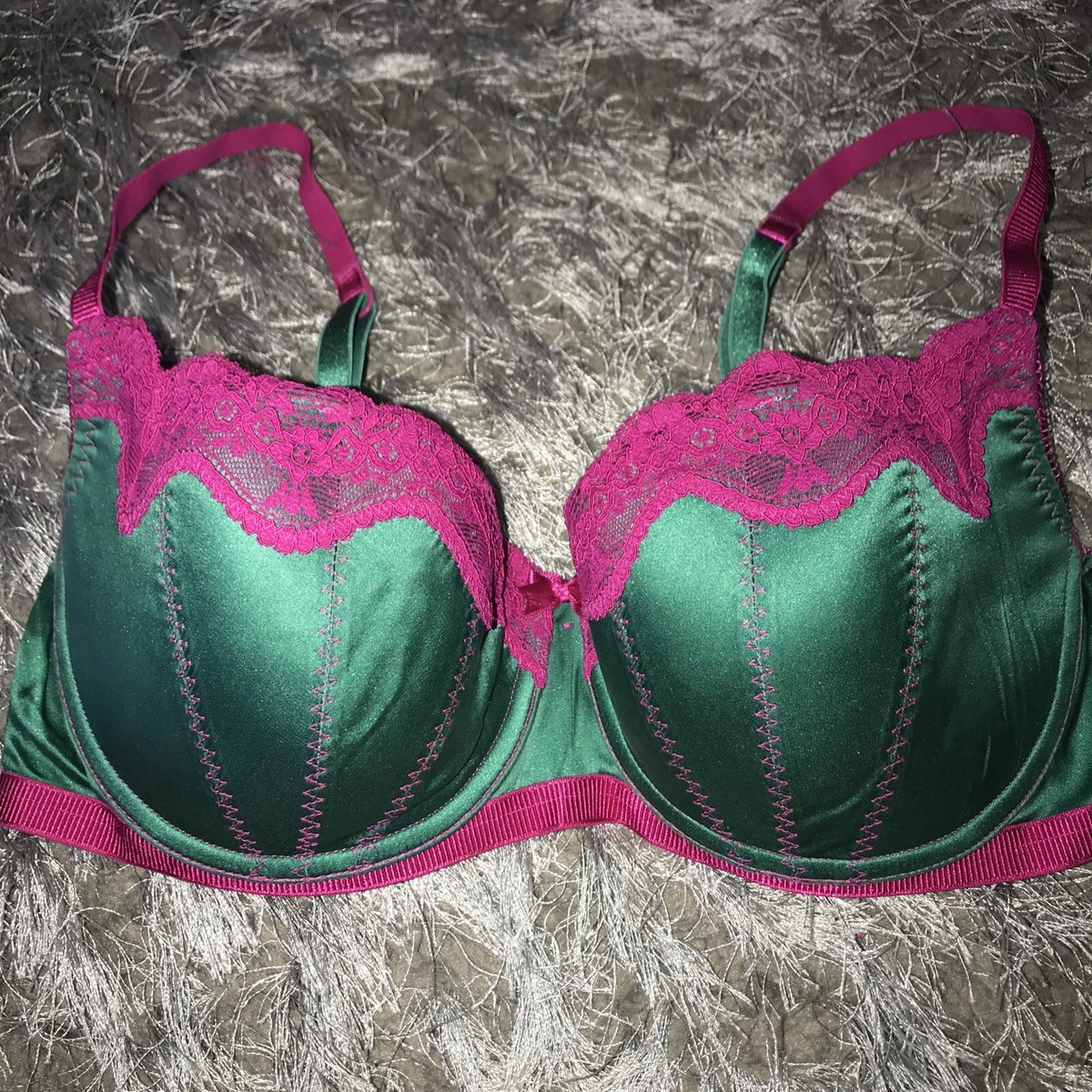
Walk into any mall and ask a random person to describe a D cup. They’ll likely gesture toward something "large" or "heavy." It's one of those weird social myths that has stuck around for decades, despite being totally inaccurate. Most people think a 32D is some sort of Hollywood-esque bombshell size. Honestly? It’s not. In reality, a 32D is a fairly average, often even "small-looking" size that would surprise most people who rely on media stereotypes rather than a measuring tape.
The confusion stems from the fact that we've been taught to look at the letter as an absolute value. It's not. The letter is a ratio.
The Math Behind What 32d Look Like
If you want to understand what a 32D looks like, you have to look at the ribcage first. The number "32" refers to the underbust measurement—the circumference of your ribcage directly beneath your breasts. A 32-inch band is relatively small. It usually belongs to someone with a petite or slender frame, perhaps someone who wears an XS or Small in t-shirts.
Now, let's talk about that "D." In the world of bra sizing, a D cup simply means there is a 4-inch difference between the ribcage and the fullest part of the bust.
$Bust - Underbust = Cup Size$
For a 32D, the math looks like this:
- Underbust: 32 inches
- Bust: 36 inches
When you spread four inches of volume across a 32-inch frame, it doesn't result in the "huge" look people expect. It looks like a moderate, proportional amount of breast tissue. On a narrow frame, it might look slightly more "projected" than it would on a wider person, but it is a far cry from the "watermelon" imagery often associated with the letter D.
Visualizing the Volume: The Tennis Ball Analogy
Expert fitters often use fruit or sports balls to help people visualize volume, because "inches" don't always translate well to 3D shapes. A 32D typically holds about 300ml to 400ml of breast tissue per cup. To put that into perspective, it’s roughly the volume of a large orange or a slightly squished tennis ball.
Compare that to a 40D. Even though they both share the "D" letter, a 40D is massive compared to a 32D. Why? Because a 40D represents a 4-inch difference on a 40-inch frame. The cups have to be much wider and deeper to maintain that 4-inch ratio over a larger surface area. A 40D holds nearly double the actual weight and volume of a 32D.
This is why you can’t just look at a letter. If you saw a woman wearing a properly fitted 32D, you might guess she was a "B cup" based on old-school, incorrect assumptions.
Why Does My 32d Look Small?
You've probably felt this. You get measured, the calculator says 32D, you look in the mirror, and you think, No way. I'm flat. There are a few reasons for this optical illusion.
First, shallow vs. projected shapes. If your breast tissue is spread out over a large area of your chest (shallow), it won't "stick out" as much as someone whose tissue is concentrated in a narrow base (projected). Two women can both be 32Ds, but one looks "curvier" simply because her anatomy projects forward more.
Second, the "Swoop and Scoop" factor. Most women just put on a bra and go. But if you don't manually pull the breast tissue from the sides and underarms into the cup, the bra won't fit right. You might have "armpit fat" that is actually just breast tissue waiting to be housed in the correct cup. Once you swoop and scoop, that 32D suddenly fills out and looks like the size it’s supposed to be.
Sister Sizes and the 32d Range
Sometimes a 32D isn't actually the best fit, even if the math works. This is where "sister sizes" come in. These are sizes that have the exact same cup volume but different band lengths.
If you are a 32D, your sister sizes are:
- 30DD: A tighter band with the same volume.
- 34C: A looser band with the same volume.
If you find that 32D cups fit perfectly but the band is digging into your skin like a torture device, you might actually prefer a 34C. Conversely, if the 32D cups are great but the band keeps sliding up your back, a 30DD might be your "true" fit. It’s all about how that volume is distributed around your torso.
Common Signs You Aren't Actually a 32d
If you think you're a 32D but you're experiencing any of the following, the label is likely wrong:
- The Gore doesn't touch: The little piece of fabric between the cups (the gore) should lay flat against your sternum. If it’s hovering in mid-air, your cups are too small.
- Double Boob: If your breast tissue is spilling over the top of the cup, creating a "quad-boob" effect, you need to go up at least one or two cup sizes.
- The Band Rides Up: If your bra band forms a "rainbow" shape on your back instead of a straight line, your band is too big. You might need to drop to a 30 or 28 band.
- Gaping: If there is air space in the cup, it doesn't always mean the cup is too big. Often, it means the cup is too small or the wrong shape, so your breasts are pushing the bra away from your body.
Real-World Examples of 32d
If you looked at celebrities like Scarlett Johansson or Halle Berry during certain points in their careers, they were often cited as being in the D-cup range. However, because they have narrow ribcages, they are likely wearing much smaller band sizes than the average person realizes.
A 32D on a 5'2" woman with a tiny frame will look significantly more prominent than it would on a 5'11" woman with broad shoulders. Perspective is everything. Height and shoulder width "eat up" the visual impact of a bust.
How to Find Your Real Size
Stop relying on the "Add 4" method. Many old-school department stores will measure your ribcage at 28 inches and then tell you to add 4 or 5 inches to find your band size (making you a 32). This is a trick used to fit more women into a limited range of stock. It results in a band that is too loose and offers zero support.
To get it right:
- Measure your underbust snugly. If it's 32 inches, your band is 32.
- Measure your bust loosely at the fullest part.
- Count the inches of difference. 1=A, 2=B, 3=C, 4=D, 5=DD, and so on.
If you find yourself measuring at a 32D, don't be shocked if you look "smaller" than the stereotype. You are likely just wearing a bra that actually fits your frame instead of a "boob hat" that just sits on top of your chest without providing lift.
Moving Forward With a 32d Fit
Now that you know what a 32D actually looks like, your next move is to check your current drawer.
Take your favorite bra and put it on. Lean forward, scoop all the tissue from your underarm into the cup, and stand up straight. Check the gore—is it touching your chest? Check the band—is it level all the way around? If anything feels off, ignore the tag and trust your body. You might find that moving to a sister size or changing the cup shape (like switching from a T-shirt bra to a balconette) makes that 32D look exactly how it's supposed to: comfortable, supported, and perfectly proportional to you.