Your dirt bike is screaming one minute and coughing the next. You’ve cleaned the carb three times, replaced the spark plug, and even messed with the fuel mixture until your hands smell like premix permanently. Still, it feels soft off the bottom. That snappy, instant power you remember is gone. Honestly, it’s probably your 2 stroke engine reeds. These tiny, flapping pieces of carbon fiber or fiberglass are the literal gatekeepers of your engine’s combustion cycle. If they aren't sealing perfectly, your bike is basically trying to breathe through a straw with a hole in it.
Most people ignore them because they’re tucked away behind the intake manifold. Out of sight, out of mind. But these little petals vibrate thousands of times per minute. They take a beating.
What Are 2 Stroke Engine Reeds Actually Doing?
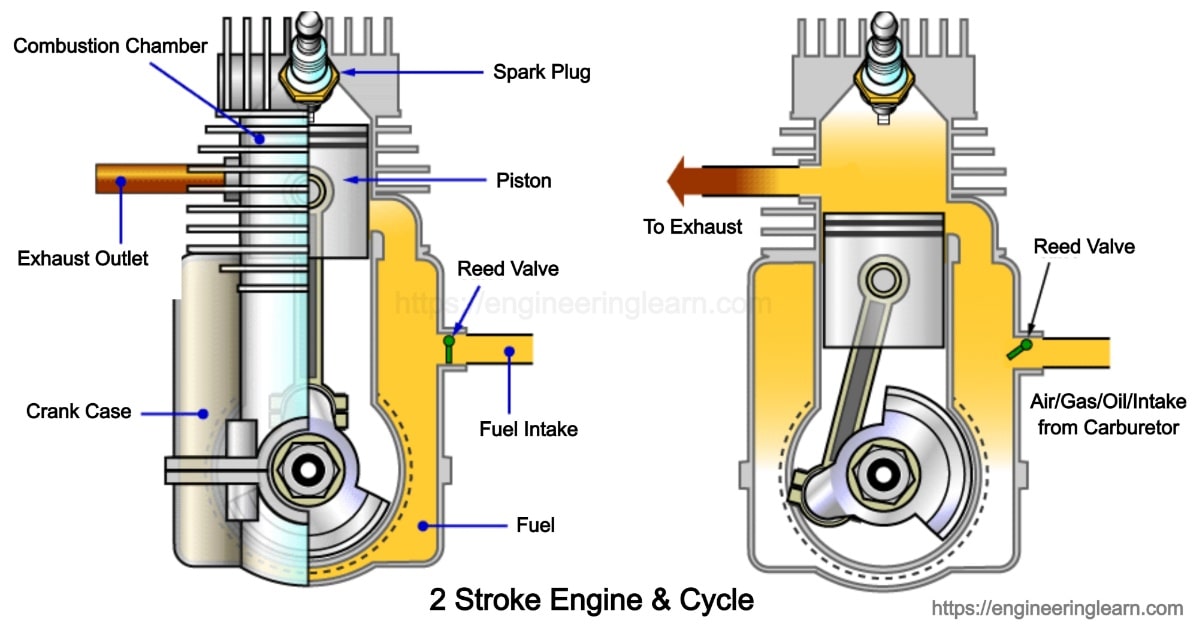
Think of the reed valve as a one-way check valve. In a standard four-stroke, you have mechanical valves driven by a camshaft. But 2 strokes are simpler and, frankly, a bit more chaotic. When the piston moves up, it creates a vacuum in the crankcase. This atmospheric pressure difference sucks the 2 stroke engine reeds open, pulling air and fuel in from the carburetor or throttle body. Then, as the piston travels back down, it compresses that mixture. This pressure should slam the reeds shut so the fuel is forced up through the transfer ports and into the combustion chamber.
If they don't shut? You get blowback.
That fuel-air mixture gets kicked back into the intake, ruining the intake track’s pressure wave and making the bike run like garbage at low RPMs. You’ll notice it most when you’re trying to lug the engine through a tight technical section or popping over a log. If the snap isn't there, the reeds are the first thing I check.
The Material Debate: Carbon Fiber vs. Fiberglass
You'll hear guys at the track arguing about Boyesen versus VForce until they're blue in the face. It usually comes down to the material of the petals themselves.
Fiberglass reeds are the old-school standard. They’re durable and cheap. They tend to have a bit more "memory," meaning they hold their shape well over long periods, but they aren't as responsive as the fancy stuff. They’re great for a trail bike where you just want it to run reliably for five years without a teardown.
Then you have carbon fiber. This is what you see in high-performance 2 stroke engine reeds from companies like Moto Tassinari. Carbon is stiffer and lighter. Because it has less mass, it can react much faster to the pressure changes in the crankcase. This translates to better throttle response. The downside? Carbon fiber is brittle. When it fails, it doesn't just bend; it chips or shatters.
Does it matter?
Sorta. If you're a casual rider, you might not feel the difference between a high-end carbon reed and a fresh set of OEM fiberglass ones. But if you’re racing, that millisecond of faster opening time matters. It’s the difference between clearing a double and casing it.
Signs Your Reeds are Toast
You don't always need to pull the intake apart to know there's a problem. There are "tells."
- Hard Starting: If you’re kicking that bike until your leg hurts, and the carb is clean, the reeds aren't sealing. The vacuum isn't strong enough to pull fuel in.
- Poor Idle: You set the idle screw, it stays for a second, then drops and dies.
- The "Bog": You whack the throttle open and the engine goes wahhhhh instead of braaap.
- Visible Fraying: If you actually take them out, hold them up to the light. Can you see daylight between the petal and the cage? If yes, they're dead. Even a tiny gap—we’re talking the thickness of a human hair—can ruin your low-end tuning.
I’ve seen guys try to "flip" the reeds to get more life out of them. Don't do that. It’s a temporary fix that usually results in the petal snapping off and getting sucked into the crankcase. While soft reeds won't necessarily destroy your bottom end, a chunk of carbon fiber floating around your bearings is a recipe for a very expensive weekend.
The VForce vs. Rad Valve Rivalry
If you're looking at aftermarket 2 stroke engine reeds, you're going to run into the "Big Two."
The Moto Tassinari VForce system uses a double-V design. Basically, it doubles the reed tip surface area. This means the petals don't have to open as far to get the same amount of airflow. Less travel equals less wear and faster response. It’s a brilliant bit of engineering. Most KTM and Husqvarna models actually come with VForce cages stock nowadays because they work so well.
On the other side, you have the Boyesen Rad Valve. Boyesen takes a different approach. They focus on the "aerodynamics" of the intake tract. Their cage is often a single-piece aluminum casting designed to optimize air velocity. They also pioneered the "dual-stage" reed, where a smaller, thinner reed sits on top of a thicker one. The thin one opens for low-RPM response, and the thick one kicks in when the pressure really picks up.
Which is better? Honestly, it depends on the bike. Some Yamahas love the Rad Valve. Most European bikes seem to prefer the VForce. It’s one of those things where you have to look at the dyno charts for your specific year and model.
Maintenance and Installation Realities
Installing new 2 stroke engine reeds isn't rocket science, but you can mess it up.
First, cleanliness is everything. Any dirt that falls into the intake goes straight to the big-end bearing. Clean the bike before you even touch a wrench. When you're bolting the petals onto the cage, use a tiny drop of blue Loctite on the screws. If one of those tiny screws backs out and goes through your engine, it’s game over.
Don't over-tighten them, either. You just want them snug. If you crush the reed material, it’ll crack prematurely.
And here’s a pro tip: check the reed cage seating surface. Sometimes the rubber coating on the cage gets notched or worn. If the cage itself is uneven, new petals won't seal, and you'll be right back where you started, wondering why the bike still runs like a wet noodle.
The Life Expectancy
How long do they last? It depends on how you ride. If you're a "rev limiter" kind of rider, you might need new petals every 20-30 hours. If you’re just lugging through the woods, you might get 100 hours. A good rule of thumb is to inspect them every time you do a top-end piston change. If the tips look "fuzzy" or if there's any chipping at the corners, throw them away.
Technical Nuances: Tension and Petal Thickness
We don't talk about reed tension enough. Petals come in different thicknesses—usually measured in millimeters (like 0.3mm or 0.4mm).
Thinner reeds are "softer." They open easily, which is killer for low-end grunt and technical riding. But at high RPMs, they can start to "flutter." This is essentially a harmonic vibration where the reed can't keep up with the engine speed. When they flutter, they don't seal, and your top-end power falls off a cliff.
Thicker reeds are "stiff." They suck for off-idle response but stay stable at 10,000 RPM. Professional motocross racers often lean toward stiffer setups because they spend 90% of the race in the top half of the powerband. For the average guy? Stick to the middle ground.
Real-World Example: The 125cc Struggle
The 125cc two-stroke is the most sensitive to reed health. Because these engines have very little torque to begin with, any loss in primary compression is devastating. I remember a buddy who bought a "project" YZ125. It wouldn't pull sixth gear on a flat road. He replaced the top end, timed the power valve, and messed with the jetting for weeks.
Finally, we pulled the reed block. The petals were so warped you could fit a credit card through the gap. We dropped in a fresh set of 2 stroke engine reeds, and the bike suddenly had a "hit" again. It’s the cheapest horsepower you’ll ever buy.
Beyond the Petals: The Reed Spacer
You might see "reed spacers" for sale. These are blocks that sit between the cylinder and the reed cage. The idea is to increase the volume of the crankcase.
Does it work? Yes, but maybe not how you want. Increasing crankcase volume generally shifts the powerband. It usually smooths out the "hit" and gives you more over-rev on the top end. If you’re riding a 250 or 300 and find the power too snappy or violent, a spacer can actually help tame it. But if you're looking for more "snap," a spacer is usually the wrong move.
Final Practical Steps for Your Bike
If your bike is more than two seasons old and you've never looked at the intake, it’s time. Don't wait for a failure.
- Pull the intake boot: Get the carb out of the way and remove the four to six bolts holding the reed cage in.
- The Light Test: Hold the cage up to a bright light. Look through the bottom. If you see light leakage around the edges of the petals, they're spent.
- Check for Chipping: Run your finger (carefully) along the edges. Any roughness means the carbon is delaminating.
- Clean the Surfaces: Use contact cleaner to wipe down the cage and the mating surface on the cylinder.
- Replace or Upgrade: If you’re buying new petals, consider if you want to stay OEM or jump to something like a VForce4. The VForce is a larger upfront investment but often pays off in better fuel atomization and crisper response.
- Torque it Right: Use a torque wrench. Most reed cage bolts only need about 6-10 Nm. Over-torquing can warp the intake manifold and cause an air leak, which is a great way to lean out your engine and melt a piston.
Take care of your 2 stroke engine reeds, and they’ll make sure your bike actually moves when you twist the grip. It’s one of those maintenance items that separates the guys who know their machines from the guys who just ride them until they break. Be the guy who knows. Your lap times (and your wallet) will thank you.